









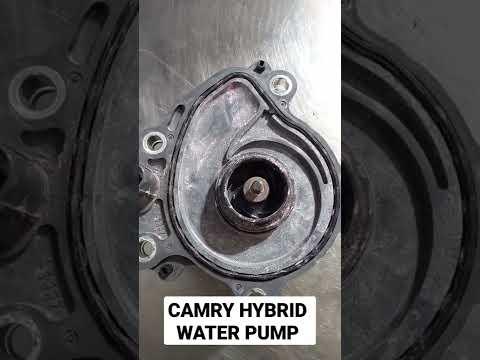







How to Replace the Water Pump on a 2002-2011 Toyota Camry (Engine vs Electric Inverter Pump) (Engine: Inline 4 2.4L)
Step-by-step instructions, tools/parts list, coolant refill & bleeding procedure, and torque specs
How to Replace the Water Pump on a 2002-2011 Toyota Camry (Engine vs Electric Inverter Pump) (Engine: Inline 4 2.4L)
Step-by-step instructions, tools/parts list, coolant refill & bleeding procedure, and torque specs for 2002, 2003, 2004, 2005, 2006, 2007, 2008, 2009, 2010, 2011


🔧 Camry - Water Pump Replacement
Your Camry can have two different “water pumps”: the engine coolant water pump (mechanical, driven by the belt) and the inverter/electric coolant pump (electric, cools the hybrid inverter system). The steps, parts, and bleeding procedure are different, so I’m giving you both paths clearly labeled.
Difficulty Level: Intermediate | Estimated Time: 2-4 hours
⚠️ Safety & Precautions
- ⚠️ Work on a cold engine; hot coolant can cause severe burns.
- ⚠️ Hybrid safety: do not touch or probe any orange high-voltage cables/connectors.
- ⚠️ Support the car with jack stands; never rely on a floor jack alone.
- ⚠️ If replacing the inverter/electric coolant pump, disconnect the 12V battery negative to prevent unexpected pump operation.
- ⚠️ Clean spills immediately; coolant is toxic to people and pets.
🔧 Required Tools
You'll need the following tools for this repair:
- Safety glasses
- Nitrile gloves
- Floor jack (rated 3-ton minimum)
- Jack stands (rated 3-ton minimum)
- Wheel chocks
- Drain pan (at least 2-gallon)
- Funnel
- Trim clip removal tool
- 10mm socket
- 12mm socket
- 14mm socket
- 3/8" drive ratchet
- 3/8" drive torque wrench (10–80 Nm range)
- Serpentine belt tool or 14mm wrench
- Pliers (hose clamp pliers)
- Flat-blade screwdriver
- Plastic gasket scraper
- Shop towels
🔩 Required Parts
HowToo sells all the parts you need for this repair:
- Engine water pump - Qty: 1
- Engine water pump gasket/O-ring (as applicable) - Qty: 1
- Inverter/electric coolant pump - Qty: 1
- Toyota Super Long Life Coolant (pink, premixed) - Qty: 2-3 gallons
- Replacement hose clamps (optional) - Qty: 2-4
📋 Before You Begin
- Park on level ground, set the parking brake, and chock the rear wheels.
- Let the car cool fully (radiator hoses should feel cool).
- Remove the radiator cap only when cool (turn slowly to relieve any pressure).
- If doing the inverter/electric coolant pump: open the trunk and disconnect the 12V battery negative using a 10mm socket.
- Have a plan to capture and properly dispose of old coolant.
🔨 Step-by-Step Instructions
Follow these steps in order:
Step 1: Identify which pump you’re replacing
- If the leak/noise is at the engine belt side (passenger side of engine), follow Path A (Engine Water Pump).
- If the issue is in the hybrid inverter coolant loop (often sets hybrid cooling-related warnings, or no coolant movement in inverter reservoir), follow Path B (Inverter/Electric Coolant Pump).
Step 2 (Path A): Raise the front and remove access panels
- Use a floor jack (rated 3-ton minimum) to lift the front and set the car on jack stands (rated 3-ton minimum).
- Remove the right-front splash shield/under cover fasteners using a trim clip removal tool and 10mm socket.
Step 3 (Path A): Drain engine coolant
- Place a drain pan (at least 2-gallon) under the radiator drain.
- Open the radiator drain cock carefully (use a flat-blade screwdriver if needed) and remove the radiator cap to help it drain.
Step 4 (Path A): Remove the serpentine belt
- Relieve belt tension using a serpentine belt tool or 14mm wrench on the tensioner.
- Slip the belt off the pulleys and note the routing. Take a quick photo first.
Step 5 (Path A): Remove the water pump pulley (if equipped)
- Hold the pulley from turning and remove the pulley fasteners using a 10mm socket.
- Reinstall torque for pulley fasteners: Torque to 10 Nm (89 in-lbs).
Step 6 (Path A): Remove the engine water pump
- Remove water pump mounting bolts using a 10mm socket.
- Pull the pump straight off; expect more coolant to drain into the pan.
- Clean the mating surface with a plastic gasket scraper and shop towels (no gouges).
Step 7 (Path A): Install the new engine water pump
- Install the new gasket/O-ring and position the new pump.
- Install bolts finger-tight, then tighten evenly using a torque wrench.
- Water pump mounting bolts: Torque to 10 Nm (89 in-lbs).
Step 8 (Path A): Reinstall belt and covers
- Reinstall the serpentine belt using a serpentine belt tool or 14mm wrench.
- Reinstall splash shields using a 10mm socket and trim clip removal tool.
Step 9 (Path A): Refill and bleed engine coolant
- Refill with Toyota Super Long Life Coolant (pink, premixed) using a funnel.
- Set cabin heat to HOT and fan on LOW.
- Because this is a hybrid, use Maintenance Mode so the engine keeps running while bleeding:
- With foot on brake, press POWER to IG-ON (not READY), press gas pedal fully 2 times.
- Shift to N, press gas pedal fully 2 times.
- Shift to P, press gas pedal fully 2 times.
- Press POWER to turn OFF, then start to READY; engine should run for bleeding.
- Top off as air burps out; watch the temperature gauge and check for leaks.
- Don’t walk away—monitor temp constantly.
Step 10 (Path B): Locate the inverter/electric coolant pump
- Open the hood and locate the inverter coolant reservoir and pump area (near the inverter assembly at the front of the engine bay).
- Disconnect the 12V battery negative using a 10mm socket if you haven’t already.
Step 11 (Path B): Drain inverter coolant (as needed)
- Place a drain pan (at least 2-gallon) under the pump/hoses.
- Use pliers (hose clamp pliers) to slide hose clamps back, then carefully remove hoses to drain coolant.
Step 12 (Path B): Remove and replace the inverter/electric coolant pump
- Unplug the pump electrical connector (press the lock tab; do not yank the wires).
- Remove pump mounting fasteners using a 10mm socket.
- Install the new pump and tighten fasteners: Torque to 10 Nm (89 in-lbs).
- Reconnect hoses and clamps using pliers (hose clamp pliers).
Step 13 (Path B): Refill and bleed inverter coolant
- Reconnect the 12V battery negative using a 10mm socket.
- Refill the inverter reservoir with Toyota Super Long Life Coolant (pink, premixed) using a funnel.
- Start to READY and watch the inverter reservoir for coolant movement/flow (a gentle swirl/flow indicates the pump is running).
- Top off as the level drops and air purges out; check carefully for leaks.
✅ After Repair
- Bring coolant levels to the correct mark in both reservoirs (engine and inverter, if applicable).
- Test drive 10–15 minutes, then park and recheck coolant levels after it cools.
- Check for leaks around the pump, hose joints, and under the car.
- If you had warning lights before, scan for codes after the repair and confirm none return.
💰 DIY vs Shop Cost
Shop Cost: $450-$950 (parts + labor)
DIY Cost: $90-$260 (parts only)
You Save: $360-$690 by doing it yourself!
Shop labor rates vary but typically run $100-$150/hour. This repair takes a shop approximately 2-4 hours.
🎯 Ready to get started?
HowToo makes it easy: same-day/2-day shipping on every part, plus all the tools and specialty tools you need! Check out the parts and tools sections below to add everything to your cart.
Guide for Engine Water Pump replace for these Toyota vehicles
| Year Make Model | Sub Model | Engine | Body Style |
|---|---|---|---|
| 2011 Toyota Camry | - | Inline 4 2.4L | - |
| 2010 Toyota Camry | - | Inline 4 2.4L | - |
| 2009 Toyota Camry | - | Inline 4 2.4L | - |
| 2008 Toyota Camry | - | Inline 4 2.4L | - |
| 2007 Toyota Camry | - | Inline 4 2.4L | - |
| 2006 Toyota Camry | - | Inline 4 2.4L | - |
| 2005 Toyota Camry | - | Inline 4 2.4L | - |
| 2004 Toyota Camry | - | Inline 4 2.4L | - |
| 2003 Toyota Camry | - | Inline 4 2.4L | - |
| 2002 Toyota Camry | - | Inline 4 2.4L | - |