









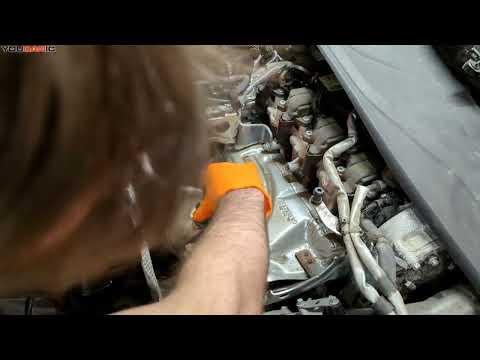







How to Replace the Upstream O2 Sensor (Sensor 1) on a 2016-2019 Mercedes-Benz GLC300 (Engine: Inline 4 2.0L)
Step-by-step pre-catalyst oxygen sensor replacement with tools list, parts, safety tips, and 40 Nm torque spec
How to Replace the Upstream O2 Sensor (Sensor 1) on a 2016-2019 Mercedes-Benz GLC300 (Engine: Inline 4 2.0L)
Step-by-step pre-catalyst oxygen sensor replacement with tools list, parts, safety tips, and 40 Nm torque spec for 2016, 2017, 2018, 2019


🔧 GLC300 - Upstream Oxygen Sensor Replacement
The upstream oxygen (O2) sensor measures oxygen in the exhaust before the catalytic converter so the engine computer can adjust fuel mixture. When it fails, you can get a check engine light, poor fuel economy, rough running, or failed emissions.
Difficulty Level: Intermediate | Estimated Time: 1.0-2.0 hours
Assumption: replacing the pre-catalyst sensor (Sensor 1) on the 2.0L turbo.
⚠️ Safety & Precautions
- ⚠️ Let the exhaust cool fully; the turbo/downpipe gets extremely hot.
- ⚠️ Support your GLC300 with jack stands; never rely on a floor jack alone.
- ⚠️ Avoid twisting the sensor harness; unplug it before turning the sensor.
- ⚠️ Disconnect the battery negative cable if working near the starter/alternator wiring.
- ⚠️ Wear eye protection; rust/dirt falls from the underbody.
🔧 Required Tools
You'll need the following tools for this repair:
- Safety glasses
- Mechanic gloves
- Floor jack (rated 3-ton minimum)
- Jack stands (rated 3-ton minimum)
- Wheel chocks
- 8mm socket
- 10mm socket
- Torx T25 bit socket
- Torx T30 bit socket
- E-socket set (E10, E12)
- Ratchet (3/8" drive)
- Extension set (3/8" drive)
- Swivel/universal joint (3/8" drive)
- Oxygen sensor socket 22mm (specialty)
- Torque wrench (10–80 Nm range)
- Trim clip remover tool
- Penetrating oil
- OBD2 scan tool
🔩 Required Parts
HowToo sells all the parts you need for this repair:
- Upstream oxygen sensor (pre-catalyst, Sensor 1) - Qty: 1
- Anti-seize compound (sensor-safe) - Qty: 1
- Replacement underbody shield fasteners/clips (assorted) - Qty: 1
📋 Before You Begin
- Park on level ground, shift to Park, and set the parking brake.
- Chock the rear wheels using wheel chocks.
- Let the engine/exhaust cool for at least 1 hour.
- If you’ll be reaching near the main wiring harness, disconnect the battery negative using a 10mm socket. (The negative cable is the “-” terminal.)
- Spray penetrating oil on the sensor threads (where it enters the exhaust) and let it soak 10–15 minutes.
🔨 Step-by-Step Instructions
Follow these steps in order:
Step 1: Raise and support the front of your GLC300
- Lift the front with a floor jack (rated 3-ton minimum) at the front center jack point.
- Set the vehicle onto jack stands (rated 3-ton minimum) at the factory support points.
- Give the vehicle a gentle shake to confirm it’s stable. Stable first, wrench second.
Step 2: Remove the lower engine/underbody shield
- Remove the undertray fasteners using a 8mm socket and Torx T25 bit socket (fastener types can be mixed).
- Pop any plastic clips using a trim clip remover tool.
- Lower the shield and set it aside.
Step 3: Locate the upstream (Sensor 1) oxygen sensor
- Look at the exhaust coming off the turbo/downpipe area.
- The upstream sensor is installed before the catalytic converter and has a wire harness leading to an electrical connector.
- If access is tight, use a ratchet (3/8" drive), extension set (3/8" drive), and swivel/universal joint (3/8" drive) to reach it.
Step 4: Unplug the oxygen sensor connector
- Follow the sensor wire to its connector on the body/engine harness.
- Release the connector lock tab using your fingers or a trim clip remover tool (do not pull on the wires).
- Free the harness from any clips so it can rotate freely during removal.
Step 5: Remove the upstream oxygen sensor
- Slide the oxygen sensor socket 22mm (specialty) over the sensor wire and onto the sensor hex.
- Use a ratchet (3/8" drive) with a swivel/universal joint (3/8" drive) and extension set (3/8" drive) as needed.
- Turn counterclockwise to loosen and remove the sensor.
- If it’s stuck, apply more penetrating oil and wait a few minutes. Don’t force it hot.
Step 6: Install the new upstream oxygen sensor
- Compare the old and new sensors (connector shape and wire length should match).
- If the new sensor threads are not pre-coated, apply a very small amount of anti-seize compound (sensor-safe) to the threads only (avoid the tip).
- Thread the sensor in by hand first to avoid cross-threading (damaging the bung threads).
- Tighten using the oxygen sensor socket 22mm (specialty) and torque wrench (10–80 Nm range).
- Torque to 40 Nm (30 ft-lbs)
Step 7: Route the harness and reconnect the connector
- Clip the harness back into its holders exactly like it was.
- Reconnect the plug until it clicks and locks.
- Make sure the harness is not touching the exhaust or heat shields.
Step 8: Reinstall the underbody shield and lower the vehicle
- Reinstall the undertray using a Torx T25 bit socket and 8mm socket.
- Replace any broken clips with replacement underbody shield fasteners/clips (assorted).
- Lower the vehicle from the jack stands (rated 3-ton minimum) using the floor jack (rated 3-ton minimum).
Step 9: Clear codes and verify the repair
- If you disconnected the battery, reconnect the negative cable using a 10mm socket.
- Use an OBD2 scan tool to clear stored fault codes.
- Start the engine and check for exhaust leaks (a sharp ticking near the sensor can indicate a leak).
✅ After Repair
- Road test 10–15 minutes and confirm the check engine light stays off.
- Use the OBD2 scan tool to confirm no O2 sensor or fuel trim codes return.
- Recheck that the harness is secured away from heat after the test drive.
- Fuel trims may stabilize after a short drive.
💰 DIY vs Shop Cost
Shop Cost: $350-$750 (parts + labor)
DIY Cost: $120-$300 (parts only)
You Save: $230-$450 by doing it yourself!
Shop labor rates vary but typically run $100-$150/hour. This repair takes a shop approximately 1.0-2.0 hours.
🎯 Ready to get started?
HowToo makes it easy: same-day/2-day shipping on every part, plus all the tools and specialty tools you need! Check out the parts and tools sections below to add everything to your cart.