









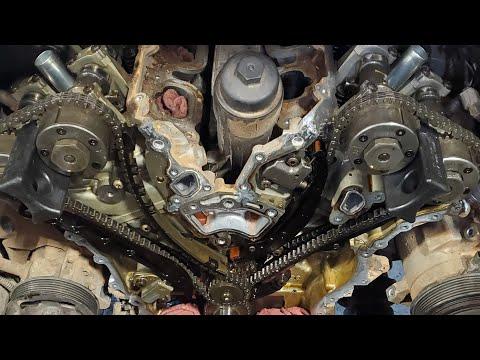







How to Replace the Timing Chain on a 2016 Ram ProMaster 1500 3.6L Pentastar
Step-by-step timing chain guide with required tools, parts list, TDC timing alignment, and torque specs for 2014, 2015, 2016, 2017, 2019
How to Replace the Timing Chain on a 2016 Ram ProMaster 1500 3.6L Pentastar
Step-by-step timing chain guide with required tools, parts list, TDC timing alignment, and torque specs for 2014, 2015, 2016, 2017, 2019


Assumption: Your ProMaster’s 3.6L uses a timing chain (not a timing belt). Steps below cover timing chain replacement on the 3.6L Pentastar.
🔧 ProMaster - Timing Chain Replacement
Your ProMaster’s 3.6L engine does not have a timing belt—its camshafts are driven by a timing chain system (chains, guides, and hydraulic tensioners). Replacing the chains is a major front-engine disassembly job; it’s usually done for chain noise, guide failure, or major oil/coolant contamination issues.
Difficulty Level: Advanced | Estimated Time: 10-16 hours
⚠️ Safety & Precautions
- ⚠️ Let the engine cool fully before draining coolant.
- ⚠️ Disconnect the negative battery terminal to prevent accidental cranking.
- ⚠️ Support the engine before removing any engine mount (use an engine support bar or a jack with a wood block).
- ⚠️ Keep fingers clear of pinch points when lowering/raising the engine.
- ⚠️ Do not rotate the crank/cams with the chain removed; valve timing can be lost.
🔧 Required Tools
You'll need the following tools for this repair:
- Safety glasses
- Nitrile gloves
- Floor jack (rated 3-ton minimum)
- Jack stands (rated 3-ton minimum)
- Wheel chocks
- 3/8" drive ratchet
- 1/2" drive breaker bar
- Torque wrench (10-150 ft-lbs)
- Torque angle gauge
- Socket set (8mm-21mm)
- Deep socket set (13mm-21mm)
- Torx bit set (T20-T50)
- E-Torx socket set (E10-E14)
- Serpentine belt tool (3/8" drive)
- Harmonic balancer puller kit
- Plastic trim clip removal tool
- Pry bar (12"-18")
- Flat plastic gasket scraper
- Drain pan (at least 10 quarts)
- Funnel
- Shop rags
- Camshaft holding/locking tool set (specialty)
- Crankshaft TDC locking pin/tool (specialty)
- Engine support bar (specialty)
🔩 Required Parts
HowToo sells all the parts you need for this repair:
- Timing chain kit (primary chain, secondary chains, guides, tensioners) - Qty: 1
- Front timing cover seal/gasket set - Qty: 1
- Front crankshaft seal - Qty: 1
- Crankshaft damper bolt (single-use) - Qty: 1
- RTV silicone sealant (OEM-spec) - Qty: 1
- Engine coolant (HOAT/OAT compatible for your ProMaster) - Qty: 2-3 gallons (mixed as required)
- Engine oil (5W-20) - Qty: 6 quarts
- Oil filter - Qty: 1
- Serpentine belt - Qty: 1 (recommended)
📋 Before You Begin
- Park on level ground, set the parking brake, and chock the rear wheels.
- Raise the front and support with jack stands under proper lift points.
- Disconnect the negative battery terminal using a 10mm socket.
- Plan to drain coolant and likely change oil (coolant/oil contamination is common during this job).
- TDC means “top dead center” of cylinder #1.
🔨 Step-by-Step Instructions
Follow these steps in order:
Step 1: Remove underbody access and prep for draining
- Use a floor jack (rated 3-ton minimum) and jack stands (rated 3-ton minimum) to safely support the front.
- Remove the lower splash shield using a socket set (8mm-21mm) and plastic trim clip removal tool.
- Place a drain pan (at least 10 quarts) under the radiator area.
Step 2: Drain coolant
- Open the coolant reservoir cap to release pressure.
- Drain coolant into the drain pan (at least 10 quarts) (method varies by radiator; use socket set (8mm-21mm) as needed for shields/access).
- Use shop rags to control spills.
Step 3: Remove intake ducting and front-of-engine accessories
- Remove intake ducting as needed using a socket set (8mm-21mm).
- Relieve belt tension using a serpentine belt tool (3/8" drive) and remove the belt.
- Remove obstructing accessory brackets/fasteners with a socket set (8mm-21mm) and E-Torx socket set (E10-E14).
Step 4: Support the engine and remove the mount (as required for access)
- Support the engine using an engine support bar (specialty). (This tool holds the engine from above so mounts can be removed safely.)
- Remove the mount/bracket hardware using a socket set (8mm-21mm) and torx bit set (T20-T50) as equipped.
- Use a pry bar (12"-18") only if needed, gently.
Step 5: Remove the crankshaft damper (harmonic balancer)
- Remove the crank bolt using a 1/2" drive breaker bar and socket set (8mm-21mm).
- Use a harmonic balancer puller kit to pull the damper straight off.
- Keep the puller centered to avoid damage.
Step 6: Remove the front timing cover
- Remove timing cover fasteners using a socket set (8mm-21mm) and E-Torx socket set (E10-E14).
- Carefully separate the cover using a pry bar (12"-18") in designated pry points only.
- Clean all mating surfaces with a flat plastic gasket scraper and shop rags.
Step 7: Set cylinder #1 to TDC and lock timing
- Rotate the engine by hand using a socket set (8mm-21mm) on the crank until timing marks align at TDC.
- Install the crankshaft TDC locking pin/tool (specialty) to prevent the crank from moving.
- Install the camshaft holding/locking tool set (specialty) to keep cams from snapping out of position.
Step 8: Remove timing chain tensioners, guides, and chains
- Remove the hydraulic tensioners using a socket set (8mm-21mm).
- Remove guides using a socket set (8mm-21mm).
- Remove the primary and secondary chains carefully and keep note of routing.
Step 9: Install new chains and align timing marks
- Install new guides using a socket set (8mm-21mm).
- Route the new chains exactly like the originals.
- Align the colored chain links with the sprocket marks (crank and cam phasers) per the kit instructions.
- Install new tensioners using a socket set (8mm-21mm), then release/activate them per design.
Step 10: Torque critical fasteners
- Tighten timing cover bolts using a torque wrench (10-150 ft-lbs): Torque to 12 Nm (9 ft-lbs).
- Tighten water pump bolts (if removed) using a torque wrench (10-150 ft-lbs): Torque to 12 Nm (9 ft-lbs).
- Install the crank damper and NEW crank bolt using a torque wrench (10-150 ft-lbs) and torque angle gauge: Torque to 250 Nm (184 ft-lbs) + 90°.
- If any spec differs, follow OEM spec.
Step 11: Reseal and reinstall the front cover
- Apply RTV silicone sealant (OEM-spec) at the required seams (especially where the timing cover meets other housings) before installation.
- Install a new front crankshaft seal (usually pressed into the cover) using appropriate gentle pressure and alignment.
- Reinstall the timing cover and hand-start all bolts to avoid cross-threading.
- Tighten in an even pattern using a torque wrench (10-150 ft-lbs): Torque to 12 Nm (9 ft-lbs).
Step 12: Reassemble accessories, belt, and mounts
- Reinstall brackets/accessories using a socket set (8mm-21mm) and E-Torx socket set (E10-E14).
- Reinstall the engine mount/bracket using a socket set (8mm-21mm) and tighten with a torque wrench (10-150 ft-lbs) to OEM specs for the mount hardware.
- Install the serpentine belt using a serpentine belt tool (3/8" drive).
- Reinstall the splash shield using a socket set (8mm-21mm) and plastic trim clip removal tool.
Step 13: Refill fluids
- Refill coolant using a funnel with the correct engine coolant.
- Change engine oil and filter using a socket set (8mm-21mm), then refill with engine oil (5W-20).
- Reconnect the battery using a 10mm socket.
✅ After Repair
- Start the engine and listen for abnormal rattles. A brief noise for 1-2 seconds can happen as tensioners fill with oil.
- Check for oil leaks around the timing cover and crank seal.
- Verify coolant level after the engine warms up, then top off as needed.
- Test drive gently, then recheck for leaks and fluid levels.
💰 DIY vs Shop Cost
Shop Cost: $1,800-$3,500 (parts + labor)
DIY Cost: $350-$900 (parts only)
You Save: $900-$2,600 by doing it yourself!
Shop labor rates vary but typically run $100-$150/hour. This repair takes a shop approximately 10-16 hours.
🎯 Ready to get started?
HowToo makes it easy: same-day/2-day shipping on every part, plus all the tools and specialty tools you need! Check out the parts and tools sections below to add everything to your cart.