









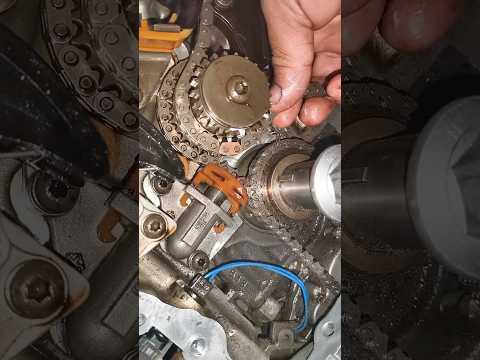



How to Replace the Timing Chain on a 2016-2019 Jeep Grand Cherokee 3.6L V6 (Engine: V8 5.7L)
Step-by-step guide with required tools, parts, safety tips, timing setup, and leak checks
How to Replace the Timing Chain on a 2016-2019 Jeep Grand Cherokee 3.6L V6 (Engine: V8 5.7L)
Step-by-step guide with required tools, parts, safety tips, timing setup, and leak checks for 2016, 2017, 2018, 2019


🔧 Grand Cherokee - Timing Drive Inspection
Your Grand Cherokee’s 3.6L V6 does not use a timing belt. It uses an internal timing chain, which is designed to last much longer and is not a routine maintenance item like a belt.
If you are hearing rattling, have cam/crank timing codes, or suspect chain wear, the repair is an advanced internal-engine job involving the front timing cover, cam phasers, chain guides, and tensioners.
Difficulty Level: Advanced | Estimated Time: 8-12 hours
⚠️ Safety & Precautions
- ⚠️ Disconnect the negative battery cable before working near the starter, alternator, or front engine wiring.
- ⚠️ Let the engine cool fully before draining coolant or removing front engine components.
- ⚠️ Support the vehicle securely with jack stands if raising it. Never rely on a jack alone.
- ⚠️ Timing chain work requires exact engine timing. Incorrect timing can cause poor running, no-start, or engine damage.
- ⚠️ A scan tool may be needed after repair to clear cam/crank correlation codes and verify cam timing data.
🔧 Required Tools
You'll need the following tools for this repair:
- 8mm socket
- 10mm socket
- 13mm socket
- 15mm socket
- 16mm socket
- 18mm socket
- 21mm socket
- 3/8-inch ratchet
- 1/2-inch breaker bar
- 1/2-inch torque wrench
- 3/8-inch torque wrench
- E-Torx socket set
- Torx T30 socket
- Torx T40 socket
- Serpentine belt tool
- Harmonic balancer puller (specialty)
- Crankshaft holding tool (specialty)
- Camshaft timing holding tools (specialty)
- Plastic trim clip remover
- Flathead screwdriver
- Gasket scraper plastic blade
- Drain pan 2-gallon minimum
- Floor jack rated 3-ton minimum
- Jack stands rated 3-ton minimum
- Wheel chocks
- Shop towels
- Safety glasses
- Nitrile gloves
- OBD-II scan tool
🔩 Required Parts
HowToo sells all the parts you need for this repair:
- Primary timing chain - Qty: 1
- Secondary timing chains - Qty: 2
- Timing chain guides - Qty: 1 set
- Timing chain tensioners - Qty: 1 set
- Front timing cover gasket set - Qty: 1
- Valve cover gasket set - Qty: 1
- Crankshaft front seal - Qty: 1
- RTV engine sealant - Qty: 1 tube
- Engine coolant - Qty: As needed
- Engine oil - Qty: As needed
- Oil filter - Qty: 1
- Serpentine belt - Qty: 1
📋 Before You Begin
- 🅿️ Park your Grand Cherokee on level ground, shift to Park, and set the parking brake.
- 🛞 Place wheel chocks behind the rear wheels.
- 🔋 Use a 10mm socket to disconnect the negative battery cable.
- 🌡️ Make sure the engine is completely cool before opening the cooling system.
- 📸 Take photos before unplugging connectors or moving hoses. This helps during reassembly.
- 🧰 A harmonic balancer puller removes the crank pulley without prying on it.
- 🧰 Camshaft timing holding tools lock the camshafts so timing stays aligned.
🔨 Step-by-Step Instructions
Follow these steps in order:
Step 1: Disconnect Battery and Raise Front
- Use a 10mm socket to loosen the negative battery terminal.
- Move the cable away from the battery post so it cannot spring back.
- Use a floor jack rated 3-ton minimum to lift the front of your Grand Cherokee.
- Place jack stands rated 3-ton minimum under the proper front support points.
- Shake gently to confirm stability.
Step 2: Remove Front Underbody Shields
- Use an 8mm socket and plastic trim clip remover to remove the lower splash shield fasteners.
- Lower the shield and set the fasteners aside in order.
- Use labeled bags for bolts.
Step 3: Drain Coolant
- Place a drain pan 2-gallon minimum under the radiator drain area.
- Use pliers or a flathead screwdriver as needed to open the drain or remove the lower radiator hose clamp.
- Allow coolant to drain fully.
- Dispose of used coolant safely. It is poisonous to people and animals.
Step 4: Remove Engine Appearance Cover and Intake Tube
- Pull the engine cover upward by hand to release the rubber mounts.
- Use an 8mm socket to loosen the intake tube clamps.
- Disconnect any breather hose clips by hand.
- Remove the intake tube and set it aside.
Step 5: Remove Serpentine Belt
- Take a photo of the belt routing before removal.
- Use a serpentine belt tool on the belt tensioner.
- Rotate the tensioner to release belt tension.
- Slide the belt off the pulleys and remove it.
- Do not place fingers between pulleys.
Step 6: Remove Cooling Fan and Front Accessories as Needed
- Use a 10mm socket to remove cooling fan shroud bolts.
- Disconnect fan electrical connectors by pressing the locking tabs.
- Lift the fan assembly straight up and out carefully.
- Use 13mm and 15mm sockets to move front accessory brackets if they block timing cover access.
- Do not disconnect A/C refrigerant lines.
Step 7: Remove Valve Covers
- Use a 10mm socket to remove ignition coil bolts.
- Unplug coil connectors by pressing the release tabs.
- Pull coils straight upward and set them aside in order.
- Use a 10mm socket to remove valve cover bolts.
- Lift each valve cover off carefully.
- Remove old valve cover gaskets by hand.
Step 8: Remove Harmonic Balancer
- Install the crankshaft holding tool to keep the crankshaft from turning.
- Use a 21mm socket and 1/2-inch breaker bar to loosen the crankshaft pulley bolt.
- Use a harmonic balancer puller to remove the crank pulley straight off the crankshaft.
- Do not pry against the timing cover.
Step 9: Remove Front Timing Cover
- Use 8mm, 10mm, 13mm, and 15mm sockets to remove timing cover bolts.
- Use a plastic gasket scraper to gently separate the cover at the sealant areas.
- Remove the timing cover straight forward.
- Use shop towels to keep debris out of the engine.
Step 10: Set Engine to Timing Position
- Use a 21mm socket on the crankshaft bolt to rotate the engine clockwise only.
- Align the crankshaft and camshaft timing marks according to the marked chain links and sprocket reference marks.
- Install the camshaft timing holding tools to lock the camshafts in position.
- Do not rotate the crankshaft or camshafts once the chains are removed.
Step 11: Remove Timing Chain Tensioners and Guides
- Use a 10mm socket or Torx T30 socket, depending on fastener location, to remove tensioner bolts.
- Remove the timing chain tensioners.
- Use a 10mm socket and Torx T40 socket to remove timing guide bolts.
- Remove the timing chain guides.
- A tensioner keeps the chain tight so it cannot jump teeth.
Step 12: Remove Timing Chains
- Slide the primary chain off the crankshaft and intermediate sprockets.
- Remove both secondary chains from the camshaft sprockets.
- Keep old chains nearby until the new chains are installed for comparison.
- Work slowly and keep marks visible.
Step 13: Install New Timing Chains
- Match the colored chain links to the crankshaft and camshaft timing marks.
- Install the secondary timing chains first, then the primary timing chain.
- Use the camshaft timing holding tools to keep the cams from moving.
- Install new timing chain guides by hand first to avoid cross-threading.
- Use a torque wrench to tighten guide and tensioner fasteners to the current Jeep service specification for the specific fastener size and location.
Step 14: Release Tensioners and Verify Timing
- Use needle-nose pliers or the tensioner release pin method supplied with the new tensioners.
- Release each timing chain tensioner so it applies pressure to the guide.
- Use a 21mm socket to rotate the crankshaft clockwise two full turns by hand.
- Recheck that timing marks return to their correct reference positions.
- If anything binds, stop immediately and recheck timing.
Step 15: Clean and Reseal Timing Cover
- Use a plastic gasket scraper to remove old sealant from the timing cover and engine block.
- Wipe the sealing surfaces clean with shop towels.
- Install a new crankshaft front seal into the timing cover.
- Apply RTV engine sealant only at the factory-style sealing areas and cover joints.
- Too much RTV can cause leaks.
Step 16: Reinstall Timing Cover
- Position the timing cover straight onto the engine.
- Start all timing cover bolts by hand.
- Use 8mm, 10mm, 13mm, and 15mm sockets to snug the bolts in stages.
- Use a torque wrench to tighten timing cover fasteners to the current Jeep service specification for each bolt size and location.
Step 17: Reinstall Harmonic Balancer
- Align the harmonic balancer with the crankshaft.
- Use the proper installer or crankshaft bolt method specified for the 3.6L engine to seat it fully.
- Use the crankshaft holding tool and 21mm socket to tighten the crankshaft pulley bolt.
- Torque to Jeep’s current crankshaft bolt specification for the 3.6L V6.
Step 18: Reinstall Valve Covers
- Install new valve cover gaskets into the valve covers.
- Place the valve covers onto the cylinder heads.
- Use a 10mm socket to start all bolts by hand.
- Use a 3/8-inch torque wrench to tighten valve cover bolts evenly.
- Torque to Jeep’s current valve cover bolt specification.
Step 19: Reinstall Accessories, Fan, and Belt
- Use 13mm and 15mm sockets to reinstall accessory brackets removed earlier.
- Use a 10mm socket to reinstall the cooling fan assembly.
- Reconnect cooling fan electrical connectors until they click.
- Route the new serpentine belt using your photo.
- Use the serpentine belt tool to rotate the tensioner and slide the belt into place.
Step 20: Refill Fluids and Reconnect Battery
- Refill the cooling system with the correct engine coolant.
- Check engine oil level and top off as needed.
- If coolant or debris entered the oil, replace the engine oil and oil filter before starting.
- Use a 10mm socket to reconnect the negative battery cable.
- Torque battery terminal snugly; do not overtighten.
Step 21: First Start Check
- Start the engine and let it idle.
- Listen for abnormal chain rattle, knocking, or misfire.
- Watch for coolant or oil leaks around the timing cover and valve covers.
- Use an OBD-II scan tool to check for camshaft/crankshaft correlation codes.
- Shut the engine off immediately if it runs rough or makes loud mechanical noise.
✅ After Repair
- ✅ Let the engine reach operating temperature while checking for leaks.
- ✅ Top off coolant after air purges from the system.
- ✅ Use an OBD-II scan tool to clear stored fault codes.
- ✅ Road test gently for 10-15 minutes, then recheck oil and coolant levels.
- ✅ Reinspect the timing cover, valve covers, and lower engine area after the road test.
💰 DIY vs Shop Cost
Shop Cost: $2,200-$3,800 parts + labor
DIY Cost: $450-$1,000 parts only
You Save: $1,750-$2,800 by doing it yourself!
Shop labor rates vary but typically run $100-$150/hour. This repair takes a shop approximately 8-12 hours.
🎯 Ready to get started?
HowToo makes it easy: same-day/2-day shipping on every part, plus all the tools and specialty tools you need! Check out the parts and tools sections below to add everything to your cart.
Guide for Engine Timing Chain replace for these Jeep vehicles
| Year Make Model | Sub Model | Engine | Body Style |
|---|---|---|---|
| 2019 Jeep Grand Cherokee | - | V6 3.6L | - |
| 2019 Jeep Grand Cherokee | - | V6 3.0L | - |
| 2019 Jeep Grand Cherokee | - | V8 5.7L | - |
| 2019 Jeep Grand Cherokee | - | V8 6.4L | - |
| 2019 Jeep Grand Cherokee | - | V8 6.2L | - |
| 2018 Jeep Grand Cherokee | - | V6 3.6L | - |
| 2018 Jeep Grand Cherokee | - | V6 3.0L | - |
| 2018 Jeep Grand Cherokee | - | V8 5.7L | - |
| 2018 Jeep Grand Cherokee | - | V8 6.4L | - |
| 2018 Jeep Grand Cherokee | - | V8 6.2L | - |
| 2017 Jeep Grand Cherokee | - | V6 3.6L | - |
| 2017 Jeep Grand Cherokee | - | V6 3.0L | - |
| 2017 Jeep Grand Cherokee | - | V8 5.7L | - |
| 2017 Jeep Grand Cherokee | - | V8 6.4L | - |
| 2016 Jeep Grand Cherokee | - | V6 3.6L | - |
| 2016 Jeep Grand Cherokee | - | V6 3.0L | - |
| 2016 Jeep Grand Cherokee | - | V8 5.7L | - |
| 2016 Jeep Grand Cherokee | - | V8 6.4L | - |