
















How to Replace the Timing Belt on a 2013 Subaru Forester (2.5L Turbo)
Step-by-step DIY guide with tools list, parts, timing mark setup, and key torque specs for 2009, 2010, 2011, 2012, 2013
How to Replace the Timing Belt on a 2013 Subaru Forester (2.5L Turbo)
Step-by-step DIY guide with tools list, parts, timing mark setup, and key torque specs for 2009, 2010, 2011, 2012, 2013


🔧 Forester - Timing Belt Replacement
Your Forester’s turbo 2.5L uses a timing belt to keep the crankshaft and camshafts perfectly synchronized. Replacing it on schedule prevents severe engine damage if the belt, tensioner, or an idler bearing fails.
Difficulty Level: Advanced | Estimated Time: 4-7 hours
⚠️ Safety & Precautions
- ⚠️ Work on a cold engine; hot coolant and turbo parts can burn you.
- ⚠️ Support the vehicle with jack stands; never rely on a jack.
- ⚠️ Do not rotate the crank or cams with the belt removed unless instructed; valve timing can slip.
- ⚠️ Keep fingers clear of the belt path when releasing the tensioner.
- ⚠️ Battery disconnect is recommended before starting.
🔧 Required Tools
You'll need the following tools for this repair:
- Safety glasses
- Nitrile gloves
- Floor jack (rated 3-ton minimum)
- Jack stands (rated 3-ton minimum)
- Wheel chocks
- 3/8" drive ratchet
- 1/2" drive breaker bar
- 1/2" drive torque wrench (20-200 ft-lbs)
- 3/8" drive torque wrench (in-lb or low ft-lb range)
- Socket set (8mm-22mm)
- 10mm socket
- 12mm socket
- 14mm socket
- 22mm socket
- Extensions (3" and 6")
- Phillips screwdriver
- Flat trim tool
- Serpentine belt tool or long 1/2" ratchet
- Crank pulley holding tool (specialty)
- Harmonic balancer puller (specialty)
- Pliers
- Drain pan (at least 2-gallon)
- Funnel
- Shop rags
- Paint marker
🔩 Required Parts
HowToo sells all the parts you need for this repair:
- Timing belt - Qty: 1
- Timing belt hydraulic tensioner - Qty: 1
- Timing belt idler pulley set - Qty: 1
- Water pump with gasket/O-ring - Qty: 1
- Thermostat with gasket - Qty: 1
- Coolant (Subaru-compatible long-life) - Qty: 2 gallons
- Accessory drive belts - Qty: 2
- Radiator drain plug gasket - Qty: 1
📋 Before You Begin
- Park on level ground, set the parking brake, and chock the rear wheels.
- Disconnect the negative battery cable using a 10mm socket.
- Raise the front and support it on jack stands.
- Remove the lower splash shield using a 10mm socket and a flat trim tool.
- Pro tip: Take photos before each removal step.
🔨 Step-by-Step Instructions
Follow these steps in order:
Step 1: Remove the top-mounted intercooler
- Loosen the intercooler hose clamps with a Phillips screwdriver or 8mm socket (whichever your clamps use).
- Remove the intercooler mounting bolts with a 12mm socket.
- Lift the intercooler out carefully and set it aside.
- Pro tip: Cover open hoses with clean rags.
Step 2: Drain the coolant
- Place a drain pan (at least 2-gallon) under the radiator drain.
- Open the radiator drain using a pliers if needed and remove the radiator cap by hand.
- Let coolant fully drain, then close the drain.
Step 3: Remove the radiator fans for working room
- Unplug the fan connectors by hand.
- Remove fan bolts using a 10mm socket.
- Lift both fan assemblies straight up and out.
Step 4: Remove accessory (drive) belts
- Loosen the belt adjuster/lock hardware with the appropriate 12mm socket and 14mm socket.
- Back off tension until belts slip off the pulleys.
- Remove both belts and set aside (replacement is recommended).
Step 5: Remove the crank pulley (harmonic balancer)
- Install the crank pulley holding tool (specialty) to keep the crank from turning.
- Remove the crank bolt using a 22mm socket and 1/2" breaker bar.
- If the pulley is stuck, use a harmonic balancer puller (specialty) to remove it.
- Set the pulley aside.
Step 6: Remove the timing belt covers
- Remove the plastic timing covers using a 10mm socket with extensions (3" and 6").
- Keep bolts grouped by cover section so they go back in the same place.
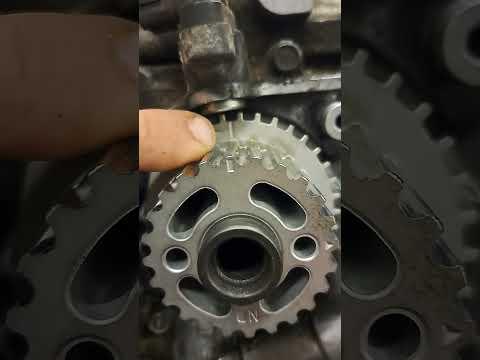
Step 7: Set engine to timing marks (Top Dead Center reference)
- Turn the crank clockwise using a 22mm socket and 1/2" ratchet until the timing marks line up on the crank sprocket and both cam sprockets.
- Use a paint marker to add your own “extra” alignment marks on the sprockets and old belt.
- Pro tip: Only rotate clockwise to avoid slack issues.
Step 8: Remove the timing belt tensioner and old belt
- Remove the tensioner mounting bolts using a 12mm socket.
- Remove the belt carefully by hand, keeping an eye on cam sprockets so they don’t jump.
- Remove the idler pulleys using a 12mm socket.
- Install the new idlers and tighten to Torque to 39 Nm (29 ft-lbs).
- Pro tip: An idler is a guide pulley for the belt.
Step 9: Replace the water pump and thermostat (recommended while you’re here)
- Remove water pump bolts using a 10mm socket.
- Remove the pump and clean the mating surface with a shop rag.
- Install the new water pump with its gasket/O-ring and tighten bolts evenly to Torque to 10 Nm (7 ft-lbs).
- Replace the thermostat and gasket (typically in the water pump housing) using a 10mm socket, then tighten to Torque to 18 Nm (13 ft-lbs).
Step 10: Install the new timing belt
- Confirm crank and cam timing marks are still aligned (use your paint marker marks as a double-check).
- Route the new belt in the correct direction (follow belt arrows/marks if provided), keeping the belt tight on the non-tensioned side.
- Install the new hydraulic tensioner but do not pull the pin yet; tighten mounting bolts to Torque to 39 Nm (29 ft-lbs) using a 12mm socket and torque wrench.
Step 11: Tension the belt and verify timing
- Pull the tensioner retaining pin straight out by hand to apply belt tension.
- Rotate the engine clockwise two full turns using a 22mm socket and 1/2" ratchet.
- Re-check that all timing marks line up perfectly.
- If any mark is off, stop and correct it before reassembly.
Step 12: Reinstall timing covers and crank pulley
- Reinstall timing covers using a 10mm socket (snug; do not overtighten plastic covers).
- Reinstall the crank pulley.
- Install and tighten the crank bolt using a 22mm socket, crank pulley holding tool (specialty), and torque wrench to Torque to 177 Nm (130 ft-lbs).
Step 13: Reinstall accessory belts, fans, and intercooler
- Install new accessory belts and set tension using a 12mm socket and 14mm socket.
- Reinstall radiator fans using a 10mm socket and reconnect the electrical plugs.
- Reinstall the intercooler using a 12mm socket, then tighten hose clamps with a Phillips screwdriver or 8mm socket.
Step 14: Refill and bleed coolant
- Refill the radiator with coolant (Subaru-compatible long-life) using a funnel.
- Start the engine and let it warm up with the heater set to hot.
- Top off coolant as air burps out, then install the radiator cap.
- Fill the overflow bottle to the proper level.
✅ After Repair
- Check for coolant leaks around the water pump and hoses.
- Listen for abnormal squeals/whines (a misrouted belt or bad idler will often make noise).
- Verify the engine idles smoothly and the check engine light stays off.
- After a full heat soak and cool down, re-check coolant level and top off if needed.
💰 DIY vs Shop Cost
Shop Cost: $1,100-$1,800 (parts + labor)
DIY Cost: $250-$650 (parts only)
You Save: $450-$1,550 by doing it yourself!
Shop labor rates vary but typically run $100-$150/hour. This repair takes a shop approximately 4-6 hours.
🎯 Ready to get started?
HowToo makes it easy: same-day/2-day shipping on every part, plus all the tools and specialty tools you need! Check out the parts and tools sections below to add everything to your cart.