









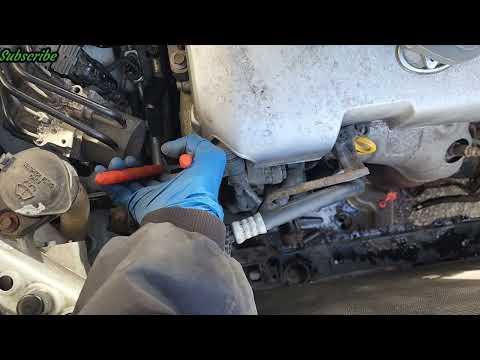






How to Replace the Thermostat on a 2020-2022 Toyota Highlander 3.5L V6 (Engine: V6 3.5L)
Step-by-step DIY thermostat replacement with tools, parts list, torque specs, safety tips, and bleeding procedure
How to Replace the Thermostat on a 2020-2022 Toyota Highlander 3.5L V6 (Engine: V6 3.5L)
Step-by-step DIY thermostat replacement with tools, parts list, torque specs, safety tips, and bleeding procedure for 2020, 2021, 2022


🔧 Highlander - Thermostat Replacement
You’ll be draining some coolant, removing the thermostat housing, swapping the thermostat, then refilling and bleeding the cooling system. On your Highlander this is an engine-front job, but space is a bit tight, so take your time.
Difficulty Level: Intermediate | Estimated Time: 2–3 hours
⚠️ Safety & Precautions
- 🛑 Always work on a completely cold engine; hot coolant can cause severe burns.
- 🛑 Support the vehicle with jack stands if you lift it; never rely only on a jack.
- 🛑 Coolant is poisonous to people and animals; avoid spills and clean any immediately.
- 🛑 Keep tools and hands clear of the cooling fan; it can start automatically with the key ON.
- 🛑 Disconnect the negative battery cable if you’re worried about accidental fan start or short circuits.
- ⚠️ Avoid getting coolant on drive belts or electrical connectors; wipe off any splashes right away.
🔧 Required Tools
You'll need the following tools for this repair:
- Floor jack (rated 3-ton minimum)
- Jack stands (rated 3-ton minimum)
- Wheel chocks
- 10mm socket
- 12mm socket
- 1/4" drive ratchet
- 3/8" drive ratchet
- 3" socket extension
- 6" socket extension
- Torque wrench (inch-lb, 40–200 in-lb range)
- Torque wrench (ft-lb, 10–80 ft-lb range)
- Flathead screwdriver (medium)
- Hose clamp pliers (specialty)
- Trim clip removal tool (specialty)
- Drain pan (at least 10-liter capacity)
- Small funnel
- Shop rags
- Plastic scraper or Scotch-Brite pad (non-metallic)
- Work light
- Nitrile gloves
- Safety glasses
🔩 Required Parts
HowToo sells all the parts you need for this repair:
- Thermostat (correct for 3.5L V6) - Qty: 1
- Thermostat housing gasket or seal - Qty: 1
- Toyota Super Long Life Coolant (pink, premixed 50/50) - Qty: 2 gallons
- New hose clamp (if original is damaged) - Qty: 1–2
- Shop towels - Qty: as needed
- Cooling system cleaner (optional) - Qty: 1
📋 Before You Begin
- 🚗 Park the Highlander on level ground, shift to Park, set the parking brake, and turn the engine OFF.
- 🧊 Let the engine cool for at least 1–2 hours until the upper radiator hose is cold to the touch.
- 🔌 If you want extra safety, disconnect the negative battery terminal using a 10mm socket so the cooling fan cannot start.
- 📱 Note any radio or seat settings you may want to reset later; disconnecting the battery can clear some memory settings.
- 🧺 Place a large drain pan under the front of the vehicle before opening anything in the cooling system.
🔨 Step-by-Step Instructions
Follow these steps in order:
Step 1: Lift and secure the front (if needed)
- Use the floor jack under the front center jacking point (behind the front bumper crossmember) to raise the front of the vehicle slightly.
- Place jack stands under the proper front pinch welds or frame points and lower the vehicle onto them with the floor jack.
- Place wheel chocks behind the rear wheels.
- If you can reach the drain and thermostat from the top, minimal lifting is fine.
Step 2: Remove the engine cover
- The engine cover is the large plastic cover on top of the engine.
- Pull up firmly at the corners with your hands; it is held by rubber grommets, no tools needed.
- Lift it away and set it aside somewhere clean.
Step 3: Remove the lower splash shield (if blocking access)
- Position the drain pan under the radiator area.
- Use the 10mm socket and ratchet to remove bolts holding the front lower splash shield.
- Use the trim clip removal tool to pop out any plastic clips.
- Lower the splash shield and set it aside; this gives you better access to the radiator drain and lower hoses.
Step 4: Partially drain the coolant
- Place the drain pan directly under the radiator drain cock on the bottom of the radiator (usually on the passenger side).
- Use your fingers or a flathead screwdriver (if there is a slot) to slowly open the drain cock.
- Open the coolant reservoir cap and, if cool, the radiator cap to let air in so coolant flows more easily.
- Drain about 1–1.5 gallons; you don’t need to empty the entire system, just enough to drop the level below the thermostat housing.
- Close the drain cock by hand snugly; do not overtighten. Torque is hand-tight plus a small nudge (no specific spec; it’s plastic).
Step 5: Locate the thermostat housing
- The thermostat housing is on the front of the engine, near the passenger side, where a larger coolant hose connects to the engine block.
- Follow the lower radiator hose or a main coolant hose from the radiator toward the engine—where it meets the engine is usually the thermostat housing.
- Use the work light to clearly see the bolts and hose connection.
Step 6: Remove the hose from the thermostat housing
- Put the drain pan under the thermostat housing area in case some coolant spills.
- Use hose clamp pliers to squeeze and slide the spring clamp away from the end of the hose. (Hose clamp pliers are special pliers designed to grab the tabs on spring hose clamps.)
- Gently twist the hose end with your hand to break it loose; avoid using sharp tools on the hose.
- Pull the hose off the thermostat housing nipple and tuck it aside without bending it sharply.
Step 7: Remove the thermostat housing
- Use the 10mm socket, extension, and ratchet to remove the bolts holding the thermostat housing to the engine.
- Keep track of bolt length and position; lay them out in order on a clean rag.
- Gently wiggle and pull the housing away from the engine. Some coolant may drip into the pan.
- Do not pry hard on the aluminum surfaces; they can crack.
Step 8: Remove the old thermostat and clean surfaces
- Note the orientation of the thermostat (which side faces the engine and where any jiggle valve/bleed hole is positioned).
- Pull the old thermostat straight out; if stuck, gently tap it with the handle of the flathead screwdriver.
- Use a plastic scraper or Scotch-Brite pad to clean any old gasket material or buildup from the engine and thermostat housing sealing surfaces.
- Wipe both surfaces clean with shop rags until smooth and dry. Do not gouge the metal.
Step 9: Install the new thermostat and gasket
- Place the new gasket or seal on the thermostat or in the housing as designed (some are integral to the thermostat).
- Install the new thermostat in the same orientation as the old one. If it has a small bleed hole or jiggle valve, position it near the top (about the 12 o’clock position) to help air escape.
- Carefully align the thermostat housing onto the engine, making sure the gasket stays in place.
- Install the housing bolts by hand a few turns to avoid cross-threading.
- Use the 10mm socket and inch-lb torque wrench to tighten the bolts evenly in a crisscross pattern to 10 N·m (89 in-lb).
Step 10: Reattach the hose
- Slide the hose back onto the thermostat housing nipple until it seats fully against the stop.
- Use hose clamp pliers to move the clamp back over the hose and onto the proper clamping area.
- Make sure the clamp is centered over the raised bead on the nipple so it seals well.
Step 11: Reinstall splash shield and lower the vehicle
- Lift the lower splash shield back into place.
- Install its bolts with the 10mm socket and ratchet, and push in the plastic clips with your fingers or trim clip removal tool if needed.
- Use the floor jack to raise the vehicle slightly, remove the jack stands, then lower the vehicle to the ground.
Step 12: Refill the cooling system
- Make sure the radiator drain cock is closed.
- Using a funnel, slowly fill the radiator with Toyota Super Long Life Coolant (pink, premixed 50/50) until full.
- Fill the coolant reservoir to the “FULL” mark.
- Leave the radiator cap off for the bleeding process at first.
Step 13: Bleed air from the system
- Reconnect the negative battery terminal with a 10mm socket if you removed it. Torque to 5 N·m (44 in-lb) (snug, not overtight).
- Set the cabin heater to maximum heat and fan speed (front and rear heaters ON if equipped).
- Start the engine and let it idle. Watch the coolant level in the radiator opening; as the thermostat opens, the level may drop.
- Add more coolant as needed to keep the radiator full while the engine warms up.
- Gently squeeze the upper radiator hose (with gloves) to help push out trapped air.
- Once you see a steady flow of coolant with no big air bubbles and the upper hose feels hot, turn the engine OFF.
- Top off the radiator if needed and install the radiator cap fully.
- Check and adjust the coolant reservoir level to the “FULL” line.
Step 14: Reinstall the engine cover and clean up
- Align the engine cover over its mounting posts and press down firmly at the corners until it snaps into place.
- Wipe up any spilled coolant with shop rags.
- Pour the used coolant from the drain pan into sealed containers for proper recycling—never pour it on the ground.
✅ After Repair
- 🔁 Start the engine and let it reach normal operating temperature while parked. Watch the temperature gauge; it should stabilize in the normal middle range, not keep climbing.
- 🌡️ Feel for strong, steady heat from the cabin heater; that indicates good coolant flow and air fully bled.
- 🔍 Check around the thermostat housing, hose connections, and under the radiator for leaks while the engine is running and again after shutting it off.
- 🧊 After the engine cools completely (later the same day or next morning), recheck the coolant reservoir and top it up to the “FULL” mark if it dropped.
- 🚗 Over the next few short drives, keep an eye on the temperature gauge and check under the vehicle for any new drips.
💰 DIY vs Shop Cost
Shop Cost: $350–$550 (parts + labor)
DIY Cost: $70–$140 (parts + coolant)
You Save: $210–$480 by doing it yourself!
Shop labor rates typically run $100–$150/hour. This repair takes a shop about 1.5–2.0 hours.
🎯 Ready to get started?
HowToo makes it easy: same-day/2-day shipping on every part, plus all the tools and specialty tools you need! Check out the parts and tools sections above to add everything to your cart.
Guide for Engine Coolant Thermostat replace for these Toyota vehicles
| Year Make Model | Sub Model | Engine | Body Style |
|---|---|---|---|
| 2022 Toyota Highlander | - | V6 3.5L | - |
| 2021 Toyota Highlander | - | V6 3.5L | - |
| 2020 Toyota Highlander | - | V6 3.5L | - |