









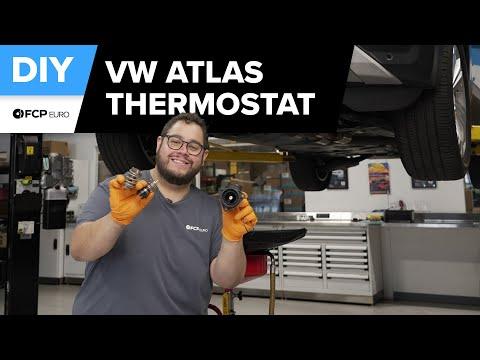







How to Replace the Thermostat on a 2018 Volkswagen Passat (Coolant Drain & Bleed Guide)
Step-by-step thermostat housing replacement with tools, parts list, coolant refill/bleeding tips, and leak checks for 2013, 2014, 2015, 2016, 2017, 2018
How to Replace the Thermostat on a 2018 Volkswagen Passat (Coolant Drain & Bleed Guide)
Step-by-step thermostat housing replacement with tools, parts list, coolant refill/bleeding tips, and leak checks for 2013, 2014, 2015, 2016, 2017, 2018


🔧 Passat - Thermostat Replacement
On your Passat, the thermostat controls coolant flow to keep engine temperature stable. Replacing it typically means draining coolant and removing the thermostat housing/assembly, then refilling and bleeding the cooling system to prevent overheating.
Difficulty Level: Intermediate | Estimated Time: 2.0-4.0 hours
⚠️ Safety & Precautions
- ⚠️ Work only on a fully cool engine; hot coolant can cause severe burns.
- ⚠️ Support the car with jack stands; never work under a car held by a jack.
- ⚠️ Coolant is toxic—capture all coolant and dispose of it properly.
- ⚠️ Keep coolant off belts and electrical connectors; clean spills immediately.
- ⚠️ Battery disconnect is usually not required unless you unplug major electrical connectors and want extra safety.
🔧 Required Tools
You'll need the following tools for this repair:
- Floor jack (rated 2-ton minimum)
- Jack stands (pair, rated 2-ton minimum)
- Wheel chocks
- Safety glasses
- Nitrile gloves
- Drain pan (10-liter minimum)
- Ratchet (3/8")
- Extension (6")
- Socket set (8mm, 10mm, 13mm)
- Torx bit socket set (T25, T30)
- Triple-square bit set (M10)
- Torque wrench (5-60 Nm range)
- Hose clamp pliers (specialty)
- Pick tool (small hook)
- Plastic trim tool
- Coolant funnel
- Shop rags
- Flashlight
🔩 Required Parts
HowToo sells all the parts you need for this repair:
- Thermostat assembly (thermostat with housing) - Qty: 1
- Thermostat seal / O-ring (if not included) - Qty: 1
- Volkswagen-approved coolant (G13 or G12evo equivalent) - Qty: 1-2 gallons
- Distilled water - Qty: 1-2 gallons
- Replacement hose clamps (as needed) - Qty: 1
📋 Before You Begin
- Park on level ground, set the parking brake, and place wheel chocks behind the rear wheels.
- Let the engine cool completely (ideally overnight).
- Place a drain pan (10-liter minimum) under the front of the car.
- Two quick questions (so I give the exact correct procedure):
- Are you replacing the full thermostat housing/assembly (common on this engine), or do you have a thermostat insert only?
- Do you have any warning lights or codes (example: P0128) or is this a leak repair?
🔨 Step-by-Step Instructions
Follow these steps in order:
Step 1: Raise the front and remove the lower splash shield
- Lift the front with a floor jack (rated 2-ton minimum) and support with jack stands (pair, rated 2-ton minimum).
- Remove the belly pan fasteners using a Torx bit socket set (T25, T30) with a ratchet (3/8").
Step 2: Depressurize the cooling system
- Use shop rags around the coolant reservoir cap.
- Slowly loosen the cap to release pressure, then remove it.
Step 3: Drain coolant
- Position the drain pan (10-liter minimum) under the radiator/lower hose area.
- Drain coolant from the radiator drain (if accessible) using a pick tool (small hook) to free the dust cap and the appropriate fitting, or drain by carefully loosening the lower hose clamp using hose clamp pliers (specialty).
- Drain cleanly—coolant will spread fast.
Step 4: Remove components for access to the thermostat area
- Remove the intake ducting as needed using a socket set (8mm, 10mm, 13mm) and a plastic trim tool for clips.
- Move any covers/brackets blocking access using a ratchet (3/8") and extension (6").
- Use a flashlight to identify the thermostat housing and the attached hoses.
Step 5: Disconnect hoses and electrical connectors at the thermostat housing
- Use hose clamp pliers (specialty) to compress clamps and slide them back.
- Twist hoses gently to break the seal, then pull them off; use a pick tool (small hook) carefully if stuck.
- If a connector is present on the housing area, disconnect it using a plastic trim tool (don’t pull on wires).
Step 6: Remove the thermostat housing/assembly
- Remove housing fasteners using the correct driver from your socket set (8mm, 10mm, 13mm) and/or triple-square bit set (M10), using a ratchet (3/8") and extension (6").
- Pull the housing straight off and catch remaining coolant in the drain pan (10-liter minimum).
- Remove the old seal/O-ring and clean the mating surface with shop rags.
Step 7: Install the new thermostat assembly and seal
- Lightly wet the new O-ring with fresh coolant, then place it correctly on the new housing.
- Install the housing squarely to avoid pinching the seal.
- Tighten fasteners evenly using a torque wrench (5-60 Nm range) to the manufacturer spec for your housing bolts.
- Even tightening prevents leaks.
Step 8: Reconnect hoses, clamps, and any connectors
- Push hoses fully onto the fittings.
- Reposition clamps using hose clamp pliers (specialty) so they sit behind the bead on the fitting.
- Reconnect electrical connectors until they click.
Step 9: Refill coolant
- Refill the reservoir using a coolant funnel with Volkswagen-approved coolant mixed 50/50 with distilled water (unless pre-mixed).
- Fill to the MAX line when cold.
Step 10: Bleed air and verify thermostat operation
- Start the engine and let it idle with the reservoir cap on loosely at first, then snug it once the level stabilizes.
- Set HVAC to HOT and fan medium.
- Monitor temperature gauge and check for heat output; add coolant as needed after shutting off and cooling.
- Inspect for leaks around the housing and hose connections using a flashlight.
Step 11: Reinstall splash shield and lower the car
- Reinstall the belly pan using a Torx bit socket set (T25, T30) and ratchet (3/8").
- Lower the car safely using the floor jack (rated 2-ton minimum) and remove jack stands (pair, rated 2-ton minimum).
✅ After Repair
- After the first drive, let the engine cool fully and recheck coolant level; top off to MAX.
- Watch for signs of trapped air: no cabin heat, gurgling sounds, or temperature swings.
- If you had a check-engine light for thermostat performance, clear codes and confirm it does not return.
💰 DIY vs Shop Cost
Shop Cost: ₹12,000-₹30,000 (parts + labor)
DIY Cost: ₹4,000-₹12,000 (parts only)
You Save: ₹8,000-₹18,000 by doing it yourself!
Shop labor rates vary but typically run ₹800-₹2,000/hour. This repair takes a shop approximately 2-4 hours.
🎯 Ready to get started?
HowToo makes it easy: same-day/2-day shipping on every part, plus all the tools and specialty tools you need! Check out the parts and tools sections below to add everything to your cart.