









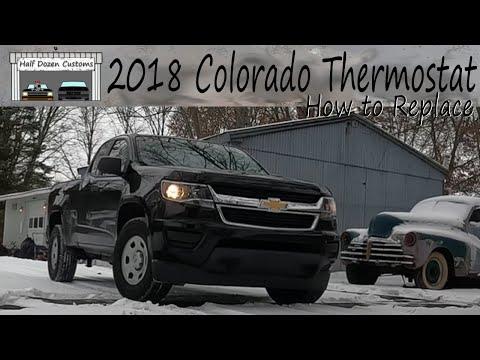





How to Replace the Thermostat on a 2018 Chevrolet Colorado 2.5L
Step-by-step DIY thermostat housing replacement with tools, parts list, torque specs, coolant refill, and safety tips
How to Replace the Thermostat on a 2018 Chevrolet Colorado 2.5L
Step-by-step DIY thermostat housing replacement with tools, parts list, torque specs, coolant refill, and safety tips


Colorado - Thermostat Replacement 🔧
Got it—you want to replace the thermostat on your 2018 Colorado 2.5L. I’ll walk you through it step by step in beginner-friendly language.
First, two quick questions so I can be exact:
- 🔹 Are you seeing any check-engine light or specific code (like P0128), or just overheating / low temp on the gauge?
- 🔹 Do you have a basic tool kit already (ratchet, sockets, screwdrivers), or are you starting from scratch?
Reply with short answers, and I’ll tailor the steps. For now, here is the full OEM-style procedure you’ll be following.
Colorado - Safety & Overview ⚠️
- ⚠️ Engine must be completely cool before you open anything in the cooling system. Hot coolant can cause serious burns.
- ⚠️ Never open the coolant reservoir cap on a hot engine.
- ⚠️ Keep coolant away from kids and pets; it is poisonous but smells sweet.
- 🔹 On your 2.5L, the thermostat is built into the thermostat housing on the engine, near the upper radiator hose.
Colorado - Parts You’ll Need 📦
- 🧩 Thermostat housing assembly with thermostat (GM style, one unit)
- This is usually sold as a complete unit; don’t try to swap just the inner thermostat.
- 🧩 New housing gasket / seal (often included with the housing)
- 🧩 Dex-Cool compatible coolant (orange/pink GM-spec, premixed 50/50 or concentrate + distilled water)
- 🧩 Small amount of RTV silicone sealant (only if the new part or manual calls for it; many use just an O-ring)
Colorado - Tools You’ll Need 🛠️
- 🛠️ Metric socket set (8–15 mm) and a ratchet
- A ratchet is the common hand tool that lets you turn sockets without removing them each time.
- 🛠️ Short and long extensions for the ratchet (to reach bolts easily)
- 🛠️ Torque wrench (small “inch-pound” or low-range “foot-pound” type)
- A torque wrench lets you tighten bolts to a specific force so you don’t strip or break them.
- 🛠️ Flat-blade screwdriver or small pry tool (for hose clamps)
- 🛠️ Pliers (for spring-type hose clamps)
- 🛠️ Drain pan (to catch coolant)
- 🛠️ Funnel (for refilling coolant)
- 🛠️ Shop towels / rags
- 🛠️ Optional: Plastic trim tool (to gently separate the housing if stuck; safer than a metal screwdriver)
Colorado - Torque Specs 📏
- 🔩 Thermostat housing bolts: ~89 in-lb (about 7.5 ft-lb)
- 🔩 Engine cover bolts (if equipped): snug only, ~80–90 in-lb
- 🔩 Coolant reservoir cap: hand-tight only
Do not overtighten the housing bolts; the housing is usually aluminum or plastic and can crack.
Colorado - Prep Steps 🧊
- 🧊 1. Let the engine cool completely
- Wait at least 1–2 hours after driving. The upper radiator hose should feel cool to the touch.
- 🧊 2. Disconnect the negative battery cable (recommended)
- Use a 10 mm socket to loosen the negative (-) terminal and move it aside.
- This reduces the chance of accidental short circuits while working.
- 🧊 3. Raise front slightly (optional but helpful)
- If you have ramps or a jack and stands, you can lift the front a bit to make draining easier.
- Always support the truck with jack stands, never just a jack.
Colorado - Locate the Thermostat Housing 📍
- 📍 Follow the upper radiator hose from the radiator toward the engine.
- 📍 Where that hose connects to the engine is the thermostat housing.
- 📍 On the 2.5L, it’s on the front/side of the engine, held by 2–3 small bolts, with a sensor connector nearby.
Colorado - Drain Enough Coolant 💧
- 💧 1. Place drain pan under the radiator area
- 💧 2. Slowly open the coolant reservoir cap
- If you hear a hiss, stop and let pressure bleed off slowly.
- 💧 3. Partial drain
- On many Colorados, there is a radiator drain plug (petcock) at the bottom of the radiator.
- Open it carefully (by hand or with pliers) and drain 1–2 gallons into the pan.
- If there is no easy drain plug, you can loosen the lower radiator hose at the radiator and let coolant drain into the pan.
- 💧 4. Close the drain
- Once you’ve drained enough, close the drain plug or reattach the lower hose securely.
Colorado - Remove the Old Thermostat Housing 🧰
- 🧰 1. Remove any engine cover (if equipped)
- Usually held by a few bolts or just pulls up off rubber grommets.
- 🧰 2. Disconnect electrical connector(s)
- If there is a sensor on the housing, press the tab and unplug it.
- 🧰 3. Remove the upper radiator hose from the housing
- Use pliers to squeeze the spring clamp and slide it back on the hose.
- Twist the hose gently to break it free, then pull it off the housing.
- If it’s stuck, don’t stab it with a screwdriver; gently work it around.
- 🧰 4. Remove thermostat housing bolts
- Use the correct metric socket (often 10 mm) and ratchet.
- Remove the bolts evenly; keep track of their positions.
- 🧰 5. Separate the housing from the engine
- If it’s stuck, gently pry with a plastic trim tool or carefully with a flat screwdriver at the tab area, not on the sealing surface.
- More coolant will spill—keep the drain pan under it.
- 🧰 6. Remove the old thermostat/housing
- On your engine, the thermostat is part of the housing, so remove the whole assembly.
Colorado - Clean the Mating Surface 🧽
- 🧽 1. Remove old gasket material
- Use a plastic scraper or fingernail to remove any old gasket or O-ring pieces from the engine side.
- Do not scratch the aluminum surface.
- 🧽 2. Wipe clean
- Use a clean rag with a bit of brake cleaner or alcohol to wipe the surface.
- Make sure it’s dry and smooth.
Colorado - Install the New Thermostat Housing 🆕
- 🆕 1. Prepare the new housing
- Make sure the new O-ring or gasket is properly seated in its groove.
- If the OEM instructions call for a thin bead of RTV, apply a very thin bead and let it skin for a few minutes.
- 🆕 2. Position the housing
- Place the new housing against the engine, lining up the bolt holes.
- 🆕 3. Install bolts finger-tight
- Start all bolts by hand to avoid cross-threading.
- 🆕 4. Torque the housing bolts
- Use the torque wrench to tighten to about 89 in-lb (7.5 ft-lb).
- Tighten in a crisscross or even pattern so the housing seats flat.
- 🆕 5. Reattach the upper radiator hose
- Slide the hose fully onto the new housing.
- Move the clamp back into its original position over the hose barb.
- 🆕 6. Reconnect any electrical connector
- Push until you hear or feel a click.
- 🆕 7. Reinstall engine cover (if removed)
Colorado - Refill & Bleed the Cooling System 🌡️
- 🌡️ 1. Close all drains
- Double-check the radiator drain plug and hoses are tight.
- 🌡️ 2. Fill coolant
- Use a funnel at the coolant reservoir.
- Fill with Dex-Cool 50/50 mix up to the COLD mark on the tank.
- 🌡️ 3. Start the engine and warm it up
- Reconnect the negative battery cable first.
- Start the engine with the reservoir cap off or loose.
- Turn the heater to HOT and fan on low.
- Let the engine reach operating temperature; the thermostat should open and the upper hose will get hot.
- 🌡️ 4. Watch for air bubbles
- As the engine warms, you may see bubbles in the reservoir; this is air bleeding out.
- Top off coolant as the level drops, keeping it near the COLD or slightly above line.
- 🌡️ 5. Install reservoir cap
- Once the engine is warm and bubbles stop, install the cap firmly.
- 🌡️ 6. Check for leaks
- Look around the thermostat housing, hose connections, and drain plug.
- No drips or wet spots should be visible.
Colorado - Final Checks & Test Drive 🚗
- 🚗 1. Let engine cool completely again
- After your first warm-up, shut off the engine and let it cool fully.
- Recheck coolant level and top off to the COLD mark if needed.
- 🚗 2. Short test drive
- Drive 10–15 minutes, watching the temperature gauge.
- It should reach normal operating range and stay steady.
- 🚗 3. Recheck for leaks
- Look again around the housing and under the truck for any coolant spots.
Coolant Disposal & Tips 🌍
- 🌍 Do not pour old coolant on the ground or down drains. Put it in sealed containers and take it to a local workshop or recycling center.
- 💡 Take pictures as you go so you remember hose and connector positions.
- 💡 If a bolt feels like it’s not threading easily, back it out and start again by hand.
Next Step ✅
Reply with:
- 🔹 Any warning light or code you had (if you know it)
- 🔹 Whether you have a basic tool kit already
Then I can add any scan-tool or extra steps you might need and double-check that this matches exactly what you’re seeing under the hood.
HowToo makes it easy: below this answer you’ll see recommended thermostat housings, gaskets, coolant, and tools. You can add them to your cart right from the parts section, with fast shipping so you can get this job done soon. 🚚