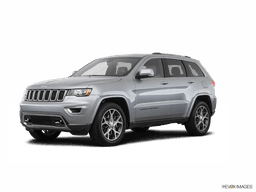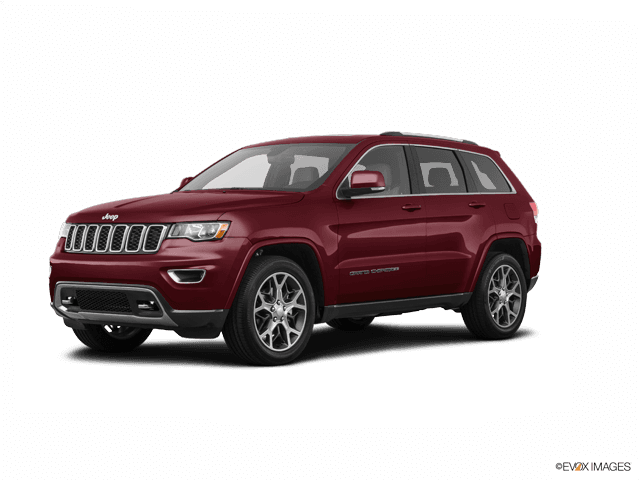









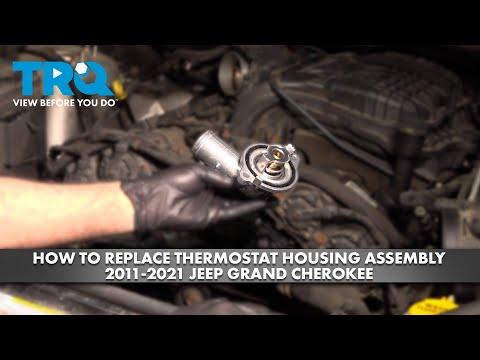





How to Replace the Thermostat on a 2016-2021 Jeep Grand Cherokee 3.6L (Engine: V8 5.7L)
Step-by-step coolant thermostat repair guide with tools, parts, torque specs, and bleeding tips
How to Replace the Thermostat on a 2016-2021 Jeep Grand Cherokee 3.6L (Engine: V8 5.7L)
Step-by-step coolant thermostat repair guide with tools, parts, torque specs, and bleeding tips for 2016, 2017, 2018, 2019, 2020, 2021


🔧 Grand Cherokee - Thermostat Replacement
Replacing the thermostat on your Grand Cherokee means draining some coolant, removing the thermostat housing at the front of the 3.6L engine, installing a new thermostat assembly, then refilling and bleeding the cooling system. A stuck thermostat can cause overheating, slow warm-up, poor heater performance, or coolant temperature trouble codes.
Difficulty Level: Intermediate | Estimated Time: 1.5-2.5 hours
⚠️ Safety & Precautions
- ⚠️ Work only on a completely cool engine; hot coolant can cause severe burns.
- ⚠️ Do not remove the pressure cap while the engine is hot.
- ⚠️ Coolant is poisonous to people and animals; catch it in a drain pan and dispose of it properly.
- ⚠️ Disconnect the negative battery cable before working near wiring and the cooling fan area.
- ⚠️ Use only coolant compatible with Jeep OAT coolant systems; mixing coolant types can cause sludge.
🔧 Required Tools
You'll need the following tools for this repair:
- 10mm socket
- 13mm socket
- 1/4-inch ratchet
- 3/8-inch ratchet
- 6-inch extension
- Flat-blade screwdriver
- Hose clamp pliers
- Plastic trim removal tool
- Torque wrench inch-pound range
- Torque wrench foot-pound range
- Drain pan 2-gallon minimum
- Funnel with spill-free adapter
- Shop towels
- Nitrile gloves
- Safety glasses
🔩 Required Parts
HowToo sells all the parts you need for this repair:
- Thermostat assembly with seal - Qty: 1
- Mopar-compatible OAT coolant concentrate or premix - Qty: 1 gallon minimum
- Distilled water - Qty: 1 gallon if using concentrate
- Upper radiator hose clamp - Qty: 1 if damaged or weak
📋 Before You Begin
- Park your Grand Cherokee on level ground and let the engine cool fully.
- Set the parking brake and shift the transmission to Park.
- Open the hood and remove the engine cover by lifting it straight up by hand.
- Disconnect the negative battery cable using a 10mm socket. The negative cable is the black cable marked “-”.
- Place a drain pan 2-gallon minimum under the radiator drain area before opening the cooling system.
- A thermostat is a temperature-controlled valve that helps the engine warm up and prevents overheating.
- OAT coolant means Organic Acid Technology coolant; your Grand Cherokee requires this coolant type.
🔨 Step-by-Step Instructions
Follow these steps in order:
Step 1: Remove the Engine Cover
- Use both hands to pull the plastic engine cover straight upward.
- Set it aside where it will not get stepped on.
- Pull evenly to avoid cracking it.
Step 2: Disconnect the Battery
- Use a 10mm socket and 3/8-inch ratchet to loosen the negative battery cable clamp.
- Move the cable away from the battery post so it cannot touch accidentally.
Step 3: Remove the Radiator Pressure Cap
- Put on safety glasses and nitrile gloves.
- Make sure the engine is cold.
- Slowly turn the coolant pressure cap counterclockwise by hand and remove it.
- The pressure cap is the cap on the pressurized coolant bottle.
Step 4: Drain Some Coolant
- Position the drain pan 2-gallon minimum under the radiator drain cock area.
- Use a flat-blade screwdriver if needed to carefully open the radiator drain cock.
- Drain enough coolant so the level drops below the thermostat housing, usually about 1 gallon.
- Close the drain cock by hand or with the flat-blade screwdriver. Do not overtighten it.
- Clean spills right away.
Step 5: Remove the Air Intake Duct if Needed
- Use a flat-blade screwdriver to loosen the air duct clamp at the throttle body.
- Use a flat-blade screwdriver to loosen the clamp at the air filter box.
- Use a plastic trim removal tool to release any attached wiring clips from the duct.
- Lift the duct out by hand and set it aside.
- This gives your hands more room near the thermostat housing.
Step 6: Locate the Thermostat Housing
- Find the large upper radiator hose at the front of the engine.
- Follow that hose to the engine; it connects to the thermostat housing.
- The housing is the plastic or aluminum outlet where the hose attaches to the engine.
Step 7: Remove the Upper Radiator Hose from the Thermostat Housing
- Use hose clamp pliers to squeeze the spring clamp on the upper radiator hose.
- Slide the clamp back several inches on the hose.
- Twist the hose gently by hand to break it loose.
- Pull the hose off the thermostat housing.
- Use shop towels to catch remaining coolant.
- Do not pry hard on plastic.
Step 8: Remove the Thermostat Housing Bolts
- Use a 10mm socket, 6-inch extension, and 1/4-inch ratchet to remove the thermostat housing bolts.
- Support the housing with your other hand as the last bolt comes out.
- Keep the bolts organized so they go back in the same positions.
Step 9: Remove the Old Thermostat Assembly
- Pull the thermostat assembly away from the engine by hand.
- Remove the old seal if it stayed stuck to the engine.
- Use shop towels to clean the mounting surface.
- Do not use metal scrapers on the sealing surface.
- A clean surface prevents leaks.
Step 10: Install the New Thermostat Assembly
- Compare the new thermostat assembly with seal to the old one by hand.
- Make sure the new seal is fully seated in its groove.
- Place the new thermostat assembly onto the engine in the same orientation as the old one.
- Start all bolts by hand first to prevent cross-threading.
Step 11: Tighten the Thermostat Housing Bolts
- Use a 10mm socket, 6-inch extension, and torque wrench inch-pound range to tighten the thermostat housing bolts evenly.
- Torque to 12 Nm (106 in-lbs).
- Do not overtighten; the housing can crack.
Step 12: Reinstall the Upper Radiator Hose
- Push the upper radiator hose fully onto the thermostat housing by hand.
- Use hose clamp pliers to move the spring clamp back to its original position.
- Make sure the clamp sits behind the raised bead on the housing neck.
Step 13: Reinstall the Air Intake Duct
- Place the air intake duct back into position by hand.
- Use a flat-blade screwdriver to tighten the duct clamps.
- Use a plastic trim removal tool if needed to reseat any wiring retainers.
Step 14: Refill the Cooling System
- Install the funnel with spill-free adapter on the coolant bottle opening.
- Add Mopar-compatible OAT coolant concentrate or premix.
- If using concentrate, mix it 50/50 with distilled water before adding.
- Fill slowly until coolant reaches the proper cold fill mark.
- Do not mix OAT coolant with universal green coolant.
Step 15: Reconnect the Battery
- Place the negative battery cable back onto the battery post.
- Use a 10mm socket and torque wrench foot-pound range to tighten the clamp.
- Torque to 5 Nm (44 in-lbs).
Step 16: Bleed Air from the Cooling System
- Leave the funnel with spill-free adapter installed.
- Start the engine and set the cabin heat to full hot with the blower on low.
- Let the engine idle while watching the coolant level in the funnel.
- Add coolant as air bubbles come out and the level drops.
- When the upper radiator hose gets hot, the thermostat has opened.
- Let the engine continue running until the cooling fan cycles on once.
- Shut the engine off and let it cool.
- Remove the funnel and install the pressure cap by hand.
Step 17: Reinstall the Engine Cover
- Line up the engine cover with the rubber mounting posts.
- Push downward by hand until it seats firmly.
✅ After Repair
- ✅ Start the engine and check around the thermostat housing and upper radiator hose for leaks.
- ✅ Watch the temperature gauge during the first drive; it should stay near the normal middle range.
- ✅ After the engine cools completely, recheck the coolant level and top off with OAT coolant if needed.
- ✅ Confirm the heater blows hot air at idle and while driving.
- ✅ If the check engine light was on for a thermostat code, clear it with a scan tool after the repair.
- ✅ Dispose of used coolant at a proper recycling or hazardous-waste facility near Panipat.
💰 DIY vs Shop Cost
Shop Cost: $250-$450 (parts + labor)
DIY Cost: $45-$120 (parts only)
You Save: $130-$330 by doing it yourself!
Shop labor rates vary but typically run $100-$150/hour. This repair takes a shop approximately 1.0-1.5 hours.
🎯 Ready to get started?
HowToo makes it easy: same-day/2-day shipping on every part, plus all the tools and specialty tools you need! Check out the parts and tools sections below to add everything to your cart.
Guide for Engine Coolant Thermostat Housing Assembly replace for these Jeep vehicles
| Year Make Model | Sub Model | Engine | Body Style |
|---|---|---|---|
| 2021 Jeep Grand Cherokee | - | V6 3.6L | - |
| 2020 Jeep Grand Cherokee | - | V6 3.6L | - |
| 2019 Jeep Grand Cherokee | - | V6 3.6L | - |
| 2019 Jeep Grand Cherokee | - | V6 3.0L | - |
| 2018 Jeep Grand Cherokee | - | V6 3.6L | - |
| 2018 Jeep Grand Cherokee | - | V6 3.0L | - |
| 2017 Jeep Grand Cherokee | - | V6 3.6L | - |
| 2017 Jeep Grand Cherokee | - | V6 3.0L | - |
| 2016 Jeep Grand Cherokee | - | V6 3.6L | - |
| 2016 Jeep Grand Cherokee | - | V6 3.0L | - |