












How to Replace the Thermostat on a 2015 Ram 1500 3.6L V6
Step-by-step DIY thermostat and housing replacement with tools, parts list, torque specs, coolant refill, and bleeding tips for 2011, 2012, 2013
How to Replace the Thermostat on a 2015 Ram 1500 3.6L V6
Step-by-step DIY thermostat and housing replacement with tools, parts list, torque specs, coolant refill, and bleeding tips for 2011, 2012, 2013


1500 - Thermostat Replacement 🔧
You’re working on a 2015 3.6L V6, which uses a thermostat housing assembly on the front of the engine. I’ll walk you through it step by step.
Safety & Prep ⚠️
- 🧤 Work cold: Let the engine cool at least 1–2 hours; hot coolant can cause serious burns.
- 🔌 Disconnect battery negative: 10 mm wrench on the negative terminal to avoid accidental shorts.
- 🧯 Coolant is toxic: Keep away from kids/pets and dispose of it properly.
Parts You’ll Need 📦
- 🧊 Thermostat & housing assembly (3.6L Pentastar, with seal/gasket included)
- 🧊 Fresh coolant: HOAT / OAT type that meets Chrysler MS-12106 (usually pink/purple; match what’s in your 1500)
- 🧊 Distilled water (if mixing concentrate)
- 🧊 New hose clamp(s) if any are rusty or damaged
Tools Required 🛠️
- 🧰 Socket set:
- 8 mm, 10 mm, 13 mm sockets (1/4" and 3/8" drive)
- Short and medium extensions
- Ratchet
- 🧰 Torque wrench (small, 5–30 Nm / 50–250 in‑lb range)
- 🧰 Flat-blade screwdriver or nut driver (for hose clamps)
- 🧰 Pliers (for spring-type hose clamps)
- 🧰 Drain pan (at least 10 L / 3 gal)
- 🧰 Plastic trim tool (to help with hose removal without cutting)
- 🧰 Shop towels / rags
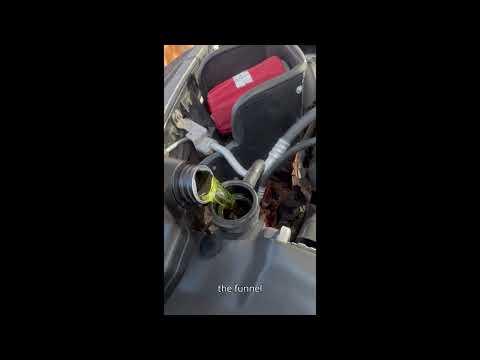
- 🧰 Funnel (long neck helps)
Hose clamp pliers are special pliers that grip spring clamps securely; regular pliers can work but are more awkward.
Location of the Thermostat 📍
- 🚗 Stand in front of your 1500, hood open.
- Follow the lower radiator hose (big hose from bottom of radiator) back to the engine.
- It connects to an aluminum/plastic thermostat housing on the front of the engine, slightly toward the passenger side.
Coolant Drain (Partial) 💧
- 🪜 Raise the front slightly on ramps or jack stands if needed; always support with stands, never just a jack.
- 🪣 Place the drain pan under the lower radiator hose or radiator drain (petcock).
- 🪣 Easiest: loosen the lower radiator hose clamp at the radiator and crack the hose loose to drain 1–2 gallons.
- Tip: Only pull the hose off a little so it dribbles instead of dumping everywhere.
- 🪣 Once drained enough, push the hose back on and snug the clamp so it doesn’t leak while you work.
Accessing the Thermostat Housing 🔍
- 🧩 Remove any engine cover:
- Usually just pulls up off rubber grommets; lift straight up.
- 🧩 If the intake tube is in your way:
- Loosen the hose clamps at the throttle body and airbox (flat screwdriver or 8 mm socket).
- Unplug any sensor connectors on the tube (like the intake air temp sensor; press the tab and pull).
- Lift the tube out and set aside.
Removing the Thermostat Housing 🧊
- 🧊 Place rags under the housing area to catch drips.
- 🧊 Use pliers or screwdriver to loosen the lower radiator hose clamp at the thermostat housing.
- 🧊 Twist the hose gently to break it free, then pull it off the housing.
- Tip: If it’s stuck, use a plastic trim tool to work around the edge; don’t stab the hose.
- 🧊 Unplug any sensor connector on or near the housing (if equipped).
- 🧊 Remove the thermostat housing bolts:
- Usually 3 bolts, 10 mm head.
- Use a 10 mm socket with extension and ratchet.
- 🧊 Carefully pull the housing away from the engine. Some coolant will spill; catch it with the pan.
- 🧊 Remove the old thermostat assembly and gasket/seal (if separate).
Clean the Mating Surface 🧽
- 🧽 Use a clean rag to wipe the engine-side surface where the thermostat sits.
- 🧽 If there’s old gasket material, gently scrape with a plastic scraper.
- Do not use a metal scraper that can gouge the aluminum.
- 🧽 Make sure no debris falls into the coolant passage.
Install the New Thermostat 🆕
- 🆕 Confirm the new thermostat matches the old one (shape, diameter, housing style).
- 🆕 If the seal/gasket is separate:
- Fit the new O-ring/gasket into the groove on the thermostat or housing as designed.
- 🆕 Position the thermostat/housing assembly onto the engine:
- On this engine, the thermostat is usually integrated into the housing; just align the housing with bolt holes.
- 🆕 Install the housing bolts finger-tight first to avoid cross-threading.
- 🆕 Torque the bolts evenly in a criss-cross pattern:
- Thermostat housing bolts: 10 Nm (89 in‑lb)
- Snug, not gorilla tight—this is aluminum.
- 🆕 Reinstall the lower radiator hose onto the housing and tighten the clamp securely.
- 🆕 Reconnect any sensor connectors you unplugged.
Reinstall Intake & Covers 🧩
- 🧩 Refit the intake tube:
- Slide onto throttle body and airbox.
- Tighten hose clamps (snug with screwdriver or 8 mm socket).
- Reconnect any sensors.
- 🧩 Push the engine cover back onto its mounting grommets.
Refill & Bleed the Cooling System 🌡️
- 🌡️ Make sure the lower hose at the radiator is fully reattached and clamped.
- 🌡️ Open the coolant reservoir cap.
- 🌡️ Mix coolant if needed:
- 50/50 mix coolant and distilled water unless you bought premix.
- 🌡️ Slowly fill the reservoir to the “MAX” line.
- 🌡️ On many 3.6L setups there is a bleeder screw on the upper hose or near the thermostat housing:
- If present, crack it open with the correct socket or screwdriver.
- Fill until coolant (no bubbles) comes out, then close the bleeder.
- 🌡️ Reconnect the battery negative terminal (10 mm).
- 🌡️ Start the engine and let it idle with the heater set to HOT and fan on low.
- 🌡️ Watch the coolant level in the reservoir:
- Add as needed to keep it near MAX while air burps out.
- 🌡️ Let the engine reach operating temperature:
- Upper radiator hose should get hot once the thermostat opens.
- Cabin heater should blow hot air.
- 🌡️ Check for leaks around the thermostat housing and hose connections.
- 🌡️ Shut off engine, let it cool completely, then recheck coolant level and top off if needed.
Final Checks ✅
- ✅ No coolant drips under the front of the truck after a drive.
- ✅ Temperature gauge stays in the normal middle range.
- ✅ Heater works properly and no “gurgling” sounds from the dash (sign of trapped air).
Shop vs DIY Cost 💰
- 💰 A shop would typically charge:
- Labor: 1.5–2.0 hours
- Parts & coolant: often $150–250
- Total: roughly $300–450 at the higher end.
- 💰 Doing it yourself mainly costs the thermostat assembly, coolant, and basic tools.
If you tell me whether you see a bleeder screw on your upper hose or near the thermostat housing, I can give you a very short, specific bleeding sequence for your exact setup.
HowToo makes it easy: below this answer you’ll see recommended thermostats, coolant, and tools that fit your 1500. You can add them straight to your cart from the parts section for fast shipping.