









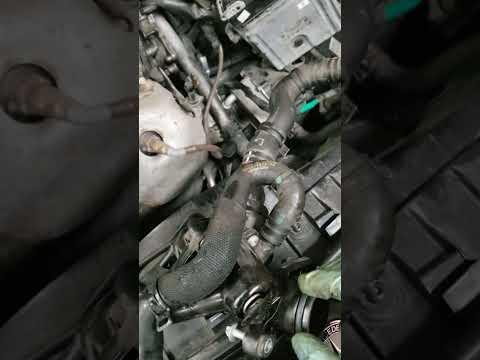







How to Replace the Thermostat on a 2015-2020 Mercedes-Benz GLA250 (Coolant Bleed Guide) (Engine: Inline 4 2.0L)
Step-by-step thermostat housing removal, required tools/parts, refill & bleed steps, and leak-check safety tips
How to Replace the Thermostat on a 2015-2020 Mercedes-Benz GLA250 (Coolant Bleed Guide) (Engine: Inline 4 2.0L)
Step-by-step thermostat housing removal, required tools/parts, refill & bleed steps, and leak-check safety tips for 2015, 2016, 2017, 2018, 2019, 2020


🔧 GLA - Thermostat Replacement
On your GLA, the thermostat controls coolant flow to keep engine temperature stable. If it sticks open you’ll get slow warm-up/poor heat; if it sticks closed you can overheat. Replacing it means draining some coolant, removing the thermostat housing, installing a new seal, then refilling and bleeding the cooling system.
Difficulty Level: Intermediate | Estimated Time: 2-4 hours
Assumption: Thermostat is in the thermostat housing at the front/side of the engine and is serviced as an assembly with a seal.
⚠️ Safety & Precautions
- ⚠️ Never open the coolant reservoir when hot; hot coolant can spray out.
- ⚠️ Support the vehicle securely on jack stands before going underneath.
- ⚠️ Coolant is toxic; catch all coolant and clean spills immediately.
- ⚠️ Keep coolant off belts and electrical connectors.
- ⚠️ Battery disconnect is recommended if you’ll unplug multiple sensors near the thermostat housing.
🔧 Required Tools
You'll need the following tools for this repair:
- Floor jack (rated 3-ton minimum)
- Jack stands (rated 3-ton minimum)
- Wheel chocks
- Safety glasses
- Nitrile gloves
- LED work light
- Drain pan (10-quart minimum)
- Funnel
- Coolant fill/bleed kit (vacuum type) (specialty)
- Trim clip removal tool
- Flathead screwdriver
- Pick tool set
- Pliers (hose clamp)
- Metric socket set 8mm-13mm
- Ratchet 3/8"
- Extension set 3/8"
- Universal joint 3/8"
- Torx bit set T20-T30
- External Torx socket set E8-E12
- Torque wrench 1/4" (2-25 Nm)
- Plastic razor scraper
- Brake cleaner spray
- Shop rags
🔩 Required Parts
HowToo sells all the parts you need for this repair:
- Thermostat assembly - Qty: 1
- Thermostat housing seal/O-ring - Qty: 1
- Coolant (MB-approved) - Qty: 2-3 gallons
- Replacement hose clamps - Qty: 2
- Replacement plastic clips/fasteners assortment - Qty: 1
📋 Before You Begin
- Park on level ground, set the parking brake, and chock the rear wheels.
- Let the engine cool completely (radiator hoses should feel cool to the touch).
- Remove the engine cover (it pulls upward).
- Disconnect the negative battery terminal using a 10mm socket.
- Raise the front of the vehicle with a floor jack and support it on jack stands.
- Take photos before unplugging connectors.
🔨 Step-by-Step Instructions
Follow these steps in order:
Step 1: Remove lower covers for access
- Remove the lower splash shield using a Torx bit set T20-T30 and a trim clip removal tool.
- Position a drain pan under the front of the engine/radiator area.
Step 2: Drain enough coolant to drop below thermostat level
- Slowly loosen the coolant reservoir cap to release any remaining pressure.
- Drain coolant from the radiator drain (if equipped) using a flathead screwdriver, or remove the lower hose clamp using pliers (hose clamp) and slide the hose off carefully.
- Once flow slows, reinstall the drain/reattach the hose temporarily to prevent dripping.
Step 3: Remove intake/air ducting as needed
- Remove the intake duct and airbox/snorkel pieces that block access using a metric socket set 8mm-10mm and a flathead screwdriver for hose clamps.
- Set parts aside in order so reassembly is easy.
Step 4: Locate the thermostat housing and unplug connectors
- Find the thermostat housing where the large radiator hose meets the engine.
- Unplug the electrical connector(s) at the thermostat housing using a pick tool to lift the lock tab gently (a lock tab is a small plastic latch that must be released before pulling the plug).
- Use shop rags to catch coolant drips.
Step 5: Remove coolant hoses from the thermostat housing
- Compress spring clamps using pliers (hose clamp) and slide the clamps back on the hose.
- Twist the hose to break it free, then pull it off the housing.
- Don’t pry hard on plastic fittings.
Step 6: Remove the thermostat housing
- Remove the thermostat housing bolts using an external Torx socket set E8-E12, a ratchet, and a 3/8" extension.
- If a bolt is at an awkward angle, use a universal joint 3/8".
- Pull the housing straight off. More coolant will drain—keep the drain pan in place.
Step 7: Clean the mating surface and install the new thermostat/seal
- Remove the old seal/O-ring using a pick tool.
- Clean the sealing surface with a plastic razor scraper, then wipe with brake cleaner spray on a shop rag.
- Install the new seal/O-ring and seat it fully.
- Install the new thermostat housing/assembly in place.
Step 8: Torque bolts and reconnect hoses/connectors
- Tighten thermostat housing bolts evenly using a torque wrench 1/4" (2-25 Nm).
- Torque to factory specification (bolt size and housing design vary by configuration).
- Reinstall hoses and position clamps using pliers (hose clamp).
- Reconnect electrical connector(s) until the lock clicks into place.
Step 9: Refill and bleed the cooling system
- Refill with MB-approved coolant using a funnel.
- Best method: use a coolant fill/bleed kit (vacuum type) (specialty) to pull a vacuum and refill without air pockets (air pockets are trapped air that can cause overheating).
- If filling normally: fill to the MAX line, then proceed to the warm-up bleed in the next step and top off as needed.
Step 10: Reassemble covers and restore battery
- Reinstall intake/air ducting using a metric socket set and flathead screwdriver.
- Reinstall the lower splash shield using Torx bits and the trim clip removal tool.
- Lower the vehicle from the jack stands.
- Reconnect the negative battery terminal using a 10mm socket.
✅ After Repair
- Start the engine and let it idle. Turn the cabin heat to HOT and the fan to medium.
- Watch the temperature gauge and check for leaks around the thermostat housing and hoses.
- After the engine warms up, shut it off, let it cool, then recheck coolant level and top off.
- Test drive 10-15 minutes, then recheck for leaks again.
💰 DIY vs Shop Cost
Shop Cost: $600-$1,200 (parts + labor)
DIY Cost: $120-$350 (parts only)
You Save: $480-$850 by doing it yourself!
Shop labor rates vary but typically run $100-$150/hour. This repair takes a shop approximately 2-4 hours.
🎯 Ready to get started?
HowToo makes it easy: same-day/2-day shipping on every part, plus all the tools and specialty tools you need! Check out the parts and tools sections below to add everything to your cart.