









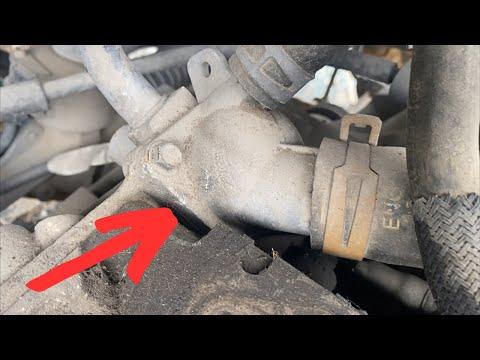





How to Replace the Thermostat on a 2010-2017 Chevrolet Equinox 2.4L (Engine: V6 3.6L)
Step-by-step DIY thermostat and housing replacement with tools, parts list, torque specs, coolant refill, and bleeding tips
How to Replace the Thermostat on a 2010-2017 Chevrolet Equinox 2.4L (Engine: V6 3.6L)
Step-by-step DIY thermostat and housing replacement with tools, parts list, torque specs, coolant refill, and bleeding tips for 2010, 2011, 2012, 2013, 2014, 2015, 2016, 2017


🔧 Equinox - Thermostat Replacement
The thermostat controls coolant flow and engine temperature. When it fails, you can get overheating, poor heat, or a check engine light. You’ll replace the thermostat and housing, refill with fresh coolant, and bleed the system so your Equinox runs at the correct temperature again.
Difficulty Level: Intermediate | Estimated Time: 2–3 hours
⚠️ Safety & Precautions
- ⚠️ Let the engine cool completely before opening the cooling system; hot coolant can cause serious burns.
- ⚠️ Wear safety glasses and gloves; coolant is toxic and can irritate skin and eyes.
- ⚠️ Keep coolant away from children and animals; it tastes sweet but is poisonous.
- ⚠️ Support the vehicle with jack stands if you lift it; never rely only on a jack.
- ⚠️ Disconnect the negative battery cable before working near the alternator to prevent short circuits.
- ⚠️ Properly dispose of used coolant at a recycling center; do not pour it on the ground or down drains.
🔧 Required Tools
You'll need the following tools for this repair:
- 🧰 3/8" drive ratchet
- 🧰 1/4" drive ratchet
- 🧰 3/8" drive extension set (3"–6")
- 🧰 10mm socket
- 🧰 13mm socket
- 🧰 15mm socket
- 🧰 E10 external Torx socket
- 🧰 T20 Torx screwdriver
- 🧰 Flathead screwdriver (medium)
- 🧰 Hose clamp pliers (specialty)
- 🧰 Needle-nose pliers
- 🧰 Plastic trim tool
- 🧰 Drain pan (at least 10-liter capacity)
- 🧰 Shop towels or rags
- 🧰 Funnel with small spout
- 🧰 Floor jack (rated 2-ton minimum)
- 🧰 Jack stands (2-ton minimum, pair)
- 🧰 Torque wrench 5–80 Nm (4–60 ft-lbs)
- 🧰 Safety glasses
- 🧰 Mechanic’s gloves
🔩 Required Parts
HowToo sells all the parts you need for this repair:
- 🔩 Thermostat with housing (2.4L) - Qty: 1
- 🔩 Thermostat housing gasket or seal (if not included) - Qty: 1
- 🔩 Dex-Cool compatible premixed coolant (50/50) - Qty: 2–3 gallons
- 🔩 Upper radiator hose clamp (optional if old clamp is weak) - Qty: 1
- 🔩 Lower radiator hose clamp (optional) - Qty: 1
- 🔩 Throttle body gasket (optional, if removed for access) - Qty: 1
- 🔩 Shop towels/absorbent pads - Qty: As needed
- 🔩 Dielectric grease (for electrical connectors) - Qty: small tube
📋 Before You Begin
- Park your Equinox on level ground, shift to Park, and set the parking brake.
- Let the engine cool for at least 1–2 hours so the cooling system is not under pressure.
- Open the hood and remove the engine cover by lifting it up; it just snaps off.
- Disconnect the negative battery cable using a 10mm socket and move it aside so it cannot touch the terminal.
- Place a drain pan under the radiator drain area; you will be draining coolant.
🔨 Step-by-Step Instructions
Follow these steps in order:
Step 1: Access and drain the coolant
- Remove the coolant reservoir cap by hand to release any remaining pressure gently.
- Use the floor jack to raise the front of the Equinox and place it securely on jack stands.
- Place the drain pan under the lower radiator area on the passenger side.
- On the bottom of the radiator, open the drain cock (small plastic valve) by hand or with a flathead screwdriver and let coolant drain fully.
- After draining, close the radiator drain cock snugly by hand; do not overtighten.
Step 2: Remove the air intake duct for room
- Loosen the intake hose clamp at the throttle body using a flathead screwdriver.
- Loosen the clamp at the air filter box with the same flathead screwdriver.
- Disconnect any small hoses or electrical connectors on the duct using your hands or needle-nose pliers if needed.
- Lift the intake duct out and set it aside. Gives more working space
Step 3: Remove the serpentine belt from the alternator
- Locate the belt tensioner (small pulley on a spring-loaded arm).
- Use a 15mm socket and 3/8" ratchet on the tensioner bolt to rotate the tensioner and relieve belt tension.
- While holding the tensioner, slip the belt off the alternator pulley by hand, then slowly release the tensioner.
- Leave the belt in place on the other pulleys; just move it off the alternator.
Step 4: Remove the alternator for better access
- Disconnect the alternator electrical connector by pressing the tab and pulling it off by hand.
- Use an E10 external Torx socket and ratchet to remove the nut holding the main power cable, then lift the cable off.
- Use a 13mm socket to remove the upper alternator mounting bolt.
- Use a 13mm socket and extension to remove the lower alternator bolt.
- Lift the alternator up and out of the way; it may need a gentle wiggle by hand. Note bolt locations for reassembly
Step 5: Locate the thermostat housing
- The thermostat housing is the aluminum part bolted to the engine block where a large coolant hose connects, roughly behind where the alternator sat.
- Use a shop towel to wipe around the housing and hose connections so dirt does not fall into the system.
Step 6: Remove hoses from the thermostat housing
- Use hose clamp pliers to squeeze and slide back the spring clamp on the upper hose attached to the thermostat housing.
- Twist the hose gently by hand to break it free, then pull it off the housing; direct any remaining coolant into the drain pan.
- If there is a smaller bypass hose, move its clamp with hose clamp pliers and remove it the same way.
- Twist first, then pull to avoid tearing hose
Step 7: Remove the thermostat housing
- Use a 10mm socket and 1/4" ratchet with an extension to remove the bolts holding the thermostat housing to the engine block.
- There are usually 3 bolts; keep track of their positions.
- Gently pull the housing away from the block by hand; a bit of coolant may spill, so keep the drain pan under the area.
- Remove the entire housing with the old thermostat attached.
Step 8: Clean the sealing surface
- Use a shop towel to wipe the engine’s mating surface clean.
- Carefully remove any old gasket material from the engine side using a plastic trim tool so you do not scratch the metal.
- Surface must be clean, smooth, and dry
Step 9: Install the new thermostat and housing
- If the new thermostat is separate, snap it into the new housing as shown in its instructions, making sure it sits fully in place.
- Install the new gasket or seal into the groove on the new housing; ensure it is seated evenly all around.
- Position the new housing against the engine block, aligning bolt holes by hand.
- Install the housing bolts finger-tight using the 10mm socket so you do not cross-thread them.
- Use a torque wrench with 10mm socket to tighten the bolts evenly in a crisscross pattern to 10 Nm (89 in-lbs).
Step 10: Reinstall coolant hoses
- Push the upper hose fully onto the new thermostat housing by hand until it seats against the stop.
- Use hose clamp pliers to slide the clamp back over the fitting in its original position.
- Reconnect any smaller hoses and move their clamps back into place with hose clamp pliers.
- Inspect hoses for cracks or swelling; replace if needed.
Step 11: Reinstall the alternator
- Lower the alternator back into position by hand, aligning the mounting ears with the bracket.
- Install the lower bolt finger-tight using a 13mm socket, then the upper bolt the same way.
- Use a torque wrench with 13mm socket to tighten the alternator mounting bolts to 35 Nm (26 ft-lbs).
- Reattach the main power cable and tighten the nut with an E10 external Torx socket to 10 Nm (89 in-lbs).
- Reconnect the alternator electrical connector by pushing it on by hand until it clicks.
Step 12: Reinstall the serpentine belt
- Route the belt over all pulleys except the alternator, following the belt routing diagram under the hood.
- Use a 15mm socket and ratchet on the tensioner to rotate it and relieve tension.
- Slip the belt over the alternator pulley by hand, then slowly release the tensioner.
- Check that the belt is seated correctly in all pulley grooves.
Step 13: Reinstall the air intake duct
- Place the intake duct back between the airbox and throttle body by hand.
- Reconnect any small hoses and electrical connectors by hand.
- Tighten both hose clamps with a flathead screwdriver until snug.
Step 14: Refill the cooling system
- Lower the vehicle off the jack stands using the floor jack.
- Mix coolant only if needed; use premixed 50/50 Dex-Cool compatible coolant.
- Place a funnel in the coolant reservoir and slowly fill to the “FULL COLD” line.
- Fill the radiator (if it has a cap) to the base of the neck; if there is no radiator cap, just use the reservoir.
Step 15: Bleed air from the system
- Reconnect the negative battery cable using a 10mm socket and tighten snugly.
- With the reservoir cap off, start the engine and let it idle.
- Set the heater to maximum heat and the fan on low so coolant flows through the heater core.
- Watch the coolant level in the reservoir and add more as needed using the funnel.
- Let the engine reach operating temperature; the upper radiator hose should get hot once the thermostat opens.
- When you see small bubbles stop and the level stabilizes, turn off the engine and let it cool.
- After cooling, top off the reservoir to the “FULL COLD” line and install the cap by hand.
✅ After Repair
- Check for leaks around the thermostat housing, hoses, and radiator drain once the engine is warm and again after it cools.
- Monitor engine temperature on the dash gauge; it should stay near the normal middle range.
- After a short drive and cool-down, recheck coolant level in the reservoir and top off if needed.
- If you had a check engine light for thermostat issues, have the code cleared with a scan tool, or it may clear on its own after several drive cycles.
- Inspect the serpentine belt path again to ensure it’s seated correctly on all pulleys.
💰 DIY vs Shop Cost
Shop Cost: $350–$550 (parts + labor)
DIY Cost: $80–$150 (parts only)
You Save: $270–$400 by doing it yourself!
Shop labor rates vary but typically run $100–$150/hour. This repair takes a shop approximately 1.5–2.0 hours.
🎯 Ready to get started?
HowToo makes it easy: same-day/2-day shipping on every part, plus all the tools and specialty tools you need! Check out the parts and tools sections above to add everything to your cart.
Guide for Engine Coolant Thermostat replace for these Chevrolet vehicles
| Year Make Model | Sub Model | Engine | Body Style |
|---|---|---|---|
| 2017 Chevrolet Equinox | - | Inline 4 2.4L | - |
| 2016 Chevrolet Equinox | - | Inline 4 2.4L | - |
| 2015 Chevrolet Equinox | - | Inline 4 2.4L | - |
| 2014 Chevrolet Equinox | - | Inline 4 2.4L | - |
| 2013 Chevrolet Equinox | - | Inline 4 2.4L | - |
| 2012 Chevrolet Equinox | - | Inline 4 2.4L | - |
| 2011 Chevrolet Equinox | - | Inline 4 2.4L | - |
| 2010 Chevrolet Equinox | - | Inline 4 2.4L | - |