









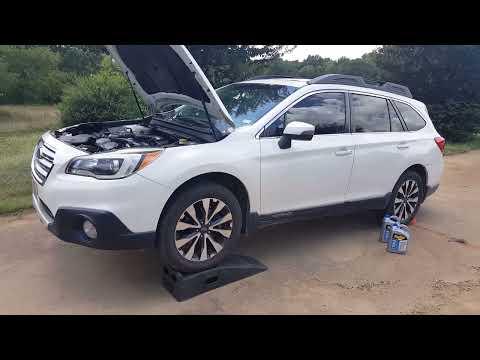







How to Replace the Thermostat on a 2000-2019 Subaru Outback (Cooling System Guide) (Engine: Flat 6 3.6L)
Step-by-step instructions with required tools/parts, coolant refill & bleeding tips, and safety checks to prevent overheating
How to Replace the Thermostat on a 2000-2019 Subaru Outback (Cooling System Guide) (Engine: Flat 6 3.6L)
Step-by-step instructions with required tools/parts, coolant refill & bleeding tips, and safety checks to prevent overheating for 2000, 2001, 2002, 2003, 2004, 2005, 2006, 2007, 2008, 2009


🔧 Outback - Thermostat Replacement
On your Outback, the thermostat controls coolant flow to keep engine temperature stable. Replacing it usually means draining some coolant, removing the thermostat housing at the front of the engine, installing a new thermostat + seal, then refilling and bleeding air from the cooling system.
Difficulty Level: Intermediate | Estimated Time: 2-3 hours
⚠️ Safety & Precautions
- ⚠️ Only work on a fully cold engine; hot coolant can cause severe burns.
- ⚠️ Support the vehicle with jack stands before going underneath.
- ⚠️ Keep coolant away from pets and kids; it’s toxic and sweet-smelling.
- ⚠️ Do not open the radiator cap when hot.
🔧 Required Tools
You'll need the following tools for this repair:
- Floor jack (rated 3-ton minimum)
- Jack stands (rated 3-ton minimum)
- Wheel chocks
- Safety glasses
- Nitrile gloves
- Drain pan (at least 2-gallon)
- Funnel with long neck
- Trim clip remover
- 10mm socket
- 12mm socket
- 3/8" ratchet
- 3/8" torque wrench (10–60 Nm range)
- Pliers for hose clamps
- Pick tool
- Shop towels
🔩 Required Parts
HowToo sells all the parts you need for this repair:
- Engine thermostat - Qty: 1
- Thermostat seal / gasket (O-ring) - Qty: 1
- Subaru-compatible long-life coolant (premixed) - Qty: 2 gallons
- Replacement hose clamp - Qty: 1
📋 Before You Begin
- Park on level ground, set the parking brake, and let the engine cool completely (overnight is best).
- Raise the front of your Outback with a floor jack and support it on jack stands.
- Place a drain pan under the radiator drain area.
- Quick check: please reply with (1) a photo of the front/top of the engine where the lower radiator hose meets the engine, and (2) whether your new thermostat came with a new rubber seal. This lets me give the exact bolt locations and correct torque specs for your exact housing.
🔨 Step-by-Step Instructions
Follow these steps in order:
Step 1: Remove the lower engine cover
- Use a trim clip remover to remove the plastic clips.
- Use a 10mm socket to remove any 10mm bolts.
- Lower the cover and set it aside.
Step 2: Drain coolant (partial drain)
- Remove the coolant reservoir cap by hand (only if cold).
- Position the drain pan under the radiator drain.
- Open the radiator drain using a pick tool carefully if needed to start the drain plug turning, then finish by hand.
- Let it drain until the flow slows to a drip.
Step 3: Access the thermostat housing
- From the top, locate the lower radiator hose where it connects to the engine (front area).
- Use pliers for hose clamps to slide the clamp back on the hose.
- Twist the hose gently to break it loose; use a pick tool carefully around the edge if it’s stuck. Don’t gouge the hose neck.
- Pull the hose off and aim it into the drain pan (more coolant will come out).
Step 4: Remove the thermostat housing
- Use a 10mm socket or 12mm socket (depends on your housing) to remove the thermostat housing bolts.
- Remove the housing and thermostat.
- Use shop towels to catch remaining coolant.
- Clean the mating surfaces using shop towels only. No scraping aluminum.
Step 5: Install the new thermostat and seal
- Install the new rubber seal/O-ring onto the thermostat (if separate) by hand.
- Install the thermostat in the same orientation as removed (jiggle valve/bleed point positioned exactly like the old one).
- Reinstall the housing and start bolts by hand to avoid cross-threading.
- Use a 3/8" torque wrench (10–60 Nm range) to tighten the housing bolts.
- STOP HERE: I need your photo to give the exact OEM torque spec for your exact housing/bolt size so we don’t risk a leak or cracked housing.
Step 6: Reconnect the lower radiator hose
- Push the hose fully onto the neck by hand.
- Use pliers for hose clamps to reposition the clamp in the same spot it was originally.
Step 7: Refill and bleed the cooling system
- Use a funnel with long neck to refill with Subaru-compatible long-life coolant (premixed).
- Start the engine and set the HVAC to full heat and low fan.
- Let it idle and watch the coolant level; top off as air burps out.
- When the radiator fans cycle and heat is steady, shut the engine off and let it cool fully, then recheck level.
✅ After Repair
- Check for leaks at the thermostat housing and lower radiator hose with the engine running.
- After a full cool-down, recheck coolant level in the reservoir and top off as needed.
- Test drive 10–15 minutes, then recheck for leaks again.
- If the temperature gauge rises abnormally, stop and recheck for trapped air.
💰 DIY vs Shop Cost
Shop Cost: $350-$700 (parts + labor)
DIY Cost: $60-$180 (parts only)
You Save: $170-$640 by doing it yourself!
Shop labor rates vary but typically run $100-$150/hour. This repair takes a shop approximately 1.5-2.5 hours.
🎯 Ready to get started?
HowToo makes it easy: same-day/2-day shipping on every part, plus all the tools and specialty tools you need! Check out the parts and tools sections below to add everything to your cart.