









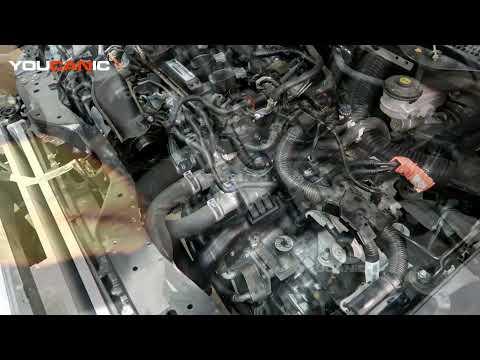






How to Replace the Thermostat on a 1997-2022 Honda CR-V 1.5L Turbo (Engine: Inline 4 1.5L)
Step-by-step DIY thermostat replacement with tools, parts list, coolant bleeding, torque specs, safety tips, and cost savings
How to Replace the Thermostat on a 1997-2022 Honda CR-V 1.5L Turbo (Engine: Inline 4 1.5L)
Step-by-step DIY thermostat replacement with tools, parts list, coolant bleeding, torque specs, safety tips, and cost savings for 1997, 1998, 1999, 2000, 2001


🔧 CR-V - Thermostat Replacement
You’ll be removing the thermostat housing on the front of the engine, swapping in a new thermostat with a fresh seal, then refilling and bleeding the coolant. This helps fix slow warm-up, overheating, or temperature fluctuation issues.
Difficulty Level: Intermediate | Estimated Time: 2-3 hours
⚠️ Safety & Precautions
- 🔥 Only work on the cooling system when the engine is completely cool to avoid serious burns.
- 🧊 Coolant is toxic; keep it off skin, paint, and away from children or pets.
- 🚗 Support your CR-V with jack stands, never just a floor jack.
- 🔌 Battery disconnect is not strictly required, but you may disconnect the negative terminal with a 10mm wrench for extra safety while working near the fan area.
- 🌬️ The radiator fan can start automatically; do not put hands or tools near the fan unless the key is out of the ignition.
- ♻️ Collect old coolant in a drain pan and dispose of it properly; do not pour it on the ground or down drains.
🔧 Required Tools
You'll need the following tools for this repair:
- 🛠️ Floor jack (rated 3-ton minimum)
- 🛠️ Jack stands (rated 3-ton minimum)
- 🛠️ Wheel chocks
- 🛠️ 10mm socket
- 🛠️ 12mm socket
- 🛠️ 3/8" drive ratchet
- 🛠️ 3/8" drive extension (3"-6")
- 🛠️ Torque wrench (5-60 Nm range)
- 🛠️ Flathead screwdriver (medium size)
- 🛠️ Hose clamp pliers (specialty)
- 🛠️ Needle-nose pliers
- 🛠️ Drain pan (8+ liters)
- 🛠️ Coolant funnel or spill-free funnel (specialty)
- 🛠️ Plastic trim clip remover tool
- 🛠️ Shop towels or rags
- 🛠️ Work light
- 🛠️ Safety glasses
- 🛠️ Mechanic gloves
🔩 Required Parts
HowToo sells all the parts you need for this repair:
- 🔩 Engine thermostat (1.5L turbo) - Qty: 1
- 🔩 Thermostat O-ring / seal - Qty: 1
- 🔩 Honda Type 2 premixed coolant (blue) - Qty: 2 gallons
- 🔩 Radiator drain plug washer - Qty: 1
- 🔩 Hose clamps (lower radiator hose, if old/rusty) - Qty: 2
- 🔩 Shop towels / absorbent pads - Qty: 1 pack
📋 Before You Begin
- Park your CR-V on a level surface, set the parking brake, and place wheel chocks behind the rear wheels.
- Let the engine cool completely (at least 1-2 hours after driving).
- Raise the front of the vehicle with a floor jack and support it securely on jack stands at the factory jack points.
- Turn the ignition OFF and remove the key.
- Inside the cabin, set the heater to full HOT and the fan to LOW; leave it there for bleeding later.
- If you choose, disconnect the negative battery cable using a 10mm socket or 10mm wrench.
🔨 Step-by-Step Instructions
Follow these steps in order:
Step 1: Remove the engine undercover (splash shield)
- Use the floor jack to lift the front, then set jack stands under the pinch welds.
- Use a 10mm socket and ratchet to remove the bolts holding the front plastic undercover.
- Use a plastic trim clip remover tool to pop out any plastic clips and lower the shield out of the way.
- Keep bolts and clips grouped by location.
Step 2: Drain the coolant
- Place a drain pan under the radiator drain plug (bottom of radiator, driver side).
- Use a flathead screwdriver to carefully open the radiator drain plug until coolant flows into the pan.
- Open the coolant reservoir cap by hand to let air in and speed draining.
- Once drained, use the flathead screwdriver to gently close the drain plug; do not overtighten.
- Expect 4-5 liters to come out.
Step 3: Remove intake air ducting for access
- From above, locate the plastic air intake duct between the airbox and front grille.
- Use a 10mm socket and ratchet to remove the bolts securing the upper air duct and lift it out.
- If needed, use the plastic trim clip remover tool to release any clips.
- This opens up space to see the thermostat housing where the lower radiator hose meets the engine.
Step 4: Locate and remove the lower radiator hose from the thermostat housing
- Follow the lower radiator hose from the bottom of the radiator to where it connects to the engine—this fitting is the thermostat housing.
- Use hose clamp pliers to compress the spring clamp on the hose at the thermostat housing, then slide the clamp back on the hose.
- Gently twist the hose by hand to break it free, then pull it off the housing; use needle-nose pliers if needed to help move the clamp further back.
- Have shop towels ready; some extra coolant will spill out.
Step 5: Remove the thermostat housing cover
- Identify the thermostat housing cover—usually held on by 2-3 small bolts where the hose attached.
- Use a 10mm socket, extension, and ratchet to remove the housing bolts.
- Gently pull the housing cover away; you may need to wiggle it slightly by hand.
- Note bolt lengths and positions so they go back in the same locations.
Step 6: Remove the old thermostat
- Pull the thermostat straight out of the engine by hand; note its orientation (which side faces out/up).
- Remove the old O-ring or seal from the housing or the thermostat with your fingers.
- Use shop towels to clean the mating surfaces on the housing and engine—no old rubber or corrosion should remain.
- Do not scratch the aluminum surfaces.
Step 7: Install the new thermostat and seal
- Fit the new O-ring/seal onto the new thermostat by hand, seated evenly in its groove.
- Install the new thermostat into the engine in the same orientation as the old one; usually the “jiggle pin” or small bleed hole faces upward.
- Lightly coat the O-ring with a bit of clean coolant using a shop towel to help it seat and avoid pinching.
Step 8: Reinstall the thermostat housing cover
- Position the housing cover back over the thermostat by hand, ensuring the O-ring stays in place.
- Install the housing bolts by hand first to avoid cross-threading.
- Use a 10mm socket, extension, and ratchet to snug each bolt evenly.
- Then use a torque wrench with a 10mm socket to tighten the bolts to 10 Nm (7.4 ft-lbs).
- Tighten bolts in a crisscross pattern.
Step 9: Reattach the lower radiator hose
- Push the lower radiator hose fully onto the thermostat housing by hand until it seats against the stop.
- Use hose clamp pliers to compress the clamp and slide it back into its original position over the hose end.
- Double-check by hand that the hose is fully seated and the clamp is centered over the hose barb.
Step 10: Reinstall intake ducting and undercover
- From above, reinstall the plastic air intake duct and line up the mounting holes.
- Use a 10mm socket and ratchet to reinstall the duct bolts and snug them; no torque spec is critical here, just firm hand tight.
- Underneath, position the engine undercover back in place.
- Use the plastic trim clip remover tool (by hand) to seat clips, then use a 10mm socket and ratchet to reinstall all shield bolts.
Step 11: Refill the cooling system
- Lower the vehicle back to the ground using the floor jack and remove the jack stands.
- Remove the radiator cap (if accessible) or use the reservoir opening and place a coolant funnel in the neck.
- Slowly pour Honda Type 2 coolant into the funnel by hand until the radiator and reservoir are full.
- Squeeze the upper and lower radiator hoses by hand to help push air out.
Step 12: Bleed air from the cooling system
- With the funnel still in place, start the engine using the key.
- Set the cabin heater to full HOT and fan to MEDIUM using the control knobs.
- Let the engine idle, occasionally raising RPM to about 2000–2500 using the accelerator pedal for 20–30 seconds at a time.
- Watch for air bubbles coming up through the coolant funnel; keep adding coolant by hand to maintain the level.
- Continue until the radiator fan comes on and goes off at least twice, and you get steady heat inside the cabin.
- Turn off the engine with the key, let it cool, then remove the funnel and install the radiator/reservoir caps by hand.
Step 13: Final checks for leaks and coolant level
- Once the engine has cooled, check the coolant reservoir level and top off to the “MAX” line by hand if needed.
- Use a work light and visually inspect the thermostat housing area, lower hose connection, and drain plug for any leaks.
- Wipe any wet spots with shop towels and recheck after a short drive.
✅ After Repair
- Start the engine and watch the temperature gauge; it should warm up to normal and stay steady.
- Confirm strong, steady heat from the cabin vents with the heater on HOT.
- After your first 10–15 minute drive and full cool-down, recheck the coolant level and top off to the “MAX” line if needed.
- Look under your CR-V and around the thermostat housing for any fresh coolant leaks for the next few drives.
💰 DIY vs Shop Cost
Shop Cost: $300-$450 (parts + labor)
DIY Cost: $60-$120 (parts only)
You Save: $240-$330 by doing it yourself!
Shop labor rates vary but typically run $100-$150/hour. This repair takes a shop approximately 1.5-2.0 hours.
🎯 Ready to get started?
HowToo makes it easy: same-day/2-day shipping on every part, plus all the tools and specialty tools you need! Check out the parts and tools sections above to add everything to your cart.
Guide for Engine Coolant Thermostat replace for these Honda vehicles
| Year Make Model | Sub Model | Engine | Body Style |
|---|---|---|---|
| 2022 Honda CR-V | - | Inline 4 1.5L | - |
| 2021 Honda CR-V | - | Inline 4 1.5L | - |
| 2020 Honda CR-V | - | Inline 4 1.5L | - |
| 2019 Honda CR-V | - | Inline 4 1.5L | - |
| 2019 Honda CR-V | - | Inline 4 2.4L | - |
| 2018 Honda CR-V | - | Inline 4 1.5L | - |
| 2018 Honda CR-V | - | Inline 4 2.4L | - |
| 2017 Honda CR-V | - | Inline 4 1.5L | - |
| 2017 Honda CR-V | - | Inline 4 2.4L | - |
| 2001 Honda CR-V | - | Inline 4 2.0L | - |
| 2000 Honda CR-V | - | Inline 4 2.0L | - |
| 1999 Honda CR-V | - | Inline 4 2.0L | - |
| 1998 Honda CR-V | - | Inline 4 2.0L | - |
| 1997 Honda CR-V | - | Inline 4 2.0L | - |