









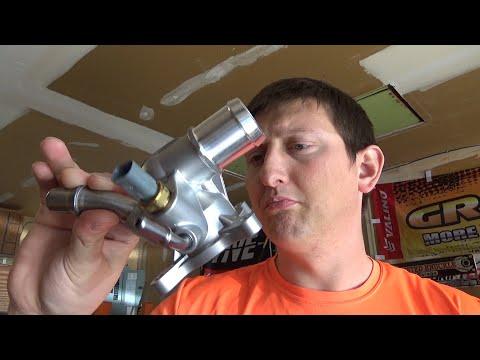







How to Replace the Thermostat Housing on a 2015-2021 Jeep Renegade (Coolant Bleed Guide) (Engine: Inline 4 2.4L)
Step-by-step DIY instructions with tools, parts list, torque specs, refill/bleed steps, and leak checks
How to Replace the Thermostat Housing on a 2015-2021 Jeep Renegade (Coolant Bleed Guide) (Engine: Inline 4 2.4L)
Step-by-step DIY instructions with tools, parts list, torque specs, refill/bleed steps, and leak checks for 2015, 2016, 2017, 2018, 2019, 2020, 2021


🔧 Renegade - Thermostat Replacement
On your Renegade, the thermostat controls coolant flow to keep engine temperature stable. A stuck thermostat can cause overheating, no heat from the cabin vents, or a check engine light, and replacing it usually means swapping the thermostat housing assembly and refilling/bleeding the cooling system.
Difficulty Level: Intermediate | Estimated Time: 2-4 hours
⚠️ Safety & Precautions
- ⚠️ Never open the coolant cap on a hot engine; hot coolant can spray and burn you.
- ⚠️ Support the vehicle with jack stands if you raise it—never rely on a jack alone.
- ⚠️ Keep coolant off belts and electrical connectors; wipe spills immediately.
- ⚠️ Coolant is toxic—catch it in a drain pan and dispose of it properly.
- 🔋 Battery disconnect is not strictly required, but disconnecting the negative terminal helps prevent accidental shorting when working around wiring.
🔧 Required Tools
You'll need the following tools for this repair:
- Safety glasses
- Nitrile gloves
- Floor jack (rated 3-ton minimum)
- Jack stands (rated 3-ton minimum)
- Wheel chocks
- Drain pan (at least 10-quart)
- Funnel
- Trim clip removal tool
- Flat-blade screwdriver
- Pliers (hose clamp pliers)
- 1/4" drive ratchet
- 3/8" drive ratchet
- 6" extension (1/4" drive)
- 10mm socket (1/4" drive)
- 13mm socket (3/8" drive)
- Torx T30 bit
- Torque wrench (inch-pound)
- Torque wrench (ft-lb)
- Coolant vacuum refill tool (specialty)
- Shop towels
🔩 Required Parts
HowToo sells all the parts you need for this repair:
- Thermostat housing assembly (with thermostat) - Qty: 1
- Thermostat housing seal/O-ring - Qty: 1
- Engine coolant (OAT, 50/50 premix) - Qty: 2-3 gallons
- Hose clamp (matching size) - Qty: 1-2
- Cooling system safe cleaner (optional) - Qty: 1
📋 Before You Begin
- Park on level ground, set the parking brake, and place wheel chocks behind the rear wheels.
- Let the engine cool fully (at least 2 hours). Then slowly loosen the coolant reservoir cap to relieve any remaining pressure.
- If raising the front, use a floor jack at the proper lift point and support with jack stands.
- Place a drain pan under the radiator area before disconnecting hoses.
- Assumption: This procedure matches the 2.4L thermostat integrated into the housing; torque values can vary by fastener/housing—verify with a service source if your parts differ.
🔨 Step-by-Step Instructions
Follow these steps in order:
Step 1: Disconnect battery (recommended)
- Use a 10mm socket and 3/8" drive ratchet to loosen the negative battery terminal and move it aside.
Step 2: Remove the upper engine cover and intake ducting
- Remove the engine cover by pulling it upward firmly by hand (it is held by rubber grommets).
- Use a flat-blade screwdriver or Torx T30 bit (depending on clamp style) to loosen the intake hose clamp(s).
- Use a trim clip removal tool to remove any plastic push-clips holding the air snorkel/duct.
- Lift the intake ducting/air inlet pieces out for access.
Step 3: Drain enough coolant to get below the thermostat level
- Position the drain pan (at least 10-quart) under the lower radiator hose area.
- Use pliers (hose clamp pliers) to slide the clamp back, then carefully twist and pull the lower hose to let coolant drain.
- Drain until flow slows to a drip, then reinstall the hose temporarily to reduce mess.
- Tip: Twisting the hose breaks it loose safely.
Step 4: Locate the thermostat housing and unplug connectors
- Find the thermostat housing where the main radiator hose meets the engine.
- Unplug any nearby electrical connector(s) (coolant temperature sensor/thermostat heater if equipped) by hand; use a flat-blade screwdriver gently only if the lock tab is stubborn.
Step 5: Remove coolant hoses from the thermostat housing
- Use pliers (hose clamp pliers) to slide each clamp back from the thermostat housing neck.
- Twist each hose to free it, then pull it off while aiming it into the drain pan.
- Wipe the hose ends with shop towels.
Step 6: Remove the thermostat housing bolts
- Use a 10mm socket (1/4" drive), 1/4" drive ratchet, and 6" extension to remove the thermostat housing mounting bolts.
- Pull the thermostat housing straight off the engine. More coolant will spill—keep the drain pan underneath.
Step 7: Clean the mounting surface
- Use shop towels to wipe the engine’s sealing surface clean and dry.
- Do not gouge the metal surface; if needed, use a plastic edge from the trim clip removal tool carefully.
- Tip: Clean + dry prevents repeat leaks.
Step 8: Install the new thermostat housing and seal
- Install the new seal/O-ring onto the new thermostat housing (lightly wet it with fresh coolant so it seats smoothly).
- Position the housing on the engine and start all bolts by hand (prevents cross-threading).
- Tighten bolts evenly using a 10mm socket and torque wrench (inch-pound).
- Torque to 10 Nm (89 in-lbs)
Step 9: Reconnect hoses and clamps
- Push hoses fully onto the thermostat housing until they bottom out.
- Use pliers (hose clamp pliers) to reposition clamps back to their original locations.
- Reconnect any electrical connector(s) until they click.
Step 10: Reinstall intake pieces and engine cover
- Reinstall the intake ducting and any push-clips using the trim clip removal tool (to align clips) and hand pressure to seat them.
- Tighten intake clamps using a flat-blade screwdriver or Torx T30 bit as equipped.
- Press the engine cover back onto its grommets by hand.
Step 11: Refill and bleed the cooling system
- Refill the coolant reservoir using a funnel with engine coolant (OAT, 50/50 premix) to the MAX line.
- If you have a coolant vacuum refill tool (specialty), use it now—this pulls air out so you don’t overheat from an air pocket. (An air pocket is trapped air that blocks coolant flow.)
- Start the engine and set the cabin HVAC to full HOT, low fan.
- Let it idle and watch temperature. As it warms up, keep topping off the reservoir as the level drops.
- Once the radiator fan cycles on/off at least once, shut the engine off and let it cool completely, then recheck the level and top off.
Step 12: Reconnect battery and final check
- Reconnect the negative battery terminal using a 10mm socket.
- Wipe any spilled coolant and inspect the thermostat housing and hose connections for seepage.
✅ After Repair
- Verify you have strong cabin heat and the temperature gauge stays normal during a 10-15 minute drive.
- Park, let it cool, then recheck coolant level and top off to the MAX line.
- Check for leaks over the next 2-3 heat cycles (a heat cycle is warm up to operating temp, then cool down).
- If the check engine light was on, it may clear after a few drive cycles; if not, a scan tool may be needed to clear codes.
💰 DIY vs Shop Cost
Shop Cost: $450-$850 (parts + labor)
DIY Cost: $80-$220 (parts only)
You Save: $370-$630 by doing it yourself!
Shop labor rates vary but typically run $100-$150/hour. This repair takes a shop approximately 2-4 hours.
🎯 Ready to get started?
HowToo makes it easy: same-day/2-day shipping on every part, plus all the tools and specialty tools you need! Check out the parts and tools sections below to add everything to your cart.
Guide for Engine Coolant Thermostat Housing Assembly replace for these Jeep vehicles
| Year Make Model | Sub Model | Engine | Body Style |
|---|---|---|---|
| 2021 Jeep Renegade | - | Inline 4 2.4L | - |
| 2020 Jeep Renegade | - | Inline 4 2.4L | - |
| 2019 Jeep Renegade | - | Inline 4 2.4L | - |
| 2018 Jeep Renegade | - | Inline 4 2.4L | - |
| 2017 Jeep Renegade | - | Inline 4 2.4L | - |
| 2016 Jeep Renegade | - | Inline 4 2.4L | - |
| 2015 Jeep Renegade | - | Inline 4 2.4L | - |