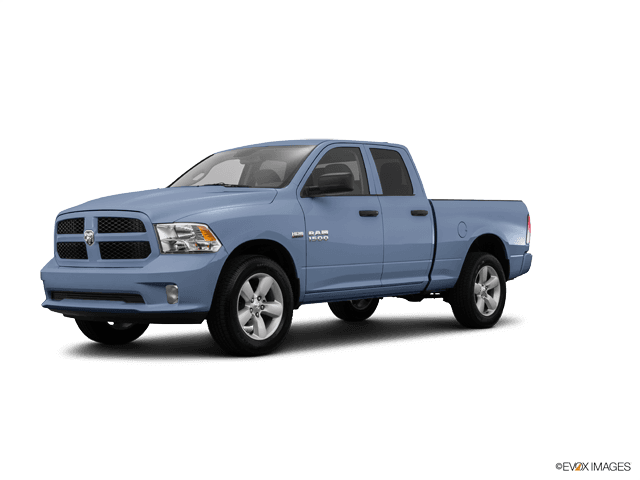
















How to Replace the Thermostat Housing on a 2014-2018 Ram 1500 3.6L Pentastar (Engine: V6 3.6L)
Step-by-step thermostat replacement with required tools, parts list, torque specs, and coolant bleed tips
How to Replace the Thermostat Housing on a 2014-2018 Ram 1500 3.6L Pentastar (Engine: V6 3.6L)
Step-by-step thermostat replacement with required tools, parts list, torque specs, and coolant bleed tips for 2014, 2015, 2016, 2017, 2018


🔧 1500 - Thermostat Replacement
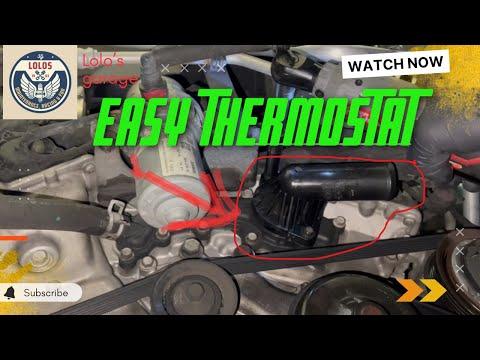
Your 1500’s thermostat controls coolant flow so the engine warms up correctly and doesn’t overheat. On the 3.6L, the thermostat is built into a plastic thermostat/coolant outlet housing, so you typically replace the whole housing assembly and its seal.
Difficulty Level: Intermediate | Estimated Time: 2-4 hours
Assumption: 3.6L Pentastar uses an integrated thermostat housing at the front of the engine.
⚠️ Safety & Precautions
- ⚠️ Never open the coolant system hot; wait until fully cool.
- ⚠️ Wear safety glasses and gloves; coolant is toxic and slippery.
- ⚠️ Support the truck with jack stands if you raise it; never rely on a jack.
- ⚠️ Keep coolant away from kids/pets; clean spills immediately.
- 🔋 Battery disconnect is recommended if you’ll remove the alternator.
🔧 Required Tools
You'll need the following tools for this repair:
- Safety glasses
- Nitrile gloves
- Wheel chocks
- Floor jack (rated 3-ton minimum)
- Jack stands (rated 3-ton minimum)
- Drain pan (at least 3-gallon)
- Funnel
- Shop rags
- Plastic trim tool
- Hose clamp pliers
- Flathead screwdriver
- Ratchet (3/8" drive)
- Socket set: 8mm, 10mm, 13mm, 15mm
- Extension set (3" and 6")
- Torque wrench (in-lb/Nm capable)
- Serpentine belt tool or 15mm long-handled wrench
- Gasket scraper (plastic)
🔩 Required Parts
HowToo sells all the parts you need for this repair:
- Thermostat housing assembly (with thermostat) - Qty: 1
- Thermostat housing seal/O-ring - Qty: 1
- Engine coolant (Mopar OAT 50/50 or concentrate + distilled water) - Qty: 2-3 gallons (as needed)
- Distilled water (if using concentrate coolant) - Qty: 2-3 gallons (as needed)
📋 Before You Begin
- 🅿️ Park on level ground, set the parking brake, and chock the wheels.
- 🧊 Let the engine cool completely (upper radiator hose should feel cool).
- 🔋 Use a 10mm socket to disconnect the negative battery terminal and move it aside so it can’t spring back.
- 🧼 Place a drain pan under the radiator area to catch coolant.
🔨 Step-by-Step Instructions
Follow these steps in order:
Step 1: Lower coolant level
- Remove the coolant reservoir cap slowly to release any leftover pressure.
- Place the drain pan under the radiator drain area.
- If equipped with a radiator drain petcock: open it using a flathead screwdriver and drain until the level is below the thermostat housing.
- If no petcock is accessible: use hose clamp pliers to remove the lower radiator hose clamp and carefully pull the hose to drain coolant.
- Tip: Drain less by lowering level only.
Step 2: Remove the intake duct (for access)
- Use an 8mm socket to loosen the hose clamps on the intake duct.
- Disconnect any breather line(s) by hand or with a plastic trim tool if clipped in.
- Lift the intake duct out and set it aside.
Step 3: Relieve serpentine belt tension
- The belt tensioner is a spring-loaded pulley that keeps the belt tight.
- Use a serpentine belt tool or 15mm long-handled wrench on the tensioner bolt and rotate to relieve tension.
- Slip the belt off the alternator pulley and let it rest safely out of the way.
- Tip: Take a belt-routing photo first.
Step 4: Remove the alternator (common for clearance)
- Unplug the alternator electrical connector by pressing the lock tab (use a plastic trim tool if needed).
- Remove the alternator power cable nut using a 13mm socket, then move the cable aside.
- Remove alternator mounting bolts using a 13mm socket with extensions as needed.
- Lift the alternator out and set it aside.
- During reassembly: Torque alternator mounting bolts to 54 Nm (40 ft-lbs).
Step 5: Disconnect hoses from the thermostat housing
- Use hose clamp pliers to compress the spring clamp(s) and slide them back on the hose.
- Twist the hose gently to break it free, then pull it off the housing.
- Have shop rags ready for coolant drips.
Step 6: Remove the thermostat housing
- Remove the thermostat housing bolts using a 10mm socket.
- Lift the housing straight off.
- Remove the old seal/O-ring (if it didn’t come off with the housing).
Step 7: Clean the sealing surface
- Use a gasket scraper (plastic) and shop rags to clean the mating surface.
- Do not gouge the aluminum surface; smooth and clean is the goal.
- Tip: No old seal material should remain.
Step 8: Install the new thermostat housing
- Install the new seal/O-ring onto the new housing (or into its groove, depending on design).
- Set the housing in place and start all bolts by hand.
- Tighten bolts evenly using a 10mm socket.
- Torque thermostat housing bolts to 12 Nm (106 in-lbs).
Step 9: Reinstall hoses, alternator, and belt
- Reinstall hoses and position clamps using hose clamp pliers.
- Reinstall the alternator and wiring using 13mm socket and extensions.
- Torque alternator mounting bolts to 54 Nm (40 ft-lbs).
- Route the belt correctly, then use the serpentine belt tool or 15mm long-handled wrench to rotate the tensioner and slip the belt back on.
- Reinstall the intake duct using an 8mm socket for the clamps.
Step 10: Refill and bleed air from the cooling system
- Close the radiator drain (if opened) using a flathead screwdriver.
- Fill the reservoir with the correct coolant using a funnel.
- If your housing has a bleed screw (small air bleeder): open it carefully with a flathead screwdriver until coolant flows without bubbles, then close it snugly.
- Reconnect the negative battery terminal using a 10mm socket.
✅ After Repair
- 🧪 Start the engine and let it idle with the heater set to HOT; confirm you get steady warm air.
- 🌡️ Watch the temperature gauge; it should rise to normal and stay stable.
- 🧼 Check for leaks around the thermostat housing and hose connections.
- 🧊 Let it cool fully, then recheck the coolant level and top off as needed.
- 🚗 Test drive 10-15 minutes, then recheck for leaks again.
💰 DIY vs Shop Cost
Shop Cost: $450-$850 (parts + labor)
DIY Cost: $60-$180 (parts only)
You Save: $270-$790 by doing it yourself!
Shop labor rates vary but typically run $100-$150/hour. This repair takes a shop approximately 2-4 hours.
🎯 Ready to get started?
HowToo makes it easy: same-day/2-day shipping on every part, plus all the tools and specialty tools you need! Check out the parts and tools sections below to add everything to your cart.
Guide for Engine Coolant Thermostat Housing Assembly replace for these Ram vehicles
| Year Make Model | Sub Model | Engine | Body Style |
|---|---|---|---|
| 2018 Ram 1500 | - | V6 3.6L | - |
| 2017 Ram 1500 | - | V6 3.6L | - |
| 2016 Ram 1500 | - | V6 3.6L | - |
| 2015 Ram 1500 | - | V6 3.6L | - |
| 2014 Ram 1500 | - | V6 3.6L | - |