









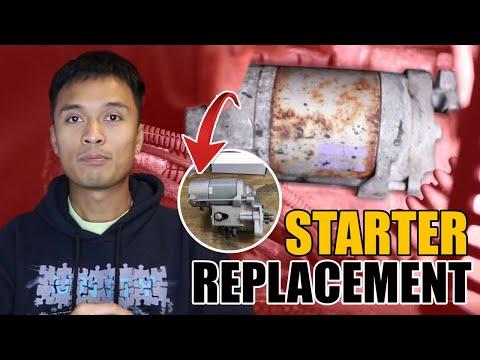






How to Replace the Starter Motor on a 2021 Toyota Tacoma 3.5L V6
Step-by-step DIY Tacoma starter replacement with tools, parts list, safety tips, and torque guidance for 2016, 2017, 2018, 2019, 2020, 2021, 2022, 2023
How to Replace the Starter Motor on a 2021 Toyota Tacoma 3.5L V6
Step-by-step DIY Tacoma starter replacement with tools, parts list, safety tips, and torque guidance for 2016, 2017, 2018, 2019, 2020, 2021, 2022, 2023


🔧 Tacoma - Starter Motor Replacement
You’ll be removing the old starter motor from the side of the transmission and installing a new one on your Tacoma. This means working under the truck and around the battery cables, so careful safety steps matter a lot.
Difficulty Level: Intermediate | Estimated Time: 2–3 hours
⚠️ Safety & Precautions
- 🔸Always disconnect the negative battery terminal first to avoid sparks and short circuits.
- 🔸Support the truck with jack stands on solid, level ground—never rely only on a floor jack.
- 🔸Let the exhaust and engine cool fully before working underneath.
- 🔸Wear safety glasses when working under the truck; rust and dirt can fall in your eyes.
- 🔸Keep metal tools away from the battery positive terminal once the battery is reconnected.
- 🔸Set the transmission in gear and apply the parking brake; chock the rear wheels.
🔧 Required Tools
You'll need the following tools for this repair:
- 🔸Floor jack (rated 3-ton minimum)
- 🔸Jack stands (rated 3-ton minimum, Qty: 2)
- 🔸Wheel chocks
- 🔸10mm socket
- 🔸12mm socket
- 🔸14mm socket
- 🔸17mm socket
- 🔸3/8" drive ratchet
- 🔸3/8" drive extensions (3" and 6")
- 🔸Torque wrench (3/8" drive, 5–80 ft-lbs range) (a torque wrench lets you tighten bolts to a specific force)
- 🔸Flathead screwdriver (medium)
- 🔸Phillips screwdriver (medium)
- 🔸Trim clip removal tool (a forked plastic tool for popping plastic clips)
- 🔸Needle-nose pliers
- 🔸Work light or headlamp
- 🔸Mechanic’s gloves
- 🔸Safety glasses
- 🔸Shop rags
🔩 Required Parts
HowToo sells all the parts you need for this repair:
- 🔸Starter motor assembly (3.5L V6) - Qty: 1
- 🔸Starter mounting bolts - Qty: 2 (recommended)
- 🔸Battery terminal protector spray - Qty: 1
- 🔸Dielectric grease - Qty: 1 small tube
- 🔸Anti-seize compound - Qty: 1 small tube
- 🔸Replacement skid plate bolts/clips - Qty: as needed (if any are rusted or damaged)
📋 Before You Begin
- Park your Tacoma on level ground, set the parking brake, and put the transmission in gear.
- Place wheel chocks behind the rear tires.
- Open the hood and locate the battery on the driver’s side.
- Turn off all electrical accessories (lights, radio, etc.).
- Make sure you have your radio/navigation presets written down if you care about them; some settings may reset when the battery is disconnected.
🔨 Step-by-Step Instructions
Follow these steps in order:
Step 1: Disconnect the battery
- Use a 10mm socket and ratchet to loosen the nut on the negative (-) battery terminal.
- Lift the cable off the terminal and tuck it aside so it cannot spring back and touch the battery post.
- If needed, use a 10mm socket to loosen the positive terminal and inspect for corrosion, but leave it connected for now.
- Always remove negative terminal first for safety.
Step 2: Raise and support the front of the truck
- Position the floor jack (3-ton) under the front frame crossmember and lift until the front wheels are off the ground.
- Place jack stands (3-ton) under the frame rails on both sides and slowly lower the truck onto the stands.
- Give the truck a firm shake to confirm it is stable.
- Leave the floor jack lightly touching the frame as a backup if possible.
Step 3: Remove the front skid plate(s)
- Locate the front skid plate under the engine area. On TRD Sport there may be a plastic and/or metal panel.
- Use a 12mm socket and ratchet to remove the bolts securing the metal skid plate.
- If there are plastic covers, remove any plastic clips with a trim clip removal tool or flathead screwdriver.
- Set the skid plate and hardware aside in order.
- Lay bolts out in removal order to remember location.
Step 4: Locate the starter motor
- From underneath on the passenger side, look where the engine meets the transmission (bellhousing area).
- The starter is a cylindrical motor with a smaller cylinder attached and two wires connected to it.
- Use your work light to clearly see the electrical connector and main cable.
Step 5: Disconnect the electrical connector and main cable
- On the small plug-style connector, press the tab and pull it off the starter solenoid by hand. If stuck, gently use a flathead screwdriver to release the tab.
- For the thick battery cable attached with a nut, use a 12mm socket and ratchet to remove the nut on the starter terminal.
- Pull the cable eyelet off the stud and push the cable aside so it cannot touch the stud.
- Do not twist the wire; hold the metal eyelet.
Step 6: Remove any brackets or lines in the way (if equipped)
- Some Tacomas have a small bracket or clip near the starter.
- Use a 12mm socket or 14mm socket as needed to unbolt any brackets blocking access to the starter mounting bolts.
- Use a trim clip removal tool or needle-nose pliers to free any harness clips from the starter or nearby brackets.
Step 7: Remove the starter mounting bolts
- Identify the two main starter mounting bolts going into the transmission bellhousing.
- Use a 14mm socket, 3/8" ratchet, and extensions as needed to reach and loosen the lower bolt first.
- Remove the lower bolt completely and set it aside.
- Support the body of the starter with one hand.
- Use the 14mm socket and ratchet to remove the upper mounting bolt.
- Once the upper bolt is free, carefully lower the starter out of its opening.
- Torque for reinstallation: Tighten starter mounting bolts to manufacturer specification per service manual.
- Keep track of any shims or spacers if present.
Step 8: Compare the old and new starters
- Place the old starter and the new starter side by side on a clean surface.
- Verify that:
- The mounting holes line up.
- The electrical terminals are in the same positions.
- The gear (pinion) size and nose length match.
- If anything looks different, do not install—double-check the part before proceeding.
Step 9: Install the new starter motor
- Apply a very thin film of anti-seize compound to the threads of the new mounting bolts if recommended (avoid getting it on the starter or bellhousing surfaces).
- Lift the new starter into position, guiding the nose into the opening in the bellhousing.
- Hand-thread the upper bolt first by hand to avoid cross-threading.
- Then hand-thread the lower bolt.
- Use a 14mm socket and ratchet to snug both bolts evenly.
- Using a torque wrench (3/8" drive) and 14mm socket, tighten both mounting bolts to manufacturer specification per service manual.
- Always start bolts by hand to protect threads.
Step 10: Reconnect the electrical connectors
- Apply a small dab of dielectric grease to the small connector terminals if available.
- Push the small plug-style connector onto the starter solenoid until it clicks.
- Place the large battery cable eyelet onto the main starter stud.
- Install the nut using a 12mm socket and ratchet and snug it firmly.
- Torque for reinstallation: Tighten starter terminal nut to manufacturer specification per service manual (do not overtighten or you can damage the stud).
Step 11: Reinstall brackets and harness clips
- Reattach any brackets you removed using a 12mm socket or 14mm socket and ratchet.
- Snap any wiring harness clips back into their original holes using your fingers or needle-nose pliers.
- Ensure no wires are touching the exhaust or moving parts.
Step 12: Reinstall skid plate(s)
- Lift the skid plate back into place.
- Install all bolts by hand first to avoid cross-threading.
- Use a 12mm socket and ratchet to tighten the bolts evenly.
- Torque for reinstallation: Tighten skid plate bolts to manufacturer specification per service manual.
- Reinstall any plastic covers and clips using a trim clip removal tool or fingers.
Step 13: Lower the truck and reconnect the battery
- Use the floor jack to lift the truck slightly off the jack stands.
- Remove the jack stands, then slowly lower the truck to the ground.
- Under the hood, clean the battery terminals with shop rags if needed.
- Use a 10mm socket to reinstall and tighten the negative (-) battery terminal.
- Spray a light coat of battery terminal protector spray on both terminals.
✅ After Repair
- Turn the key and start your Tacoma. It should crank strongly and start quickly.
- Listen for any unusual grinding or whining noises when cranking; if you hear any, shut it off and recheck mounting and wiring.
- Verify that no warning lights stay on after startup.
- Check under the truck for any loose wires, parts, or tools before driving.
- After a short drive, recheck the battery terminals to ensure they are still tight.
💰 DIY vs Shop Cost
Shop Cost: $550–$850 (parts + labor)
DIY Cost: $220–$400 (parts only)
You Save: $330–$450 by doing it yourself!
Shop labor rates typically run $100–$150/hour. This repair takes a shop approximately 1.5–2.0 hours.
🎯 Ready to get started?
HowToo makes it easy: same-day/2-day shipping on every part, plus all the tools and specialty tools you need! Check out the parts and tools sections above to add everything to your cart.