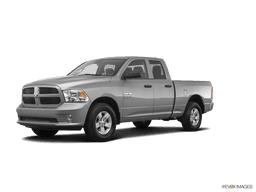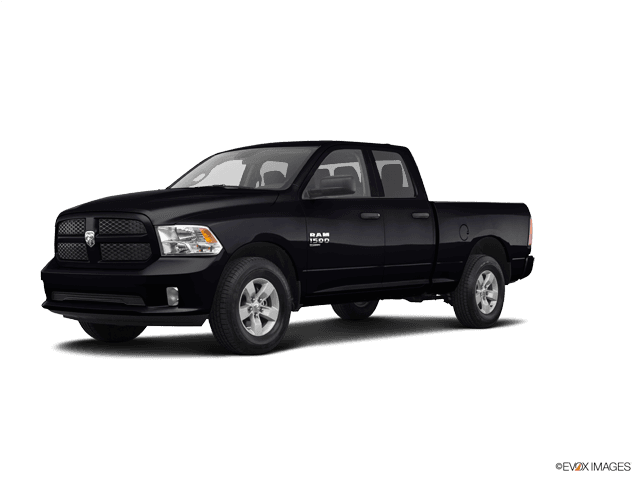














How to Replace the Starter Motor on a 2020 Ram 1500 Classic 5.7L
Step-by-step DIY starter removal and installation with tools, parts list, torque specs, and safety tips for 2019
How to Replace the Starter Motor on a 2020 Ram 1500 Classic 5.7L
Step-by-step DIY starter removal and installation with tools, parts list, torque specs, and safety tips for 2019


1500 Classic - Starter Motor Replacement 🔧
Got it—you want to replace the starter on your 2020 1500 Classic SLT 5.7L 4WD. I’ll walk you through it step by step, beginner-friendly.
Quick safety note: The starter has a direct heavy cable from the battery. You must disconnect the battery before touching it to avoid sparks or burns.
Before You Start ⚠️
- ⚠️ Work on a cool engine – exhaust and catalytic converter are close to the starter and get very hot.
- ⚠️ Park on level ground, set parking brake, and chock (block) the rear wheels.
- ⚠️ Use jack stands – never rely on a jack alone when working under the truck.
Tools & Supplies 🧰
- 🛠️ Floor jack and jack stands (rated for a full-size truck).
- 🛠️ Wheel chocks (blocks to stop the truck from rolling).
- 🛠️ Socket set:
- 3/8" and 1/2" drive ratchets.
- Common sizes you’ll use: 10mm, 13mm, 15mm sockets.
- Short and deep sockets if you have them.
- 🛠️ Extensions (3"–6") – help reach bolts from a better angle.
- 🛠️ Torque wrench – tool that lets you tighten bolts to a specific torque.
- 🛠️ Flat screwdriver or trim tool – to help with any clips or covers.
- 🛠️ Small wire brush or sandpaper – to clean cable ends if corroded.
- 🛠️ Safety glasses and mechanic gloves.
Parts You’ll Need 📦
- 🔧 Starter motor assembly for 2020 1500 Classic 5.7L (4WD, SLT).
- 🔧 New starter mounting bolts if recommended with your starter (some OEMs say to replace stretch bolts; if your new starter includes bolts, use them).
Where the Starter Is Located 📍
- 🔎 On your 5.7L HEMI, the starter is mounted on the passenger side of the engine, low down, where the engine meets the transmission (bellhousing area).
- 🔎 You’ll access it from under the truck, behind the front passenger wheel area.
Step 1 – Prepare the Truck 🧱
- 🧰 Put the truck in PARK and set the parking brake.
- 🧰 Place wheel chocks behind the rear wheels.
- 🧰 Open the hood.
Step 2 – Disconnect the Battery 🔋
- ⚠️ This is critical. The starter cable is always “hot” if the battery is connected.
- 🧰 Locate the battery under the hood.
- 🧰 Use a 10mm socket to loosen the negative (-) terminal clamp.
- 🧰 Remove the negative cable and tuck it aside so it cannot spring back and touch the terminal.
- 🧰 Wait at least 2–3 minutes to let any modules power down.
Step 3 – Raise and Support the Front End 🏗️
- 🧰 Position the floor jack under a solid front frame point or crossmember (not under thin sheet metal).
- 🧰 Lift the front of the truck high enough to work comfortably under it.
- 🧰 Place jack stands under the frame rails on both sides.
- 🧰 Gently lower the truck onto the stands and give the truck a small shake to confirm it’s stable.
- ⚠️ Never get under the truck while it’s only on the jack.
Step 4 – Locate the Starter Underneath 🔎
- 🧰 Slide under from the passenger side.
- 🧰 Look where the engine meets the transmission. The starter is a cylindrical motor with a smaller cylinder (solenoid) attached, bolted to the bellhousing.
- 🧰 You’ll see:
- A thick cable from the battery (main power).
- A smaller plug or wire (solenoid control wire).
Step 5 – Disconnect Starter Wiring 🔌
- ⚠️ Double-check the battery negative is disconnected before touching these.
- 🧰 On the starter solenoid:
- There will be a large stud with a nut holding the thick battery cable.
- There will be a small connector for the control wire.
- 🧰 Use a 13mm socket (typical) to remove the nut on the large stud and pull the thick cable off. Note the order of any washers.
- 🧰 Press the tab on the small electrical connector and pull it straight off. If stuck, gently use a flat screwdriver, but don’t pry too hard.
- 🧰 Move the cables aside so they won’t snag when you remove the starter.
Step 6 – Remove the Starter Mounting Bolts 🔩
- 🧰 The starter is held to the transmission bellhousing by usually two main bolts (sometimes three) going through the starter into the bellhousing.
- 🧰 Use a 15mm socket with a ratchet and extension to remove the mounting bolts.
- 🧰 Support the starter with one hand as you remove the last bolt so it doesn’t drop on you.
- 🧰 Once bolts are out, pull the starter straight back and down. You may need to wiggle it a bit to clear the bellhousing.
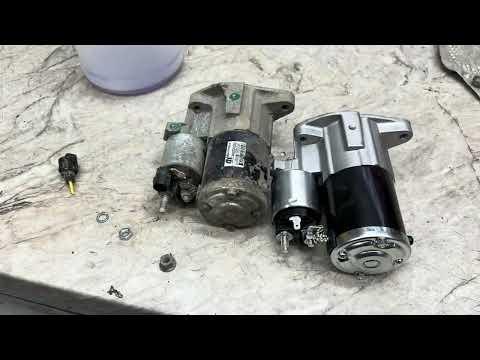
Step 7 – Compare Old and New Starter 🔍
- 🧰 On the bench, compare:
- Mounting holes location.
- Electrical stud and connector positions.
- Overall length and nose shape.
- 🧰 They should match closely. If anything looks different, stop and verify part number.
Step 8 – Install the New Starter 🆕
- 🧰 Lift the new starter into position, aligning the nose into the bellhousing opening and the bolt holes.
- 🧰 Start the mounting bolts by hand first to avoid cross-threading (damaging threads by forcing them in crooked).
- 🧰 Once both bolts are threaded by hand, snug them with the ratchet.
Step 9 – Torque the Starter Bolts 🔧
- 🧰 Set your torque wrench to:
- Starter mounting bolts: 40 N·m (30 ft-lb) – typical spec for this application.
- 🧰 Tighten each bolt evenly to the specified torque.
Step 10 – Reconnect Starter Wiring 🔌
- 🧰 Reinstall the thick battery cable onto the large stud on the starter solenoid.
- 🧰 Install the nut and tighten to:
- Solenoid battery terminal nut: 13 N·m (115 in-lb).
- 🧰 Plug the small control connector back into the solenoid until it clicks.
- 🧰 Make sure wires are routed away from the exhaust and moving parts.
Step 11 – Lower the Truck 🏁
- 🧰 Slide out from under the truck.
- 🧰 Use the jack to lift the truck slightly off the jack stands.
- 🧰 Remove the jack stands and lower the truck to the ground.
Step 12 – Reconnect Battery & Test 🔄
- 🧰 Reconnect the negative (-) battery cable and tighten the 10mm nut snugly (do not overtighten).
- 🧰 Get in the truck and turn the key/start button:
- The engine should crank strongly and start normally.
- Listen for any grinding or unusual noises from the starter area.
- 🧰 If it just clicks or does nothing, we’ll need to check connections and fuses.
Tips & Checks After Replacement ✅
- 🧰 If cranking is slow, check:
- Battery condition and charge.
- Clean, tight battery terminals.
- Clean, tight starter cable connections.
- 🧰 If you hear grinding, the starter may not be seated flat or the wrong part was installed.
Want Help With Next Steps? 🤝
If you tell me what tools you already have (even just “basic socket set and a jack”), I can adjust the steps and suggest simple workarounds.
HowToo makes it easy: below this answer you’ll see starter options, bolts, and any tools you’re missing, all with fast shipping. You can add them to your cart directly from the tools and parts section.