









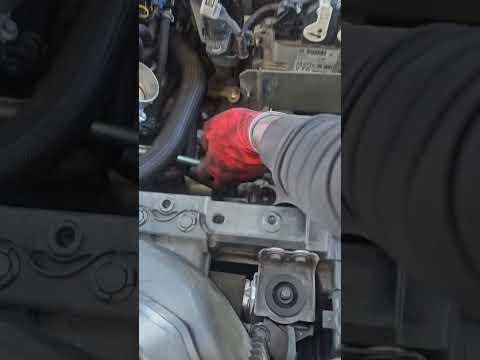






How to Replace the Starter Motor on a 2020 Nissan Altima 2.5L
Step-by-step DIY starter removal and installation with tools, parts list, torque specs, safety tips, and cost savings for 2019, 2020, 2021, 2022
How to Replace the Starter Motor on a 2020 Nissan Altima 2.5L
Step-by-step DIY starter removal and installation with tools, parts list, torque specs, safety tips, and cost savings for 2019, 2020, 2021, 2022


🔧 Altima - Starter Motor Replacement
You’ll be removing the old starter motor from the transmission side of the engine and installing a new one. This restores proper cranking if the starter has failed or is weak.
Difficulty Level: Intermediate | Estimated Time: 2-3 hours
⚠️ Safety & Precautions
- ⚠️ Always disconnect the negative battery cable before working on the starter to avoid electric shock and accidental cranking.
- ⚠️ The starter power cable is directly connected to the battery; treat it like a live cable until the battery is disconnected.
- ⚠️ Support the car with jack stands if you raise it; never rely only on a jack.
- ⚠️ Let the exhaust and engine cool before working underneath to avoid burns.
- ⚠️ Wear safety glasses when working under the car to protect your eyes from dirt and rust.
🔧 Required Tools
You'll need the following tools for this repair:
- Floor jack (rated 3-ton minimum)
- Jack stands (rated 3-ton minimum), Qty: 2
- Wheel chocks
- Ratchet 3/8-inch drive
- Ratchet 1/2-inch drive
- 10mm socket
- 12mm socket
- 13mm socket
- 14mm socket
- 3/8-inch drive extension (3-6 inch)
- 1/2-inch drive extension (6 inch)
- Torque wrench 3/8-inch drive (5-60 ft-lbs range)
- Torque wrench 1/2-inch drive (20-150 ft-lbs range)
- Flathead screwdriver (medium)
- Trim clip remover tool
- Needle-nose pliers
- Work light or headlamp
- Mechanic’s creeper or floor mat
- Gloves
- Safety glasses
🔩 Required Parts
HowToo sells all the parts you need for this repair:
- 🛠️ Starter motor assembly (for 2.5L engine) - Qty: 1
- 🛠️ Starter mounting bolts - Qty: 2 (recommended new)
- 🛠️ Battery terminal cleaning brush - Qty: 1
- 🛠️ Dielectric grease - Qty: 1 tube
- 🛠️ Anti-seize compound - Qty: 1 small tube
- 🛠️ Replacement plastic clips for engine under cover - Qty: 4-6 (if any break)
📋 Before You Begin
- 📝 Park the Altima on level ground, shift to Park, and set the parking brake firmly.
- 📝 Turn off the ignition and remove the key or key fob from the car.
- 📝 Open the hood and make sure you have enough light and space to work.
- 📝 Plan to raise the front of the car to access the starter from underneath; have the floor jack and jack stands ready.
- 📝 You do not need to change any infotainment or dash settings for this job.
🔨 Step-by-Step Instructions
Follow these steps in order:
Step 1: Disconnect the battery
- 🛠️ Open the hood and locate the battery on the left side (driver side).
- 🛠️ Use a 10mm socket and 3/8-inch ratchet to loosen the nut on the negative (black, “-”) terminal clamp.
- 🛠️ Pull the negative cable off the battery post and tuck it aside so it cannot spring back.
- 🛠️ Never let your wrench touch positive and metal body together.
Step 2: Safely lift and support the front of the car
- 🛠️ Place wheel chocks behind both rear wheels.
- 🛠️ Position the floor jack under the front center jacking point (front crossmember behind the bumper).
- 🛠️ Pump the floor jack until the front wheels are off the ground.
- 🛠️ Place jack stands under the factory pinch welds on both sides, then slowly lower the car onto the stands with the jack.
- 🛠️ Gently rock the car by hand to confirm it is stable on the stands before going underneath.
Step 3: Remove the engine under cover (splash shield)
- 🛠️ Slide under the front of the car using a creeper or mat.
- 🛠️ The plastic under cover is held with plastic clips and small bolts.
- 🛠️ Use a trim clip remover tool or flathead screwdriver to carefully pry out the plastic clips.
- 🛠️ Use a 10mm socket and 3/8-inch ratchet to remove any 10mm bolts holding the cover.
- 🛠️ Lower the under cover and set it aside.
Step 4: Locate the starter motor
- 🛠️ From underneath, look at the area where the engine meets the transmission (bellhousing area) on the front side of the engine.
- 🛠️ The starter is a cylindrical motor about the size of a soda can, with a smaller cylinder attached (the solenoid) and a thick cable running to it.
- 🛠️ Take a moment to see the wiring: one large power cable and one smaller plug or wire.
Step 5: Disconnect the starter electrical connectors
- 🛠️ Put on gloves and safety glasses if not already wearing them.
- 🛠️ On the starter solenoid, locate the small electrical connector (usually a push clip style).
- 🛠️ Use your fingers or needle-nose pliers to press the tab and gently pull the small connector off. Do not yank by the wire.
- 🛠️ Next, locate the large cable secured with a nut on a stud.
- 🛠️ Use a 12mm or 13mm socket with a 3/8-inch ratchet to remove the nut from the large terminal.
- 🛠️ Remove the cable eyelet from the stud and move the cable aside.
- 🛠️ When installing later, tighten this nut to 10 Nm (89 in-lbs).
Step 6: Remove components blocking access (if needed)
- 🛠️ On some Altimas, an additional bracket or wiring harness retainer may be in the way of the starter bolts.
- 🛠️ If a small bracket is attached to the starter or nearby, use a 10mm socket and 3/8-inch ratchet to remove its bolts and move it aside.
- 🛠️ Keep track of bolt locations so reinstallation is easier later.
Step 7: Remove the starter mounting bolts
- 🛠️ The starter is usually held to the transmission by two larger bolts from the transmission side.
- 🛠️ Use a 14mm socket with a 1/2-inch ratchet and appropriate extension to reach the starter mounting bolts.
- 🛠️ Break each bolt loose, then remove them completely while supporting the starter with your free hand so it doesn’t drop.
- 🛠️ Carefully lower the starter out of its opening and remove it from under the car.
- 🛠️ Note orientation of the old starter to match the new one during installation.
- 🛠️ Factory spec for these bolts is approximately 49 Nm (36 ft-lbs) when reinstalling.
Step 8: Prepare the new starter
- 🛠️ Compare the old and new starters side by side to confirm same shape, bolt holes, and electrical connections.
- 🛠️ Apply a very thin smear of anti-seize compound on the starter mounting flange where it contacts the transmission. Do not get it on the gear.
- 🛠️ Make sure the new starter gear area is clean and free of packing material.
Step 9: Install the new starter motor
- 🛠️ Position the new starter in place in the bellhousing opening, matching the original orientation.
- 🛠️ Hand-thread the two starter mounting bolts to avoid cross-threading.
- 🛠️ Use the 14mm socket, extension, and 1/2-inch ratchet to snug both bolts evenly.
- 🛠️ Then use a 1/2-inch torque wrench with the 14mm socket to tighten both bolts to 49 Nm (36 ft-lbs).
- 🛠️ Reinstall any bracket you removed earlier using the 10mm socket and tighten its bolts to about 9 Nm (80 in-lbs).
Step 10: Reconnect starter wiring
- 🛠️ Slide the large cable eyelet back onto the starter solenoid stud.
- 🛠️ Install the nut by hand, then tighten using a 12mm or 13mm socket and 3/8-inch torque wrench to 10 Nm (89 in-lbs).
- 🛠️ Lightly coat the exposed metal of the cable eyelet and nut with dielectric grease to help prevent corrosion.
- 🛠️ Plug the small connector back into the solenoid until it clicks.
- 🛠️ Gently tug the connector and cable to be sure they are secure and routed away from moving parts (axles, pulleys) and hot exhaust parts.
Step 11: Reinstall the engine under cover
- 🛠️ Lift the under cover back into place under the front of the car.
- 🛠️ Install any 10mm bolts first by hand, then tighten with a 10mm socket and 3/8-inch ratchet snugly (about 5 Nm / 44 in-lbs).
- 🛠️ Reinstall the plastic clips by pushing them back into their holes until seated. Replace any broken clips with new ones.
Step 12: Lower the car
- 🛠️ Position the floor jack back under the front center jacking point and lift the car slightly to free the jack stands.
- 🛠️ Remove the jack stands from both sides.
- 🛠️ Slowly lower the car to the ground and remove the floor jack.
- 🛠️ Remove the wheel chocks from behind the rear wheels.
Step 13: Reconnect the battery
- 🛠️ At the battery, place the negative (black) cable back on the negative terminal.
- 🛠️ Use a 10mm socket and 3/8-inch torque wrench to tighten the clamp nut to about 5 Nm (44 in-lbs)—snug but not crushing.
- 🛠️ If you have a battery terminal cleaning brush, clean the battery posts and terminal insides before tightening, then apply a light coat of dielectric grease.
✅ After Repair
- ✅ Sit in the driver seat, make sure the transmission is in Park, and press the brake pedal.
- ✅ Press the Start button. The engine should crank quickly and smoothly with no grinding or clicking noises.
- ✅ If the engine does not crank, recheck the battery connection, starter connectors, and that the battery is charged.
- ✅ Look under the car for any loose parts or hanging wires, and make sure the under cover is secure.
- ✅ Take a short test drive around your area, then shut the engine off and restart a few times to confirm reliable starting.
💰 DIY vs Shop Cost
Shop Cost: $550-$800 (parts + labor)
DIY Cost: $180-$300 (parts only)
You Save: $370-$500 by doing it yourself!
Shop labor rates typically run $100-$150/hour. This repair takes a shop approximately 1.5-2.0 hours.
🎯 Ready to get started?
HowToo makes it easy: same-day/2-day shipping on every part, plus all the tools and specialty tools you need! Check out the parts and tools sections above to add everything to your cart.