
















How to Replace the Starter Motor on a 2018 Volkswagen Tiguan
Step-by-step DIY instructions with required tools, parts list, and key torque specs for 2018, 2019, 2020, 2021, 2022, 2023, 2024
How to Replace the Starter Motor on a 2018 Volkswagen Tiguan
Step-by-step DIY instructions with required tools, parts list, and key torque specs for 2018, 2019, 2020, 2021, 2022, 2023, 2024


🔧 Tiguan - Starter Motor Replacement
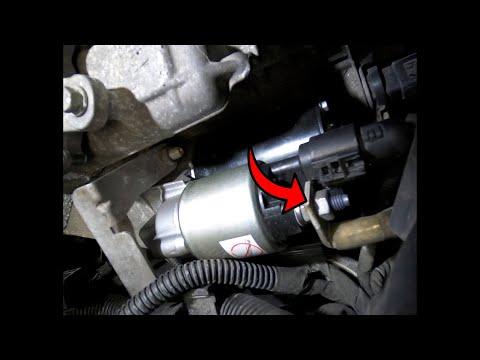
The starter motor spins the engine so it can start. On your Tiguan, the starter is mounted to the transmission bellhousing and has a heavy battery cable plus a small control connector.
Difficulty Level: Advanced | Estimated Time: 2-4 hours
⚠️ Safety & Precautions
- ⚠️ Disconnect the battery before touching starter wiring (prevents shorts and burns).
- ⚠️ Support the Tiguan with jack stands; never rely on a floor jack alone.
- ⚠️ Let the engine/metal cool first; the area near the starter can be hot.
- ⚠️ Keep the battery cable from touching metal after removal (wrap with a rag).
🔧 Required Tools
You'll need the following tools for this repair:
- Safety glasses
- Mechanic gloves
- Floor jack (rated 3-ton minimum)
- Jack stands (rated 3-ton minimum)
- Wheel chocks
- 10mm socket
- 13mm socket
- 16mm socket
- Ratchet (3/8" drive)
- Socket extension set (3/8" drive)
- Universal joint adapter (3/8" drive)
- Torque wrench (3/8" drive, 10–100 Nm range)
- Torx T25 bit
- Torx T30 bit
- Flat trim tool
- Pick tool
- Flashlight
🔩 Required Parts
HowToo sells all the parts you need for this repair:
- Starter motor - Qty: 1
- Starter mounting bolt set - Qty: 1
- Battery terminal hardware - Qty: 1
📋 Before You Begin
- Park on level ground, shift to Park, and set the parking brake.
- Open the hood and keep your key fob away from the vehicle (prevents accidental wake-up).
- Disconnect the battery: remove the negative terminal first (the “-” cable).
- Take a quick photo of all connectors first.
🔨 Step-by-Step Instructions
Follow these steps in order:
Step 1: Disconnect the battery
- Use a 10mm socket to loosen the negative battery terminal nut.
- Lift the negative cable off and move it aside so it cannot spring back.
Step 2: Raise the front of the Tiguan and remove the lower splash shield
- Place wheel chocks behind the rear wheels.
- Lift the front with a floor jack (rated 3-ton minimum) and support with jack stands (rated 3-ton minimum).
- Remove the lower engine cover/splash shield using Torx T25 bit and Torx T30 bit on a ratchet (3/8" drive).
Step 3: Locate the starter motor
- Use a flashlight to find the starter where the engine meets the transmission (bellhousing area).
- Identify the heavy battery cable on the starter solenoid and the small control connector.
- The solenoid is the small cylinder on the starter.
Step 4: Disconnect the starter wiring
- Remove any protective cap on the large terminal using a pick tool or flat trim tool.
- Remove the large battery cable nut using a 13mm socket, then lift the cable off the stud.
- Disconnect the small control connector by releasing the lock tab with a pick tool and pulling straight off.
- Torque on install: Large terminal nut Torque to 13 Nm (10 ft-lbs)
Step 5: Remove the starter mounting bolts
- Support the starter with one hand while removing bolts with a 16mm socket, socket extension set, and universal joint adapter.
- Remove the upper and lower starter mounting bolts (count and match their positions).
- Pull the starter straight out from the bellhousing.
- Torque on install: Starter mounting bolts Torque to 65 Nm (48 ft-lbs)
Step 6: Install the new starter
- Compare the new starter to the old one (same nose length, same terminals).
- Position the starter into the bellhousing and start the mounting bolts by hand (prevents cross-threading).
- Tighten with a 16mm socket and finish with a torque wrench (3/8" drive, 10–100 Nm range).
- Torque: Starter mounting bolts Torque to 65 Nm (48 ft-lbs)
Step 7: Reconnect wiring and reassemble
- Reconnect the small control connector until it clicks (use your hands; no tools needed).
- Reinstall the large battery cable and tighten using a 13mm socket.
- Torque: Large terminal nut Torque to 13 Nm (10 ft-lbs)
- Reinstall any protective caps/covers.
- Reinstall the lower splash shield using Torx T25 bit and Torx T30 bit.
Step 8: Reconnect the battery and function check
- Reconnect the negative battery terminal using a 10mm socket.
- Torque: Battery terminal clamp nut Torque to 6 Nm (53 in-lbs)
- Start the engine and listen for smooth cranking (no grinding noises).
✅ After Repair
- Confirm the engine starts repeatedly without slow cranking.
- Check that no warning lights remain on after a short drive.
- If power windows act “one-touch” incorrectly, re-initialize by holding the switch up for 2–3 seconds after the window fully closes.
- Re-check the starter area for any loose wiring or rubbing after the first drive.
💰 DIY vs Shop Cost
Shop Cost: $650-$1,200 (parts + labor)
DIY Cost: $180-$450 (parts only)
You Save: $470-$750 by doing it yourself!
Shop labor rates vary but typically run $100-$150/hour. This repair takes a shop approximately 2-4 hours.
🎯 Ready to get started?
HowToo makes it easy: same-day/2-day shipping on every part, plus all the tools and specialty tools you need! Check out the parts and tools sections below to add everything to your cart.