















How to Replace the Starter Motor on a 2018 Ram 2500 (Step-by-Step Guide)
Tools, parts list, safety tips, and torque specs for starter removal and installation for 2014, 2015, 2016, 2017, 2018, 2019, 2020, 2021, 2022
How to Replace the Starter Motor on a 2018 Ram 2500 (Step-by-Step Guide)
Tools, parts list, safety tips, and torque specs for starter removal and installation for 2014, 2015, 2016, 2017, 2018, 2019, 2020, 2021, 2022


🔧 2500 - Starter Motor Replacement
The starter motor cranks your engine when you turn the key. If it’s failing, you may get a single click, slow cranking, or intermittent no-start. On your 2500, the starter mounts low on the engine near the transmission bellhousing and is accessed from underneath.
Difficulty Level: Intermediate | Estimated Time: 1-2 hours
⚠️ Safety & Precautions
- ⚠️ Disconnect the battery before touching the starter wiring (the large cable is always “hot”).
- ⚠️ Support the truck with jack stands on the frame—never rely on a floor jack.
- ⚠️ Let the exhaust cool fully; the starter sits near hot components.
- ⚠️ Keep the key away from the truck so nobody tries to crank it.
🔧 Required Tools
You'll need the following tools for this repair:
- Floor jack (rated 3-ton minimum)
- Jack stands (rated 3-ton minimum)
- Wheel chocks
- Safety glasses
- Mechanic gloves
- Ratchet (3/8")
- Socket set (metric)
- 10mm socket
- 13mm socket
- 15mm socket
- 6" socket extension (3/8")
- 12" socket extension (3/8")
- Universal joint adapter (3/8")
- Torque wrench (3/8" drive)
- Trim clip tool
- Flathead screwdriver
- Work light
🔩 Required Parts
HowToo sells all the parts you need for this repair:
- Starter motor - Qty: 1
- Starter electrical terminal nut kit - Qty: 1
📋 Before You Begin
- Park on level ground, shift to Park, and set the parking brake.
- Chock the rear wheels with wheel chocks.
- Open the hood and disconnect the battery negative terminal using a 10mm socket. Negative off prevents accidental shorting.
- If your 2500 has an underbody shield/skid plate, plan to remove it for access.
🔨 Step-by-Step Instructions
Follow these steps in order:
Step 1: Raise and support the truck
- Use a floor jack (rated 3-ton minimum) to lift the front of your 2500 at the approved front lifting point.
- Set it down securely on jack stands (rated 3-ton minimum) placed under the frame rails.
- Give the truck a firm shake to confirm it’s stable before going underneath.
Step 2: Remove any lower shield/skid plate (if equipped)
- Use a 13mm socket (and a ratchet (3/8")) to remove the shield/skid plate bolts.
- If there are plastic push-clips, remove them with a trim clip tool or flathead screwdriver.
Step 3: Locate the starter and identify the wires
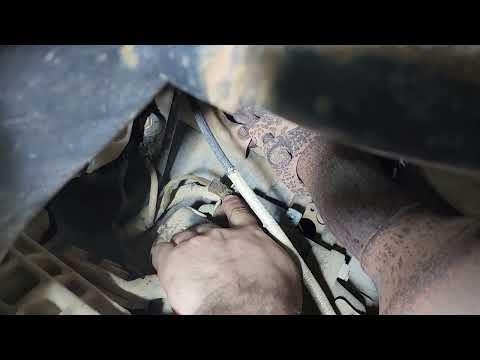
- From underneath, the starter sits at the lower side of the engine where it meets the transmission (bellhousing area).
- You’ll see:
- A thick battery cable on a stud (this is the main power cable).
- A small plug/wire (this is the start signal to the solenoid).
Step 4: Disconnect the starter wiring
- Unplug the small solenoid connector by hand. If it’s tight, gently help it with a flathead screwdriver—don’t break the lock tab.
- Remove the nut on the large battery cable stud using a 13mm socket.
- Pull the cable off and move it aside so it cannot touch metal. Keep it away from the starter body.
Step 5: Remove the starter mounting bolts
- Support the starter with one hand.
- Use a 15mm socket, ratchet (3/8"), and a 6" socket extension (3/8") (or 12" socket extension (3/8") plus universal joint adapter (3/8") if needed) to remove the starter mounting bolts.
- Lower the starter out carefully.
Step 6: Install the new starter
- Position the new starter in place and start the mounting bolts by hand to avoid cross-threading.
- Tighten the starter mounting bolts using a 15mm socket and ratchet (3/8").
- Final tighten using a torque wrench (3/8" drive): Torque to 54 Nm (40 ft-lbs).
Step 7: Reconnect the wiring
- Install the main battery cable onto the starter stud and thread the nut on by hand.
- Tighten the main cable nut using a 13mm socket and finish with a torque wrench (3/8" drive): Torque to 13 Nm (115 in-lbs).
- Plug the solenoid connector back in until it clicks.
- Confirm the cable routing won’t rub on the exhaust or steering components.
Step 8: Reinstall shield/skid plate (if removed)
- Reinstall the shield/skid plate using a 13mm socket and any clips you removed with the trim clip tool.
Step 9: Reconnect the battery and lower the truck
- Reconnect the battery negative terminal using a 10mm socket.
- Raise slightly with the floor jack (rated 3-ton minimum), remove the jack stands (rated 3-ton minimum), and lower the truck.
✅ After Repair
- Start the engine and confirm it cranks strongly with no clicking.
- With the engine running, check underneath for any wiring that’s too close to the exhaust or moving parts.
- If you had intermittent no-start before, do 5-6 restarts (warm and cold if possible) to confirm the fix.
💰 DIY vs Shop Cost
Shop Cost: $450-$900 (parts + labor)
DIY Cost: $180-$450 (parts only)
You Save: $270-$450 by doing it yourself!
Shop labor rates vary but typically run $100-$150/hour. This repair takes a shop approximately 1-2 hours.
🎯 Ready to get started?
HowToo makes it easy: same-day/2-day shipping on every part, plus all the tools and specialty tools you need! Check out the parts and tools sections below to add everything to your cart.