













How to Replace the Starter Motor on a 2018-2024 Toyota Camry 3.5L V6 (Engine: Inline 4 2.5L)
Step-by-step DIY starter removal and installation with tools, parts list, torque specs, safety tips, and cost savings
How to Replace the Starter Motor on a 2018-2024 Toyota Camry 3.5L V6 (Engine: Inline 4 2.5L)
Step-by-step DIY starter removal and installation with tools, parts list, torque specs, safety tips, and cost savings for 2018, 2019, 2020, 2021, 2022, 2023, 2024


🔧 Camry - Starter Motor Replacement
You’ll be removing the old starter motor on your Camry and installing a new one so the engine can crank and start reliably. This job involves working around the battery and near the transmission bell housing.
Difficulty Level: Intermediate | Estimated Time: 2–3 hours
⚠️ Safety & Precautions
- ⚠️ Always disconnect the negative battery terminal before working on the starter to prevent sparks and accidental cranking.
- ⚠️ Allow the engine to cool completely; parts around the starter can be very hot after driving.
- ⚠️ Support the car securely on jack stands if you raise it; never rely on a floor jack alone.
- ⚠️ Keep metal tools away from both battery terminals at the same time to avoid short circuits.
- ⚠️ Wear safety glasses; dirt and rust often fall when working from underneath.
🔧 Required Tools
You'll need the following tools for this repair:
- 🧰 10mm socket
- 🧰 12mm socket
- 🧰 14mm socket
- 🧰 3/8" drive ratchet
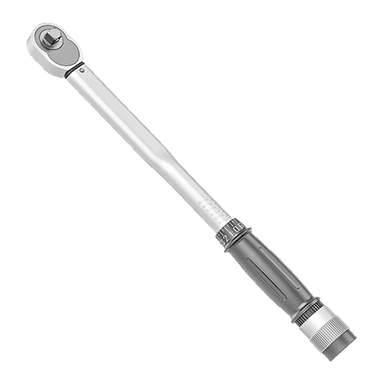
- 🧰 3/8" drive torque wrench (5–80 ft-lbs range)
- 🧰 3/8" drive extension 6"
- 🧰 Flathead screwdriver (medium)
- 🧰 Needle-nose pliers
- 🧰 Floor jack (rated 3-ton minimum)
- 🧰 Jack stands (rated 3-ton minimum)
- 🧰 Wheel chocks
- 🧰 Work light or headlamp
- 🧰 Mechanic’s gloves
- 🧰 Safety glasses
- 🧰 Fender cover
🔩 Required Parts
HowToo sells all the parts you need for this repair:
- 🔩 Starter motor (remanufactured or new, 3.5L V6) - Qty: 1
- 🔩 Starter motor mounting bolts - Qty: 2 (recommended replacement)
- 🔩 Battery terminal cleaning brush - Qty: 1
- 🔩 Dielectric grease - Qty: 1 small tube
- 🔩 Cable tie set - Qty: 1 pack
- 🔩 Shop towels - Qty: 1 pack
- 🔩 Anti-seize compound - Qty: 1 small tube
📋 Before You Begin
- 📝 Park the Camry on a flat, solid surface, shift to PARK, and set the parking brake.
- 📝 Place wheel chocks behind the rear wheels so the car cannot roll.
- 📝 Open the hood and install a fender cover to protect the paint where you lean in.
- 📝 Make sure you know your radio/infotainment presets; battery disconnect may reset some settings.
- 📝 Plan to keep the battery disconnected for the whole job.
🔨 Step-by-Step Instructions
Follow these steps in order:
Step 1: Disconnect the battery safely
- A ratchet is a handle that turns sockets; it lets you loosen bolts quickly.
- Put on safety glasses and mechanic’s gloves.
- Use a 10mm socket and 3/8" ratchet to loosen the nut on the negative (black) battery terminal.
- Twist and lift the negative cable off the battery post. Wrap the terminal with a shop towel so it cannot spring back onto the post.
- Do the same for the positive (red) terminal with the 10mm socket if you want extra safety, but negative must be off at minimum.
- Always remove negative terminal first, reconnect it last.
Step 2: Raise and support the front of the car
- A floor jack lifts the car; jack stands hold it safely while you work.
- Place wheel chocks behind both rear tires.
- Position the floor jack under the front central jacking point (under the subframe crossmember) and pump until the front wheels are off the ground.
- Slide jack stands under the factory pinch weld points on both sides and carefully lower the car onto them using the jack.
- Gently shake the car by the fender to confirm it is stable on the stands.
- Never get under a car supported only by a jack.
Step 3: Remove any lower engine cover (splash shield)
- Crawl under the front of the car with your work light.
- Use a 10mm socket and ratchet to remove the bolts holding the plastic lower engine cover (if equipped).
- There may be plastic clips; use a flathead screwdriver to gently pry their centers up, then remove the whole clip.
- Set all bolts and clips aside in a small container so you don’t lose them.
Step 4: Locate the starter motor
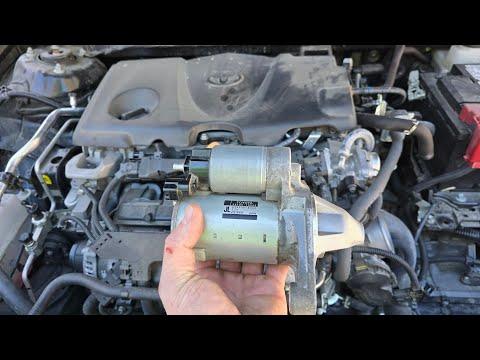
- The starter is mounted on the front side of the engine where it meets the transmission (bell housing).
- From underneath, look up near the driver’s side of the engine/transmission area; you’ll see a cylindrical motor with a thick cable attached.
- Take a moment to identify the wiring and bolts.
Step 5: Disconnect the starter electrical connectors
- There are usually two connections: a large battery cable and a smaller control connector.
- Use a 12mm socket and ratchet to remove the nut holding the large battery cable to the starter stud. Note the order of any washers.
- Pull the cable off the stud and move it aside.
- Use needle-nose pliers or your fingers to release the locking tab on the small plug connector, then unplug it from the starter.
- If there are any small brackets or cable clips attached to the starter, release them with a flathead screwdriver.
Step 6: Remove the starter mounting bolts
- Use a 14mm socket, 6" extension, and ratchet to loosen the two starter mounting bolts that go into the transmission housing.
- Crack both bolts loose first, then fully remove the lower bolt while supporting the starter with your other hand.
- Remove the upper bolt last and carefully lower the starter out of its position.
- Support the starter so it doesn’t drop suddenly.
Step 7: Compare old and new starter
- Place the old and new starters side by side on a clean surface.
- Check that the mounting holes, electrical stud, and connector locations match exactly.
- Verify the gear (pinion) size and position are the same.
- If anything is different, stop and re-check part number.
Step 8: Install the new starter motor
- Apply a tiny amount of anti-seize compound to the threads of the new mounting bolts (avoid the first couple threads).
- Lift the new starter into place from underneath and align it with the holes in the transmission housing.
- Install the upper mounting bolt by hand a few turns to hold the starter.
- Install the lower mounting bolt by hand a few turns.
- Use the 14mm socket and ratchet to snug both bolts evenly.
- Now switch to the 3/8" torque wrench with the 14mm socket and tighten both starter mounting bolts to 53 Nm (39 ft-lbs).
- Always start bolts by hand to avoid cross-threading.
Step 9: Reconnect the starter wiring
- Push the small control connector onto its terminal on the starter until it clicks into place.
- Place the large battery cable eyelet back onto the starter stud in the same position as before.
- Apply a thin film of dielectric grease to the contact area if desired (helps prevent corrosion).
- Install the nut on the stud and tighten it using a 12mm socket and ratchet to 10 Nm (7 ft-lbs) (snug, not overly tight).
- Re-secure any brackets or cable clips using the 10mm socket or flathead screwdriver as needed.
Step 10: Reinstall the lower engine cover
- Lift the plastic splash shield back into place under the engine.
- Install the bolts by hand, then tighten them using a 10mm socket and ratchet. Do not overtighten; just snug.
- Reinstall any plastic clips you removed, pressing the centers back down to lock them.
Step 11: Lower the car
- Use the floor jack to raise the front of the car slightly off the jack stands.
- Remove the jack stands from both sides.
- Slowly lower the car back onto the ground using the jack.
- Remove the wheel chocks from behind the rear tires.
Step 12: Reconnect the battery
- At the battery, make sure both posts are clean. If needed, use the battery terminal cleaning brush to remove corrosion.
- Install the positive (red) cable on its post first and tighten the nut with a 10mm socket and ratchet to about 5 Nm (4 ft-lbs) (firm but not crushing the clamp).
- Install the negative (black) cable on its post and tighten the nut with the 10mm socket to about 5 Nm (4 ft-lbs).
- Apply a small amount of dielectric grease to the top of the terminals to help prevent corrosion.
✅ After Repair
- ✅ Sit in the driver’s seat, ensure the transmission is in PARK, and turn the key or push the start button. The engine should crank strongly and start right away.
- ✅ Listen for any unusual grinding or whining noises from the starter area; if you hear any, shut off the engine and recheck mounting and wiring.
- ✅ Check under the car for any loose parts or tools you may have left behind.
- ✅ You may need to reset your clock, radio presets, and window auto-up/down if they were lost during battery disconnect.
💰 DIY vs Shop Cost
Shop Cost: $550–$800 (parts + labor)
DIY Cost: $180–$320 (parts only)
You Save: $370–$480 by doing it yourself!
Shop labor rates vary but typically run $100–$150/hour. This repair takes a shop approximately 1.5–2.0 hours.
🎯 Ready to get started?
HowToo makes it easy: same-day/2-day shipping on every part, plus all the tools and specialty tools you need! Check out the parts and tools sections below to add everything to your cart.
Guide for Starter Motor replace for these Toyota vehicles
| Year Make Model | Sub Model | Engine | Body Style |
|---|---|---|---|
| 2024 Toyota Camry | - | V6 3.5L | - |
| 2023 Toyota Camry | - | V6 3.5L | - |
| 2022 Toyota Camry | - | V6 3.5L | - |
| 2021 Toyota Camry | - | V6 3.5L | - |
| 2020 Toyota Camry | - | V6 3.5L | - |
| 2019 Toyota Camry | - | V6 3.5L | - |
| 2018 Toyota Camry | - | V6 3.5L | - |