












How to Replace the Starter Motor on a 2016 Volkswagen Golf
Step-by-step instructions with tools, parts, safety tips, and torque guidance for 2015, 2016, 2017, 2018
How to Replace the Starter Motor on a 2016 Volkswagen Golf
Step-by-step instructions with tools, parts, safety tips, and torque guidance for 2015, 2016, 2017, 2018


🔧 Starter Motor - Replacement
The starter motor on your Golf sits low on the transmission side of the engine and is reached from above and below. You’ll disconnect the battery first, remove the intake/battery area for access, then unbolt and swap the starter.
Difficulty Level: Intermediate | Estimated Time: 2-4 hours
⚠️ Safety & Precautions
- Disconnect the negative battery cable first. The starter has direct battery power and can spark.
- Wait at least 10 minutes after disconnecting the battery before working near the starter wiring.
- Support the car securely with jack stands if you need access from underneath. Never rely on a jack alone.
- The exhaust and transmission area can be hot. Let the car cool fully before starting.
- Keep the transmission in neutral with the parking brake set during testing, then switch to park/neutral only as needed.
🔧 Required Tools
You'll need the following tools for this repair:
- 10mm wrench
- 13mm socket
- 16mm socket
- Torx T25 screwdriver
- Torx T30 screwdriver
- Ratchet
- Long extension set
- Universal joint socket adapter
- Torque wrench
- Flat blade trim tool
- Floor jack (rated 3-ton minimum)
- Jack stands
- Wheel chocks
- Safety glasses
- Nitrile gloves
🔩 Required Parts
HowToo sells all the parts you need for this repair:
- Starter motor - Qty: 1
- Starter mounting bolts - Qty: 2
- Battery terminal cover - Qty: 1
📋 Before You Begin
- Park on level ground.
- Set the parking brake.
- Remove the key/fob from the car.
- Open the hood and make sure you have radio codes or saved settings if your car needs them after battery disconnect.
- If the battery is under the hood or under a cover near the airbox, expose it first for easier access.
🔨 Step-by-Step Instructions
Follow these steps in order:
Step 1: Disconnect the battery
- Use a 10mm wrench to loosen and remove the negative battery cable.
- Move the cable aside so it cannot spring back and touch the terminal.
- Keep the cable isolated.
Step 2: Remove intake and access parts
- Use a Torx T25 screwdriver and flat blade trim tool to remove the air intake ducting and any covers blocking access to the transmission side of the engine.
- If the battery tray blocks access, remove the battery and tray using a 13mm socket and ratchet.
- Set all fasteners aside in order.
Step 3: Lift the vehicle if needed
- Use a floor jack (rated 3-ton minimum) to raise the front of the car.
- Support it with jack stands placed at proper lift points.
- Use wheel chocks at the rear wheels.
Step 4: Unplug the starter wiring
- Locate the starter on the transmission bellhousing.
- Use a 13mm socket to remove the main power cable nut.
- Use a Torx T30 screwdriver or small socket, if equipped, to remove any connector retainer or bracket.
- Disconnect the small control wire carefully.
- Do not let the main cable touch ground.
Step 5: Remove the starter motor
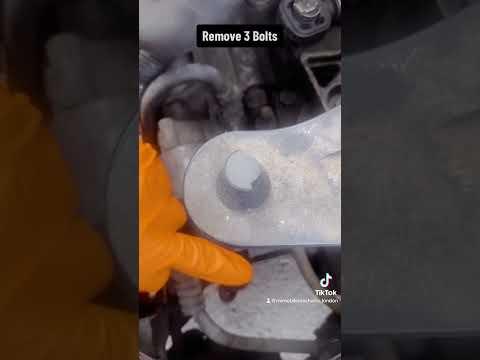
- Use a 16mm socket, long extension set, and universal joint socket adapter to remove the starter mounting bolts.
- Support the starter with one hand as the last bolt comes out.
- Lower the starter out of the vehicle.
Step 6: Install the new starter motor
- Position the new starter in place by hand.
- Install the starter mounting bolts with a 16mm socket and ratchet.
- Torque to factory specification for the starter mounting bolts.
- Reconnect the small control wire and the main power cable using a 13mm socket.
- Torque to factory specification for the terminal nut.
Step 7: Reinstall removed parts
- Reinstall the battery tray, intake ducting, and covers using a 13mm socket, Torx T25 screwdriver, and flat blade trim tool.
- Make sure all hoses, clips, and plugs are fully seated.
Step 8: Reconnect the battery
- Reconnect the negative battery cable with a 10mm wrench.
- Make sure the terminal is tight and fully seated.
✅ After Repair
- Turn the key to ON and confirm dash lights come on normally.
- Start the engine and listen for smooth cranking.
- Check the starter area for loose wiring or any clicking.
- If the car has a battery warning or stored codes, scan and clear them if needed.
💰 DIY vs Shop Cost
Shop Cost: $450-$900 (parts + labor)
DIY Cost: $180-$450 (parts only)
You Save: $270-$450 by doing it yourself!
Shop labor rates vary but typically run $100-$150/hour. This repair takes a shop approximately 2-4 hours.
🎯 Ready to get started?
HowToo makes it easy: same-day/2-day shipping on every part, plus all the tools and specialty tools you need! Check out the parts and tools sections below to add everything to your cart.