









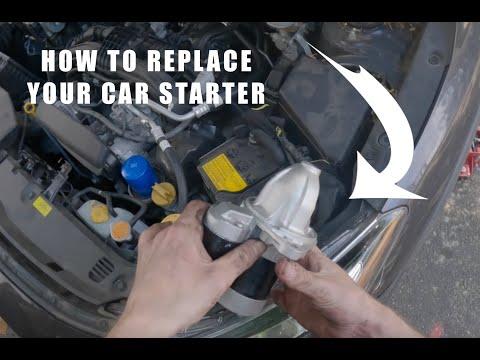





How to Replace the Starter Motor on a 2016 Subaru Outback (Step-by-Step Guide)
Tools, parts list, safety tips, wiring steps, and torque specs for a smooth starter install
How to Replace the Starter Motor on a 2016 Subaru Outback (Step-by-Step Guide)
Tools, parts list, safety tips, wiring steps, and torque specs for a smooth starter install


🔧 Outback - Starter Motor Replacement
Your starter motor spins the engine so it can start. If it’s failing, you may hear a single click, slow cranking, or no crank at all. Replacing it is mostly a bolt-on job, but you must disconnect the battery first because the starter cable is always “live.”
Difficulty Level: Intermediate | Estimated Time: 1.0-2.0 hours
⚠️ Safety & Precautions
- ⚠️ Disconnect the negative battery cable first to prevent sparks/shorts.
- ⚠️ Let the engine cool; you’ll work near hot engine parts.
- ⚠️ Support the hood securely and keep tools away from the battery positive terminal.
- ⚠️ If you raise the vehicle, use jack stands; never rely on a jack alone.
🔧 Required Tools
You'll need the following tools for this repair:
- Safety glasses
- Mechanic gloves
- 10mm socket
- 12mm socket
- 14mm socket
- 3/8" ratchet
- 3/8" torque wrench (10–80 ft-lbs range)
- 6" extension (3/8")
- 12" extension (3/8")
- Flathead screwdriver
- Trim clip remover
- Needle-nose pliers
- Flashlight
- Floor jack (rated 3-ton minimum)
- Jack stands (rated 3-ton minimum)
- Wheel chocks
🔩 Required Parts
HowToo sells all the parts you need for this repair:
- Starter motor - Qty: 1
- Starter electrical terminal boot (if damaged) - Qty: 1
- Dielectric grease (small packet) - Qty: 1
📋 Before You Begin
- Park on level ground, shift to Park, and set the parking brake.
- Place wheel chocks behind the rear wheels.
- Open the hood and keep the key fob away from the vehicle.
- Plan to disconnect the battery: negative terminal off first, on last.
🔨 Step-by-Step Instructions
Follow these steps in order:
Step 1: Disconnect the battery
- Use a 10mm socket to loosen the negative (–) battery terminal and remove it from the battery post.
- Move the cable aside so it cannot spring back to the post. Prevents accidental short circuits.
Step 2: Create working room at the top of the engine
- Use a flathead screwdriver to loosen the intake hose clamp(s) near the air box/throttle body area.
- If your intake duct has plastic clips, use a trim clip remover to pop them out without breaking them.
- Move the intake duct/air snorkel out of the way so you can see and reach the starter.
Step 3: Locate the starter and label the wires
- Find the starter where it mounts to the engine/transmission bellhousing area (it’s a small motor with a thick battery cable on it).
- Use a flashlight and take a quick photo of the wiring so you can match it during reassembly.
Step 4: Remove the starter electrical connections
- Pull back the rubber boot on the large starter terminal (battery cable).
- Use a 12mm socket to remove the nut on the large terminal, then lift the cable off.
- For the small signal wire (starter “trigger”), use needle-nose pliers to release the connector lock (if equipped) and unplug it.
- Apply a thin smear of dielectric grease during reassembly (dielectric grease is a non-conductive grease that helps prevent corrosion on connectors).
Step 5: Remove the starter mounting bolts
- Use a 14mm socket with a 3/8" ratchet and a 6" extension to remove the two starter mounting bolts.
- Support the starter with your free hand as the last bolt comes out so it doesn’t drop.
Step 6: Remove the starter from the vehicle
- Wiggle the starter straight out of its mounting pocket.
- If it feels stuck, gently rock it while pulling—do not pry hard on aluminum surfaces.
Step 7: Install the new starter
- Position the new starter in the same orientation and slide it fully into place by hand.
- Start both mounting bolts by hand (this prevents cross-threading).
- Use a 14mm socket to snug them, then use a 3/8" torque wrench to finish: Torque to 45 N·m (33 ft-lbs).
Step 8: Reconnect the starter wiring
- Reconnect the small signal connector until it clicks/locks.
- Reinstall the large battery cable on the starter terminal and install the nut using a 12mm socket: Torque to 9 N·m (80 in-lbs).
- Reposition the rubber boot so the large terminal is fully covered.
Step 9: Reinstall the intake ducting/air pieces
- Reinstall the intake duct/snorkel.
- Use a flathead screwdriver to tighten hose clamp(s) snugly (do not over-tighten and crack plastic).
- Reinstall any clips using a trim clip remover (or by hand if they push in).
Step 10: Reconnect the battery
- Reconnect the negative (–) battery terminal using a 10mm socket.
- Make it snug so it won’t rotate by hand.
Assumption: FB25 2.5L factory starter fastener sizes as listed.
✅ After Repair
- Start the engine and confirm it cranks strongly with no clicking.
- Check that no warning lights appear related to low voltage; if present, drive a short trip and recheck.
- Listen for abnormal grinding noises; if heard, shut off and recheck starter seating and bolt torque.
- Verify the intake duct is sealed (no hissing/whistling) and clamps are tight.
💰 DIY vs Shop Cost
Shop Cost: $450-$850 (parts + labor)
DIY Cost: $180-$450 (parts only)
You Save: $270-$400 by doing it yourself!
Shop labor rates vary but typically run $100-$150/hour. This repair takes a shop approximately 1.0-1.5 hours.
🎯 Ready to get started?
HowToo makes it easy: same-day/2-day shipping on every part, plus all the tools and specialty tools you need! Check out the parts and tools sections below to add everything to your cart.