















How to Replace the Starter Motor on a 2016 Ram ProMaster 1500 (3.6L Pentastar)
Step-by-step DIY starter replacement with tools list, parts, wiring tips, and torque specs for 2014, 2015, 2016, 2017, 2018, 2019, 2020, 2021
How to Replace the Starter Motor on a 2016 Ram ProMaster 1500 (3.6L Pentastar)
Step-by-step DIY starter replacement with tools list, parts, wiring tips, and torque specs for 2014, 2015, 2016, 2017, 2018, 2019, 2020, 2021


🔧 ProMaster - Starter Motor Replacement
The starter motor spins the engine so it can start. If your A4—sorry—your ProMaster has a click/no-crank, slow cranking, or intermittent starting (with a good battery), the starter or its wiring connections may need replacement.
Difficulty Level: Intermediate | Estimated Time: 1.5–3.0 hours
Assumption: 3.6L Pentastar starter access is primarily from underneath.
⚠️ Safety & Precautions
- ⚠️ Disconnect the battery before touching starter wiring (the large cable is always “hot”).
- ⚠️ Support the van with jack stands; never work under a vehicle held only by a jack.
- ⚠️ Let the exhaust cool before working nearby to avoid burns.
- ⚠️ Keep the key out of the ignition so nobody can crank the engine.
🔧 Required Tools
You'll need the following tools for this repair:
- Floor jack (rated 3-ton minimum)
- Jack stands (rated 3-ton minimum)
- Wheel chocks
- Safety glasses
- Mechanic gloves
- Metric socket set 8mm–18mm
- 13mm socket
- 15mm socket
- 3/8" drive ratchet
- 3/8" drive extensions (3", 6", 12")
- Universal joint adapter
- Torque wrench (10–100 ft-lbs)
- Flat trim clip tool
- Flathead screwdriver
- Needle-nose pliers
- Work light
- Wire brush (small)
- Dielectric grease
🔩 Required Parts
HowToo sells all the parts you need for this repair:
- Starter motor - Qty: 1
- Starter electrical terminal nut kit (if available) - Qty: 1
- Battery terminal anti-corrosion washers (optional) - Qty: 1
📋 Before You Begin
- Park on level ground, set the parking brake, and chock the rear wheels.
- Open the hood and remove the key from the vehicle.
- Disconnect the battery negative cable first (negative is the “-” terminal).
- If you’ll lift the van, break nothing loose first—just lift and support it securely on jack stands.
🔨 Step-by-Step Instructions
Follow these steps in order:
Step 1: Disconnect the battery
- Use a 10mm socket to loosen the negative battery terminal clamp and remove it from the battery.
- Tuck the cable aside so it can’t spring back onto the terminal.
- Negative cable off = safer starter work.
Step 2: Raise and support the van
- Place wheel chocks behind the rear tires.
- Use a floor jack (rated 3-ton minimum) to lift the front.
- Set the van onto jack stands (rated 3-ton minimum) at the proper lift points.
Step 3: Remove the lower splash shield (if equipped)
- Use a flat trim clip tool and flathead screwdriver to remove plastic push-clips.
- Use a metric socket set 8mm–18mm to remove any small bolts/screws holding the shield.
- Lower the shield and set it aside.
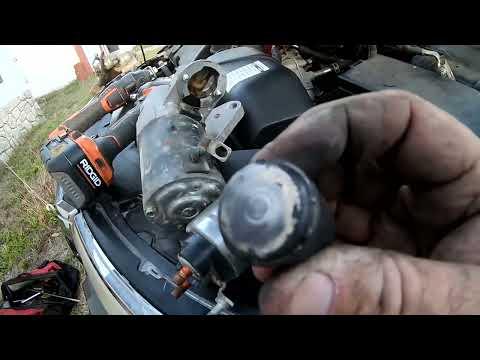
Step 4: Locate the starter motor
- Use a work light to find the starter at the engine/transmission bellhousing area.
- You’ll see a small cylinder (solenoid) on the starter with a thick battery cable attached.
- The thick cable is the “B+” power cable.
Step 5: Disconnect the starter wiring
- Remove the protective rubber boot from the large terminal by hand or with needle-nose pliers.
- Use a 13mm socket to remove the nut on the large B+ cable terminal, then remove the cable.
- Disconnect the small solenoid signal connector by pressing the locking tab (use a flathead screwdriver gently if needed).
- Clean the ring terminal with a wire brush (small).
Step 6: Remove the starter mounting bolts
- Support the starter with one hand (it’s heavier than it looks).
- Use a 15mm socket, 3/8" drive ratchet, and 3/8" drive extensions (3", 6", 12") (plus a universal joint adapter if needed) to remove the starter mounting bolts.
- Pull the starter straight out from the bellhousing.
Step 7: Install the new starter
- Compare the old and new starter (mounting holes, nose length, electrical studs) before installing.
- Position the new starter into the bellhousing and start the mounting bolts by hand to avoid cross-threading.
- Use a torque wrench (10–100 ft-lbs) with a 15mm socket to tighten the mounting bolts: Torque to 54 Nm (40 ft-lbs).
- Hand-start bolts first to prevent thread damage.
Step 8: Reconnect starter wiring
- Push the small solenoid connector on until it clicks.
- Install the large B+ cable onto the starter stud and thread the nut on by hand first.
- Use a torque wrench (10–100 ft-lbs) and 13mm socket: Torque to 13 Nm (115 in-lbs).
- Apply a thin smear of dielectric grease and reinstall the rubber boot over the large terminal.
Step 9: Reinstall splash shield
- Reposition the shield and reinstall bolts using a metric socket set 8mm–18mm.
- Reinstall push-clips using a flat trim clip tool.
Step 10: Lower the van and reconnect the battery
- Use the floor jack (rated 3-ton minimum) to lift slightly, remove jack stands (rated 3-ton minimum), then lower the van.
- Reconnect the negative battery cable and tighten using a 10mm socket.
✅ After Repair
- Turn the key and confirm the engine cranks strongly and starts normally.
- Listen for abnormal grinding noises (could indicate misalignment or wrong part).
- Recheck the starter B+ terminal boot is fully covering the stud.
- If it still only clicks: check battery condition, ground connections, and the starter signal connector.
💰 DIY vs Shop Cost
Shop Cost: $450–$850 (parts + labor)
DIY Cost: $120–$320 (parts only)
You Save: $330–$530 by doing it yourself!
Shop labor rates vary but typically run $100-$150/hour. This repair takes a shop approximately 1.5–3.0 hours.
🎯 Ready to get started?
HowToo makes it easy: same-day/2-day shipping on every part, plus all the tools and specialty tools you need! Check out the parts and tools sections below to add everything to your cart.