









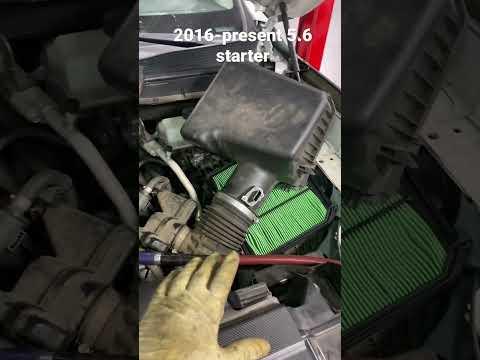







How to Replace the Starter Motor on a 2016 Nissan Titan XD (Step-by-Step Guide)
Tools, parts list, safety tips, and torque specs to remove and install the starter from underneath for 2016, 2017, 2018, 2019, 2020, 2021, 2022, 2024
How to Replace the Starter Motor on a 2016 Nissan Titan XD (Step-by-Step Guide)
Tools, parts list, safety tips, and torque specs to remove and install the starter from underneath for 2016, 2017, 2018, 2019, 2020, 2021, 2022, 2024


🔧 Titan XD - Starter Motor Replacement
The starter motor is what cranks your engine when you turn the key. On your Titan XD, it’s mounted to the transmission bellhousing, and replacement is mostly about safe lifting, disconnecting the battery, and removing a few bolts and electrical connections.
Difficulty Level: Intermediate | Estimated Time: 1.5-3.0 hours
Assumption: Access is from underneath; exact fastener torques can vary by production—verify with OEM service info if available.
⚠️ Safety & Precautions
- ⚠️ Disconnect the negative battery cable first to prevent a short (starter cables are always “live”).
- ⚠️ Support the truck with jack stands; never work under a vehicle held only by a jack.
- ⚠️ Let the exhaust cool fully; the starter area can be near hot exhaust components.
- ⚠️ Keep the key away from the truck so nobody can crank it while you’re under it.
🔧 Required Tools
You'll need the following tools for this repair:
- Floor jack (rated 3-ton minimum)
- Jack stands (rated 3-ton minimum)
- Wheel chocks
- Safety glasses
- Mechanic gloves
- Work light
- 10mm socket
- 12mm socket
- 13mm socket
- 14mm socket
- 3/8" drive ratchet
- 3/8" drive extensions (3" and 6")
- 3/8" drive wobble extension
- Torque wrench (10–100 ft-lbs range)
- Flathead screwdriver
- Trim clip remover
🔩 Required Parts
HowToo sells all the parts you need for this repair:
- Starter motor assembly - Qty: 1
- Starter electrical terminal nut (if damaged/corroded) - Qty: 1
- Intake duct clamp (if original strips) - Qty: 1
📋 Before You Begin
- 🧰 Park on level ground, set the parking brake, and chock the rear wheels.
- 🧰 Open the hood and disconnect the battery: use a 10mm socket to remove the negative (-) cable first, then isolate it so it can’t spring back.
- 🧰 Raise the front and support the frame with jack stands.
🔨 Step-by-Step Instructions
Follow these steps in order:
Step 1: Remove any lower covers/skid plate (if equipped)
- Use a trim clip remover for plastic clips and a 12mm socket or 14mm socket for bolts (varies by cover).
- Set all hardware aside in a tray so nothing gets lost.
Step 2: Locate the starter
- From underneath with a work light, find the starter where the engine meets the transmission (bellhousing area).
- You’ll see a thick battery cable on a stud and a smaller plug-in control wire.
Step 3: Disconnect the starter wiring
- Remove the small control wire connector by pressing the lock tab and pulling straight off (use a flathead screwdriver gently if the tab is stubborn).
- Remove the nut holding the main battery cable to the starter using a 13mm socket.
- Move the cable aside so it can’t touch metal. Think “no accidental contact.”
Step 4: Remove the starter mounting bolts
- Support the starter with one hand.
- Use a 14mm socket with a 3/8" drive ratchet and extensions to remove the mounting bolts (typically 2 bolts).
- A wobble extension helps tight angles. (A wobble extension is an extension that flexes slightly to reach bolts at a small angle.)
Step 5: Remove the starter from the truck
- Wiggle the starter free from the bellhousing and lower it out carefully.
- Compare the old and new starter side-by-side (same mounting holes, same electrical stud/connector).
Step 6: Install the new starter
- Lift the new starter into position and start the mounting bolts by hand to avoid cross-threading.
- Tighten the mounting bolts with a 14mm socket, then use a torque wrench: Torque to 49 Nm (36 ft-lbs).
Step 7: Reconnect the wiring
- Install the main battery cable onto the stud and tighten the nut using a 13mm socket: Torque to 9 Nm (80 in-lbs).
- Reconnect the small control wire connector until it clicks into place.
- Make sure the cable routing matches original and won’t rub on anything.
Step 8: Reinstall lower covers/skid plate
- Reinstall using the same hardware with a 12mm socket/14mm socket and any clips with a trim clip remover.
- Snug bolts evenly; don’t crush plastic panels.
Step 9: Reconnect the battery and lower the truck
- Lower the truck off the jack stands using the floor jack.
- Reconnect the battery cables using a 10mm socket: positive (+) first if removed, then negative (-).
- Battery terminal torque: Torque to 6 Nm (53 in-lbs).
✅ After Repair
- ✅ Start the engine and confirm it cranks strongly with no clicking or grinding noises.
- ✅ Check the dash for warning lights that weren’t there before.
- ✅ Recheck underneath for any loose wiring or a cable touching the exhaust.
- ✅ If you had slow cranking before, inspect/clean battery terminals and grounds.
💰 DIY vs Shop Cost
Shop Cost: $550-$1,050 (parts + labor)
DIY Cost: $180-$450 (parts only)
You Save: $370-$600 by doing it yourself!
Shop labor rates vary but typically run $100-$150/hour. This repair takes a shop approximately 1.5-3.0 hours.
🎯 Ready to get started?
HowToo makes it easy: same-day/2-day shipping on every part, plus all the tools and specialty tools you need! Check out the parts and tools sections below to add everything to your cart.