









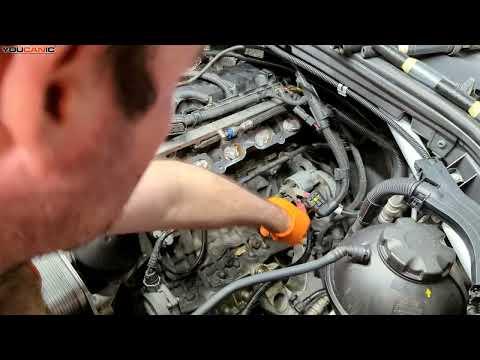







How to Replace the Starter Motor on a 2016 BMW X3 (2.0L Turbo N20)
Step-by-step intake manifold removal guide with tools, parts list, torque specs, and safety tips
How to Replace the Starter Motor on a 2016 BMW X3 (2.0L Turbo N20)
Step-by-step intake manifold removal guide with tools, parts list, torque specs, and safety tips


🔧 X3 - Starter Motor Replacement
On your X3, the starter motor is bolted to the transmission bellhousing and is commonly accessed from the top by removing the intake manifold. The job is mostly about careful disassembly, keeping connectors/hoses organized, and then swapping the starter and re-sealing the intake.
Difficulty Level: Advanced | Estimated Time: 4-6 hours
Assumption: This procedure is for the 2.0L turbo (N20) layout where starter access requires intake manifold removal.
⚠️ Safety & Precautions
- ⚠️ Disconnect the battery negative cable before touching the starter wiring (the main cable is always “hot”).
- ⚠️ Let the engine cool fully; you’ll work near hot turbo/engine parts.
- ⚠️ Support the vehicle with jack stands if you go underneath; never rely on a floor jack alone.
- ⚠️ Keep dirt out of the intake ports—stuff clean rags in the ports once the manifold is off.
- ⚠️ Do not pry on plastic connectors; use the release tabs to avoid breakage.
🔧 Required Tools
You'll need the following tools for this repair:
- Safety glasses
- Mechanic gloves
- Wheel chocks
- Floor jack (rated 3-ton minimum)
- Jack stands (rated 3-ton minimum)
- 8mm socket
- 10mm socket
- 11mm socket
- 13mm socket
- 16mm socket
- E10 external Torx socket
- E12 external Torx socket
- E14 external Torx socket
- Torx T20 driver
- Torx T25 driver
- Torx T30 driver
- Ratchet (3/8")
- Extension set (3/8")
- Swivel universal joint (3/8")
- Torque wrench (10–100 Nm range)
- Trim clip removal tool
- Pick tool
- Hose clamp pliers
- Magnetic pickup tool
- Flashlight
- Fender cover
🔩 Required Parts
HowToo sells all the parts you need for this repair:
- Starter motor - Qty: 1
- Intake manifold gasket set - Qty: 1
- Throttle body gasket - Qty: 1
- Replacement hose clamps (assorted) - Qty: 1
- Dielectric grease - Qty: 1
📋 Before You Begin
- Park on level ground, set the parking brake, and place wheel chocks behind the rear wheels.
- Open the rear cargo area and access the battery (right-side compartment).
- Disconnect the battery: use a 10mm socket to remove the negative (-) terminal and isolate it so it can’t spring back.
- Lay out small trays for bolts and label connectors with tape. This saves you a lot of frustration on reassembly.
🔨 Step-by-Step Instructions
Follow these steps in order:
Step 1: Remove the cowl/microfilter area for access
- Open the hood and remove the plastic covers and microfilter housing at the rear of the engine bay using a Torx T20 driver and trim clip removal tool.
- Set all clips/screws aside in a tray.
Step 2: Remove the intake ducting and air intake pieces
- Remove the engine cover by pulling upward firmly (it’s press-fit).
- Loosen intake hose clamps using an 8mm socket or flat-blade style clamp head with 8mm socket (whichever your clamps use).
- Unplug any sensors on the intake tube by releasing the locking tab with a pick tool (gentle—don’t force it).
Step 3: Remove the charge pipe at the throttle body
- Release the charge pipe connection(s) using a Torx T25 driver / clamp fastener as equipped.
- Move the pipe aside to create room to lift the intake manifold later.
- Tip: Take a photo before removing hoses.
Step 4: Disconnect wiring and hoses attached to the intake manifold
- Unplug manifold/throttle body related connectors (press the lock tab, then pull straight off).
- Remove vacuum/PCV hoses using hose clamp pliers and gently twist hoses to break them free.
- Use a pick tool to help lift stuck hose edges—don’t gouge the plastic fittings.
Step 5: Remove the throttle body (if it blocks manifold removal)
- Remove throttle body fasteners using an E10 external Torx socket or Torx driver as equipped.
- Remove the throttle body and discard the old gasket.
- Clean the mating surfaces with a clean rag only (no scraping).
- Torque to 10 Nm (7 ft-lbs) on reinstall (typical for small throttle body fasteners).
Step 6: Remove the intake manifold
- Remove the intake manifold mounting bolts using an E12 external Torx socket with a ratchet and extensions.
- Carefully pull the intake manifold away from the cylinder head and lift it out.
- Immediately stuff clean rags into the exposed intake ports.
- Torque to 15 Nm (11 ft-lbs) on reinstall (typical intake manifold fastener torque).
Step 7: Access and disconnect the starter wiring
- Locate the starter at the transmission bellhousing area.
- Remove the main power cable nut using a 13mm socket, then remove the cable.
- Disconnect the small solenoid connector by releasing the clip with a pick tool and pulling straight off.
- Definition: The “solenoid” is the small switch on the starter that engages it.
Step 8: Remove the starter motor
- Support the starter with one hand.
- Remove the starter mounting bolts using an E14 external Torx socket, ratchet, and extensions (a swivel universal joint helps with awkward angles).
- Lift the starter out carefully without yanking wires.
- Torque to 45 Nm (33 ft-lbs) on reinstall (common BMW starter bolt torque; verify if you have OEM data).
Step 9: Install the new starter motor
- Position the new starter and start both mounting bolts by hand to avoid cross-threading.
- Tighten with an E14 external Torx socket, then Torque to 45 Nm (33 ft-lbs).
- Reconnect the solenoid connector (it should “click” when seated).
- Reconnect the main power cable and tighten with a 13mm socket: Torque to 10 Nm (7 ft-lbs).
- Apply a tiny amount of dielectric grease to connector seals only (not on the metal contact surfaces).
Step 10: Reinstall the intake manifold with new gaskets
- Remove the rags from the intake ports.
- Install new intake manifold gaskets onto the manifold.
- Set the manifold in place and start bolts by hand.
- Tighten using an E12 external Torx socket, then Torque to 15 Nm (11 ft-lbs).
Step 11: Reinstall throttle body, charge pipe, intake ducting, and cowl parts
- Install the throttle body with a new gasket and tighten using an E10 external Torx socket: Torque to 10 Nm (7 ft-lbs).
- Reconnect the charge pipe and tighten clamps using an 8mm socket.
- Reconnect all electrical connectors and hoses you removed.
- Reinstall the microfilter/cowl pieces using a Torx T20 driver.
Step 12: Reconnect the battery
- Reconnect the battery negative terminal using a 10mm socket.
- Tighten securely: Torque to 5 Nm (44 in-lbs).
✅ After Repair
- Turn ignition ON (do not start) for 10 seconds, then OFF. Repeat once. This helps modules “wake up” cleanly.
- Start the engine and confirm it cranks strongly with no clicking.
- Listen for intake air leaks (hissing). If present, recheck charge pipe connections and manifold seating.
- Check for warning lights. If a check engine light appears, a connector/air leak is likely—recheck your work.
- Reset the clock/date if needed after battery disconnect.
💰 DIY vs Shop Cost
Shop Cost: $900-$1,400 (parts + labor)
DIY Cost: $250-$450 (parts only)
You Save: $650-$950 by doing it yourself!
Shop labor rates vary but typically run $100-$150/hour. This repair takes a shop approximately 4-6 hours.
🎯 Ready to get started?
HowToo makes it easy: same-day/2-day shipping on every part, plus all the tools and specialty tools you need! Check out the parts and tools sections below to add everything to your cart.