














How to Replace the Starter Motor on a 2015-2022 Toyota Corolla 1.8L
Step-by-step DIY starter removal and installation with tools, parts list, torque specs, safety tips, and cost savings
How to Replace the Starter Motor on a 2015-2022 Toyota Corolla 1.8L
Step-by-step DIY starter removal and installation with tools, parts list, torque specs, safety tips, and cost savings for 2015, 2016, 2017, 2018, 2019, 2020, 2021, 2022


🔧 Corolla - Starter Motor Replacement
You’ll be removing the starter motor from the front of the engine, near the transmission, by disconnecting the battery, removing the air box, and unbolting the starter. This restores reliable cranking when the engine won’t turn over or the starter is weak or clicking.
Difficulty Level: Intermediate | Estimated Time: 1.5–2.5 hours
⚠️ Safety & Precautions
- ⚠️ Always disconnect the negative battery cable before working on the starter to avoid sparks and short circuits.
- ⚠️ The starter is connected directly to battery power; accidental contact can cause serious arcing and burns.
- ⚠️ If you raise the front of the Corolla, always support it with jack stands, never only a jack.
- ⚠️ Let the engine cool before working in the engine bay; hot parts can burn you.
- ⚠️ Keep metal tools away from both battery terminals at the same time to avoid shorting the battery.
🔧 Required Tools
You'll need the following tools for this repair:
- 🧰 10mm socket
- 🧰 12mm socket
- 🧰 14mm socket
- 🧰 3/8" drive ratchet
- 🧰 3/8" drive extension (3"–6")
- 🧰 Torque wrench 3/8" drive (5–75 ft-lbs range)
- 🧰 Phillips screwdriver
- 🧰 Flathead screwdriver (medium)
- 🧰 Needle-nose pliers
- 🧰 Trim clip removal tool
- 🧰 Floor jack (rated 2-ton minimum)
- 🧰 Jack stands (pair, rated 2-ton minimum)
- 🧰 Wheel chocks
- 🧰 Work light or flashlight
- 🧰 Mechanic’s gloves
- 🧰 Safety glasses
🔩 Required Parts
HowToo sells all the parts you need for this repair:
- 🔩 Starter motor (1.8L 2ZR-FE compatible) - Qty: 1
- 🔩 Starter mounting bolts (optional refresh kit) - Qty: 2
- 🔩 Battery terminal protector spray - Qty: 1
- 🔩 Dielectric grease - Qty: 1
- 🔩 Engine under cover clips/fasteners - Qty: 4–6 (if any break)
- 🔩 Shop towels - Qty: 1 pack
📋 Before You Begin
- Park the Corolla on a flat, level surface; engage the parking brake; place wheel chocks behind the rear wheels.
- Open the hood and make sure you have good lighting.
- Turn ignition off and remove the key or switch ignition off fully if push-button start.
- Disconnect the negative battery terminal with a 10mm socket and move the cable aside so it cannot spring back.
- If you plan to go underneath, raise the front with a floor jack and support it securely with jack stands at the proper front jacking points.
🔨 Step-by-Step Instructions
Follow these steps in order:
Step 1: Remove the engine under cover (if needed for access)
- Use the floor jack to lift the front of the Corolla and set it on jack stands.
- Use a Phillips screwdriver and 10mm socket to remove the screws and bolts holding the plastic engine under cover (splash shield).
- Use a trim clip removal tool to pop out any plastic clips.
- Set the cover and hardware aside in order so you can reinstall them later. Lay hardware out in pattern removed
- Typical engine under cover bolt torque on reassembly: Torque to 7.5 Nm (66 in-lbs).
Step 2: Disconnect the battery (if not already done)
- Under the hood, use a 10mm socket to loosen the nut on the negative (black) battery terminal.
- Pull the cable off the terminal and tuck it aside so it cannot touch the battery post.
- If needed for room, you can also loosen the positive terminal nut with a 10mm socket, but do not allow tools to touch metal body parts while on the positive.
- Battery terminal clamp nuts on reassembly: Torque to 5.4 Nm (48 in-lbs).
Step 3: Remove the air intake duct and air box
- The air intake duct is the plastic tube running from the front of the car into the air filter box.
- Use a 10mm socket to remove any bolts holding the upper air duct to the body.
- Use a flathead screwdriver to loosen the hose clamp at the throttle body side of the duct.
- Gently pull the duct off and set aside. Twist gently to break seal
- On the air box, disconnect any attached hoses or electrical connectors by pressing their tabs; use needle-nose pliers if needed, gently.
- Use a 10mm socket to remove the bolts securing the air box to the car, then lift the box out to create space.
- On reassembly, intake hose clamp torque: Torque to about 5 Nm (44 in-lbs) (snug, not overtight).
Step 4: Locate the starter motor
- The starter is mounted on the front side of the engine, where the engine meets the transmission, below the removed air box area.
- It is a cylindrical metal unit with a smaller cylinder on top (the solenoid) and thick electrical cables attached.
- Use your work light to clearly see the starter and the two main mounting bolts.
Step 5: Disconnect starter electrical connections
- There are usually two connections: a large battery cable on a stud with a nut, and a smaller push-on connector for the starter signal.
- Use a 12mm socket to remove the nut holding the large cable to the starter terminal; pull the cable off and set it aside.
- Place a shop towel under the area so you don’t lose the nut if it falls.
- For the small connector, press the locking tab and gently pull it off; use needle-nose pliers if your fingers can’t reach, but don’t crush the plastic.
- Apply a very light dab of dielectric grease to the small connector on reassembly to help prevent corrosion.
Step 6: Remove the starter mounting bolts
- The starter is usually held by two main bolts going into the transmission housing.
- Use a 14mm socket with a 3/8" drive ratchet and extension to loosen and remove the upper starter bolt.
- Support the body of the starter with your other hand as you remove the lower bolt.
- Remove the lower bolt with the same 14mm socket and extension.
- Keep track of bolt length and position; they may be different lengths. Lay bolts in order of removal
- Factory starter bolt spec on installation: Torque to 39 Nm (29 ft-lbs).
Step 7: Remove the old starter
- Once the bolts are out, pull the starter straight back away from the transmission.
- You may need to wiggle it a bit to disengage it from the locating dowel.
- Carefully guide it upward and out through the space created by removing the air box.
- If space is tight, gently rotate the starter body to find a path out. Be patient, don’t force it
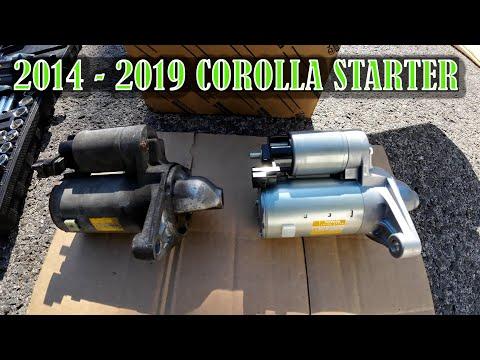
Step 8: Compare old and new starter
- Place the old and new starters side-by-side on a clean surface.
- Confirm that the mounting holes, electrical terminals, and gear (pinion) size and position match.
- If anything looks different, do not install; verify you have the correct part.
Step 9: Install the new starter
- Carefully lower the new starter into place through the same path you removed the old one.
- Align the starter nose with the opening in the transmission housing and the locating dowel.
- Install the upper starter bolt by hand first to hold the starter; thread it a few turns by hand.
- Install the lower starter bolt by hand as well to avoid cross-threading.
- Use the 14mm socket and ratchet to snug both bolts, then switch to the torque wrench.
- Tighten both bolts evenly to the factory spec: Torque to 39 Nm (29 ft-lbs).
Step 10: Reconnect starter electrical connections
- Push the small starter signal connector back onto its terminal until you feel or hear a click.
- Place the large battery cable back onto the large starter stud.
- Install the nut by hand first to avoid cross-threading.
- Use a 12mm socket to tighten the nut until it is snug; do not overtighten to avoid damaging the stud. Snug plus a small extra turn
- Spray a light coat of battery terminal protector spray on the exposed connection if desired.
Step 11: Reinstall the air box and intake duct
- Set the air box back into its mounting location and align the pins and holes.
- Install the air box mounting bolts with a 10mm socket and snug them down (lightly tight, not over-torqued).
- Reconnect any hoses or electrical connectors you previously removed; press until they click or seat fully.
- Reinstall the intake duct onto the throttle body and air box.
- Use the flathead screwdriver to tighten the hose clamp on the throttle body side: Torque to about 5 Nm (44 in-lbs) (just snug).
- Reinstall any 10mm bolts holding the duct in place using the 10mm socket.
Step 12: Reinstall the engine under cover
- Position the plastic under cover back under the engine.
- Install any plastic clips by hand first, then secure them fully.
- Use the Phillips screwdriver and 10mm socket to reinstall screws and bolts.
- Tighten the bolts to: Torque to 7.5 Nm (66 in-lbs) (just snug; do not crack the plastic).
Step 13: Reconnect the battery
- Reconnect the negative (black) battery cable to the battery terminal.
- Use the 10mm socket to tighten the clamp nut: Torque to 5.4 Nm (48 in-lbs) (firm but not crushing).
- Optionally spray a light coat of battery terminal protector spray on both terminals to reduce corrosion.
- Remove the jack stands and lower the Corolla carefully using the floor jack.
✅ After Repair
- Turn ignition on and check for any warning lights; some settings like radio presets or clock may need to be reset after battery disconnect.
- Start the engine and listen: the starter should engage quickly and smoothly, with no grinding or slow cranking.
- Check under the hood and under the car for any loose parts, tools, or hanging wires.
- Take a short drive and restart the engine several times to confirm consistent starting.
- If you get any dash warning lights that don’t clear, you may need a basic scan with a code reader to see if anything unrelated was triggered.
💰 DIY vs Shop Cost
Shop Cost: $450–$750 (parts + labor)
DIY Cost: $150–$280 (starter + small supplies)
You Save: $300–$470 by doing it yourself!
Shop labor rates vary but typically run $100–$150/hour. This repair takes a shop approximately 1.5–2.0 hours.
🎯 Ready to get started?
HowToo makes it easy: same-day/2-day shipping on every part, plus all the tools and specialty tools you need! Check out the parts and tools sections above to add everything to your cart.
Guide for Starter Motor replace for these Toyota vehicles
| Year Make Model | Sub Model | Engine | Body Style |
|---|---|---|---|
| 2022 Toyota Corolla | - | - | - |
| 2021 Toyota Corolla | - | - | - |
| 2020 Toyota Corolla | - | - | - |
| 2019 Toyota Corolla | - | - | - |
| 2018 Toyota Corolla | - | - | - |
| 2017 Toyota Corolla | - | - | - |
| 2016 Toyota Corolla | - | - | - |
| 2015 Toyota Corolla | - | - | - |