









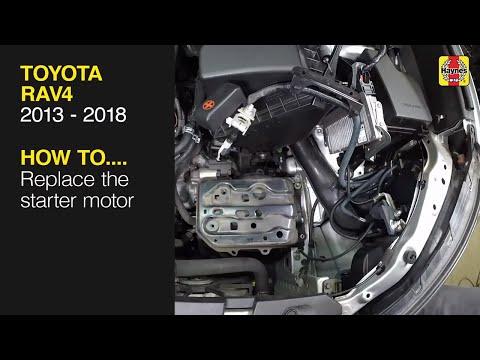





How to Replace the Starter Motor on a 2014 Toyota RAV4
Step-by-step instructions with tools, parts, torque specs, and safety tips for 2006, 2007, 2008
How to Replace the Starter Motor on a 2014 Toyota RAV4
Step-by-step instructions with tools, parts, torque specs, and safety tips for 2006, 2007, 2008


🔧 Starter Motor - Replacement
The starter on your RAV4 is mounted low on the engine/transmission side, so access is tighter than a lot of other repairs. You’ll disconnect the battery, remove the intake pieces blocking access, swap the starter, then reconnect everything and verify strong cranking.
Difficulty Level: Intermediate | Estimated Time: 2-4 hours
⚠️ Safety & Precautions
- Disconnect the negative battery cable before starting. This prevents accidental cranking and short circuits.
- The starter and nearby exhaust parts can be hot. Let the engine cool fully before working.
- Support the vehicle securely if you raise it. Use jack stands; never rely on a jack alone.
- Keep tools away from the battery positive terminal. A short can damage wiring fast.
- If your RAV4 has the original battery and it is weak, replace or charge it first. A weak battery can mimic a bad starter.
🔧 Required Tools
You'll need the following tools for this repair:
- 10mm socket
- 12mm socket
- 14mm socket
- Ratchet
- 3-inch extension
- 6-inch extension
- Breaker bar
- Torque wrench
- Flat-blade screwdriver
- Trim clip tool
- Floor jack (rated 3-ton minimum)
- Jack stands
- Wheel chocks
- Safety glasses
- Mechanic gloves
🔩 Required Parts
HowToo sells all the parts you need for this repair:
- Starter motor - Qty: 1
- Starter mounting bolts - Qty: 2
- Starter electrical nut hardware - Qty: 1
📋 Before You Begin
- Park on level ground and set the parking brake.
- Shift to Park and remove the key/fob from the vehicle.
- Open the hood and disconnect the negative battery terminal first.
- If the battery is under the hood, remove it only if needed for access and keep the terminals from touching metal.
- Take a quick photo before unplugging anything.
🔨 Step-by-Step Instructions
Follow these steps in order:
Step 1: Disconnect battery power
- Use a 10mm socket to loosen the negative battery cable, then move it aside so it cannot spring back.
- If needed, remove the positive cable only after the negative is disconnected.
- Torque to 5 N·m (44 in-lbs) when reinstalling the battery terminal clamp.
Step 2: Remove the intake ducting for access
- Use a flat-blade screwdriver or 10mm socket to loosen the air intake clamps and remove the intake duct/resonator pieces that block access to the starter.
- Set the parts aside in order so they go back the same way.
- Label hoses if they look similar.
Step 3: Raise the front of the vehicle if needed
- If access from above is not enough, use a floor jack (rated 3-ton minimum) and support the front with jack stands.
- Use wheel chocks at the rear wheels.
Step 4: Locate and disconnect the starter wiring
- Use a 12mm socket to remove the starter power cable nut.
- Remove the smaller trigger wire connector by pressing the lock tab and pulling it straight off.
- Keep the cable from touching ground metal.
- Tighten the starter terminal nut to 9 N·m (80 in-lbs) during reassembly.
Step 5: Remove the starter motor
- Use a 14mm socket, ratchet, and extension to remove the starter mounting bolts.
- Support the starter with one hand as you remove the last bolt. It is heavier than it looks.
- Work the starter out of the opening carefully.
- Tighten the starter mounting bolts to 38 N·m (28 ft-lbs) during installation.
Step 6: Install the new starter motor
- Position the new starter in place by hand first so the bolt holes line up cleanly.
- Start both mounting bolts by hand before tightening them with the 14mm socket.
- Tighten the bolts evenly so the starter seats flat against the engine.
- Hand-start every bolt first.
Step 7: Reconnect the starter wiring
- Reconnect the trigger wire until it clicks into place.
- Install the power cable and nut with a 12mm socket.
- Make sure the cable is fully seated and routed away from hot or moving parts.
- Tighten the terminal nut to 9 N·m (80 in-lbs).
Step 8: Reinstall intake parts and restore battery power
- Reinstall the intake ducting and tighten all clamps with a flat-blade screwdriver or 10mm socket.
- Reconnect the battery, positive first if removed, then negative.
- Tighten the battery terminal clamp to 5 N·m (44 in-lbs).
Step 9: Start and verify operation
- Start the engine and listen for a clean, fast crank.
- Check for warning lights, loose wiring, or abnormal noises.
- If it cranks slowly, recheck the battery condition and cable connections first.
✅ After Repair
- Start the engine several times to confirm consistent operation.
- Inspect the starter area for loose hardware or rubbing wires.
- If the battery was disconnected, reset your clock and radio presets if needed.
- If the starter still clicks without cranking, test the battery and charging system next.
💰 DIY vs Shop Cost
Shop Cost: $550-$950 (parts + labor)
DIY Cost: $180-$380 (parts only)
You Save: $370-$570 by doing it yourself!
Shop labor rates vary but typically run $100-$150/hour. This repair takes a shop approximately 2-4 hours.
🎯 Ready to get started?
HowToo makes it easy: same-day/2-day shipping on every part, plus all the tools and specialty tools you need! Check out the parts and tools sections below to add everything to your cart.