
















How to Replace the Starter Motor on a 2014 Subaru Forester (Step-by-Step Guide)
Tools, parts list, safety tips, and torque specs for removing the TMIC and installing a new starter for 2003, 2004, 2005, 2006, 2007, 2008, 2009, 2010, 2011, 2012, 2013, 2014, 2015, 2016, 2017, 2018
How to Replace the Starter Motor on a 2014 Subaru Forester (Step-by-Step Guide)
Tools, parts list, safety tips, and torque specs for removing the TMIC and installing a new starter for 2003, 2004, 2005, 2006, 2007, 2008, 2009, 2010, 2011, 2012, 2013, 2014, 2015, 2016, 2017, 2018


🔧 Forester - Starter Motor Replacement
The starter motor spins your engine so it can start. On your Forester, the starter sits on top of the transmission bellhousing and is easiest to access by removing the top-mount intercooler.
Difficulty Level: Intermediate | Estimated Time: 1.5-3.0 hours
⚠️ Safety & Precautions
- 🛑 Disconnect the negative battery cable first to prevent a short (the starter power cable is always “live”).
- 🔥 Let the engine cool fully; the turbo/intercooler area can burn you.
- 🧤 Wear gloves and safety glasses; tight access can cause slips.
- ⚡ Do not allow tools to bridge the starter power terminal to metal.
🔧 Required Tools
You'll need the following tools for this repair:
- Safety glasses
- Mechanic gloves
- Wheel chocks
- Floor jack (rated 3-ton minimum)
- Jack stands (rated 3-ton minimum)
- Fender cover
- Flashlight or work light
- Ratchet (3/8")
- Socket extension set (3/8")
- Wobble extension (3/8")
- Torque wrench (3/8", 10–80 ft-lbs range)
- 10mm socket
- 12mm socket
- 14mm socket
- 10mm wrench
- 12mm wrench
- Flathead screwdriver
- Pliers
🔩 Required Parts
HowToo sells all the parts you need for this repair:
- Starter motor - Qty: 1
- Dielectric grease - Qty: 1
📋 Before You Begin
- Park on level ground, shift to Park, and set the parking brake.
- Open the hood and let the engine cool completely.
- Disconnect the battery: use a 10mm wrench to remove the negative (–) terminal first, then isolate it so it can’t spring back.
- Tip: Take a quick photo of hose routing.
🔨 Step-by-Step Instructions
Follow these steps in order:
Step 1: Remove the top-mount intercooler (TMIC)
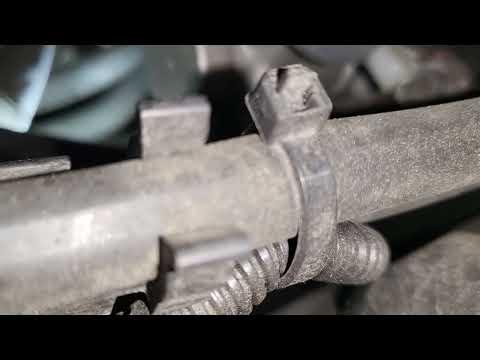
- Use a flathead screwdriver (or the appropriate socket if your clamps have hex heads) to loosen the two large hose clamps on the intercooler couplers.
- Use pliers to release any spring clamps on small hoses connected to the intercooler, then slide the hoses off carefully.
- Use a 10mm socket to remove the bypass valve bolts (the bypass valve is the small valve mounted on the intercooler that vents pressure when you lift off the throttle).
- Use a 12mm socket to remove the intercooler mounting bracket bolts.
- Lift the intercooler up and out. If it sticks, gently wiggle it while pulling upward—don’t pry hard on plastic parts.
Step 2: Locate the starter and unplug the small connector
- With the intercooler removed, look toward the top of the transmission bellhousing—the starter is the cylindrical motor with a smaller solenoid attached.
- Remove the small solenoid connector by pressing the tab and pulling it off by hand (do not pull on the wires).
Step 3: Remove the main power cable from the starter
- Use a 12mm socket to remove the nut holding the main power cable to the starter terminal.
- Pull the cable off and set it aside so it cannot touch metal.
- Apply a thin film of dielectric grease to the inside of the terminal boot if equipped.
Step 4: Remove the starter mounting bolts
- Use a 14mm socket with a socket extension (and a wobble extension if needed) to remove the two starter mounting bolts.
- Support the starter with one hand as the last bolt comes out so it doesn’t drop and hit wiring.
Step 5: Install the new starter
- Position the new starter in place and start both mounting bolts by hand to prevent cross-threading.
- Use a 14mm socket to snug the bolts, then use a torque wrench to finish tightening: Torque to 45 Nm (33 ft-lbs).
- Reconnect the main power cable and tighten the terminal nut using a 12mm socket: Torque to 13 Nm (10 ft-lbs).
- Push the small solenoid connector back on until it clicks.
Step 6: Reinstall the intercooler
- Set the intercooler back into position, aligning both couplers.
- Use a 12mm socket to reinstall intercooler bracket bolts and snug them securely.
- Reinstall the bypass valve using a 10mm socket, and snug the bolts evenly.
- Tighten the large coupler clamps using a flathead screwdriver (or the appropriate socket).
- Reconnect any small hoses and clamps using pliers.
- Tip: A loose clamp can cause a boost leak.
Step 7: Reconnect the battery
- Reconnect the positive (+) terminal first if it was removed, then reconnect the negative (–) terminal using a 10mm wrench.
- Make sure the terminal is tight and doesn’t rotate by hand.
✅ After Repair
- Start the engine and confirm it cranks strongly without clicking or grinding.
- Let it idle for 1–2 minutes and listen for hissing (a sign of an intercooler/boost hose leak).
- Take a short test drive and confirm normal power delivery (no stumbling, no check engine light).
- If you get a check engine light after this job, re-check every intercooler hose connection and clamp tightness first.
💰 DIY vs Shop Cost
Shop Cost: $500-$1,050 (parts + labor)
DIY Cost: $180-$600 (parts only)
You Save: $320-$450 by doing it yourself!
Shop labor rates vary but typically run $100-$150/hour. This repair takes a shop approximately 1.5-2.5 hours.
🎯 Ready to get started?
HowToo makes it easy: same-day/2-day shipping on every part, plus all the tools and specialty tools you need! Check out the parts and tools sections below to add everything to your cart.