









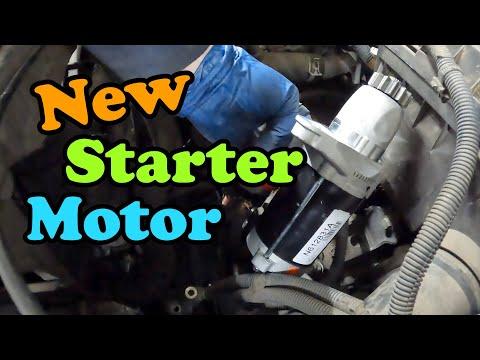





How to Replace the Starter Motor on a 2013 Toyota Highlander V6 (Step-by-Step Guide)
Tools, parts, safety tips, intake manifold removal notes, and key torque specs for a proper install
How to Replace the Starter Motor on a 2013 Toyota Highlander V6 (Step-by-Step Guide)
Tools, parts, safety tips, intake manifold removal notes, and key torque specs for a proper install


🔧 Highlander - Starter Motor Replacement
On your Highlander V6, the starter is mounted under the upper intake manifold (the top half of the intake). Replacing it means removing the intake parts on top, swapping the starter, then re-sealing the intake with new gaskets so you don’t create a vacuum leak.
Difficulty Level: Advanced | Estimated Time: 3-6 hours
⚠️ Safety & Precautions
- ⚠️ Disconnect the battery negative cable before touching the starter wiring.
- ⚠️ Let the engine cool fully; you’ll be working around hot aluminum parts.
- ⚠️ Keep tools away from the battery positive terminal to prevent shorting.
- ⚠️ Cover the open intake ports with clean rags once the manifold is off; dropping anything inside can damage the engine.
- ⚠️ After battery disconnect, wait at least 90 seconds before working near wiring harnesses (airbag system precaution).
🔧 Required Tools
You'll need the following tools for this repair:
- Safety glasses
- Nitrile gloves
- Fender cover
- 10mm socket
- 12mm socket
- 14mm socket
- 3/8" ratchet
- 1/4" ratchet
- 3/8" torque wrench
- 6" extension
- 10" extension
- Wobble extension (specialty)
- Needle-nose pliers
- Hose clamp pliers
- Flat trim tool
- Pick tool set
- Magnetic pickup tool
- Small flashlight
- Shop towels
- Masking tape
- Paint marker
🔩 Required Parts
HowToo sells all the parts you need for this repair:
- Starter motor - Qty: 1
- Upper intake manifold gasket set - Qty: 1
- Throttle body gasket - Qty: 1
- Dielectric grease - Qty: 1
📋 Before You Begin
- Park on level ground, shift to Park, and set the parking brake.
- Open the hood and install a fender cover to protect paint.
- Use masking tape and a paint marker to label hoses and connectors as you unplug them. This prevents mix-ups on reassembly.
- Disconnect the battery: use a 10mm socket to remove the negative (-) cable and isolate it so it can’t spring back.
- Have clean shop towels ready to plug intake openings once the manifold is removed.
🔨 Step-by-Step Instructions
Follow these steps in order:
Step 1: Remove the engine cover and intake duct
- Pull up to remove the engine cover (it’s held by grommets).
- Unplug the mass airflow sensor connector (on the air tube) by pressing the tab and pulling straight back.
- Use a 10mm socket to loosen the hose clamps on the intake tube.
- Remove the intake tube/air ducting and set it aside.
Step 2: Disconnect throttle body connections
- Unplug the throttle body electrical connector.
- Disconnect small vacuum/vent hoses as needed using needle-nose pliers or hose clamp pliers.
- Label each hose before pulling it off.
Step 3: Remove the throttle body
- Use a 10mm socket to remove the throttle body mounting bolts.
- Remove the throttle body and the old gasket.
- Cover the opening with a clean shop towel so nothing falls in.
- On reassembly, install a new gasket and Torque to 10 Nm (89 in-lbs).
Step 4: Remove the upper intake manifold (plenum)
- Disconnect any remaining vacuum hoses and electrical connectors attached to the upper intake manifold using a flat trim tool to gently help release clips.
- Remove the upper intake manifold bolts/nuts using a 12mm socket with a 6" extension.
- Lift the upper intake manifold straight up and out.
- Immediately cover the exposed intake ports with clean shop towels.
- On reassembly, install new upper intake manifold gaskets and Torque to 21 Nm (15 ft-lbs).
Step 5: Access the starter and disconnect the wiring
- The starter is now visible in the “valley” of the V6.
- Remove the starter solenoid terminal cover (if equipped) by hand or with a pick tool set carefully.
- Use a 12mm socket to remove the nut for the main battery cable on the starter.
- Unplug the small starter trigger wire connector by pressing the tab and pulling it off.
- Apply a small amount of dielectric grease to the trigger-wire connector during reassembly.
Step 6: Remove the starter mounting bolts and starter
- Use a 14mm socket with a 10" extension (and a wobble extension (specialty) if needed) to remove the two starter mounting bolts.
- A wobble extension angles slightly for tight access.
- Lift the starter out carefully without snagging wiring.
- If you drop a bolt, use a magnetic pickup tool to retrieve it—do not leave hardware in the engine valley.
- Install the new starter and start both mounting bolts by hand to prevent cross-threading.
- Torque starter mounting bolts to 39 Nm (29 ft-lbs).
Step 7: Reconnect starter wiring
- Reconnect the small trigger-wire connector until it clicks.
- Reinstall the main battery cable on the starter stud using a 12mm socket.
- Torque the starter terminal nut to 9 Nm (80 in-lbs).
- Reinstall the terminal protective cover.
Step 8: Reinstall the upper intake manifold and throttle body
- Remove the shop towels from the intake ports.
- Install new upper intake manifold gaskets.
- Set the upper intake manifold in place and hand-start all bolts/nuts.
- Tighten evenly using a 12mm socket, then Torque to 21 Nm (15 ft-lbs).
- Install the throttle body with a new gasket using a 10mm socket, then Torque to 10 Nm (89 in-lbs).
- Reconnect all vacuum hoses and electrical connectors (match your labels).
Step 9: Reinstall intake duct and engine cover
- Reinstall the intake tube and tighten clamps using a 10mm socket.
- Reconnect the mass airflow sensor connector.
- Press the engine cover back onto its grommets.
Step 10: Reconnect the battery
- Reconnect the negative (-) battery cable using a 10mm socket.
- Make sure the terminal is snug and does not rotate by hand.
✅ After Repair
- Start the engine and confirm it cranks strongly with no clicking.
- Listen for hissing (a vacuum leak). If you hear it, re-check intake hoses and gasket seating.
- Check that the idle settles after a short drive; a brief relearn after battery disconnect is normal.
- Verify no warning lights appear. If a check engine light comes on, re-check throttle body and sensor connectors first.
- Inspect the engine bay for leftover tools, rags, or loose connectors.
💰 DIY vs Shop Cost
Shop Cost: $700-$1,200 (parts + labor)
DIY Cost: $200-$450 (parts only)
You Save: $500-$750 by doing it yourself!
Shop labor rates vary but typically run $100-$150/hour. This repair takes a shop approximately 3-5 hours.
🎯 Ready to get started?
HowToo makes it easy: same-day/2-day shipping on every part, plus all the tools and specialty tools you need! Check out the parts and tools sections below to add everything to your cart.