









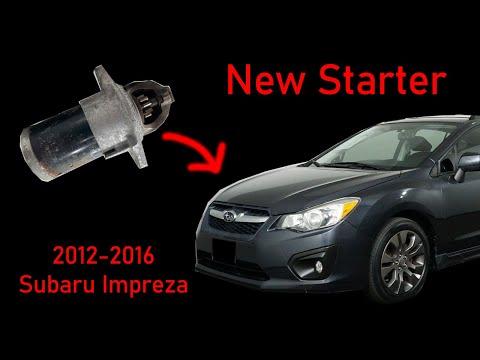




How to Replace the Starter Motor on a 2013 Subaru Forester (Step-by-Step Guide)
Tools, parts, safety tips, intercooler removal, wiring steps, and torque specs for a proper install for 2003, 2004, 2005, 2006, 2007, 2008, 2009, 2010, 2011, 2012, 2013, 2014, 2015, 2016, 2017, 2018
How to Replace the Starter Motor on a 2013 Subaru Forester (Step-by-Step Guide)
Tools, parts, safety tips, intercooler removal, wiring steps, and torque specs for a proper install for 2003, 2004, 2005, 2006, 2007, 2008, 2009, 2010, 2011, 2012, 2013, 2014, 2015, 2016, 2017, 2018


🔧 Forester - Starter Motor Replacement
The starter motor spins your engine so it can start. On your Forester, the starter sits on top of the transmission bellhousing and is easiest to reach after removing the intercooler (the aluminum box that cools turbo air).
Difficulty Level: Intermediate | Estimated Time: 1.5-3.0 hours
⚠️ Safety & Precautions
- ⚠️ Disconnect the negative battery cable first to prevent electrical shorts.
- ⚠️ Let the engine cool down; the turbo/intercooler area can be very hot.
- ⚠️ Support your body/arms securely; you’ll be leaning over the engine bay.
- ⚠️ Keep tools away from the battery positive terminal and starter power stud.
🔧 Required Tools
You'll need the following tools for this repair:
- Safety glasses
- Mechanic gloves
- Fender cover
- 10mm socket
- 12mm socket
- 14mm socket
- 3/8" drive ratchet
- 3/8" drive extension set (3" and 6")
- Torque wrench (10–80 ft-lbs range)
- Flat-blade screwdriver
- Hose clamp pliers
- Trim clip tool
- Needle-nose pliers
- Shop flashlight
- Magnetic pickup tool
🔩 Required Parts
HowToo sells all the parts you need for this repair:
- Starter motor - Qty: 1
- Battery terminal anti-corrosion pads - Qty: 1
- Dielectric grease - Qty: 1
📋 Before You Begin
- Park on level ground, shift to Park, and set the parking brake.
- Open the hood and install a fender cover to protect paint.
- Disconnect the battery: use a 10mm socket to remove the negative (-) terminal first, then move it aside so it cannot spring back.
🔨 Step-by-Step Instructions
Follow these steps in order:
Step 1: Remove the engine cover (if equipped)
- Use a 10mm socket (or trim clip tool, depending on fasteners) to remove the engine cover and set it aside.
Step 2: Remove the intercooler for access
- Intercooler = top aluminum cooler on turbo models.
- Use hose clamp pliers to release any spring clamps on small hoses attached to the intercooler, then slide the clamps back.
- Use a 12mm socket to remove the bypass valve (blow-off valve) mounting bolts, then move the valve aside with its hose still attached if possible.
- Use a flat-blade screwdriver to loosen the intercooler outlet clamp at the throttle body coupler.
- Use a flat-blade screwdriver to loosen the intercooler inlet clamp at the turbo outlet hose.
- Use a 12mm socket to remove the intercooler mounting bolts/brackets.
- Wiggle and lift the intercooler up and out. Use a shop flashlight to confirm no hoses are still attached.
Step 3: Locate the starter and label the wires
- The starter is now visible on top of the transmission bellhousing.
- Use a shop flashlight and take a photo so you can put the wiring back exactly the same.
- Starter solenoid = small switch on starter.
Step 4: Disconnect the starter electrical connections
- Pull back the rubber boot on the starter’s main power stud.
- Use a 12mm socket to remove the nut for the main battery cable, then lift the cable off and tuck it aside.
- Disconnect the solenoid signal wire:
- If your Forester uses a push-on connector, pull it straight off using needle-nose pliers (don’t yank the wire).
- If your Forester uses a small nut terminal, use a 10mm socket to remove the nut and lift the wire off.
Step 5: Remove the starter mounting bolts and remove the starter
- Use a 14mm socket with a 3/8" drive ratchet and extension set to remove the two starter mounting bolts.
- Support the starter with one hand while removing the last bolt so it doesn’t drop.
- Lift the starter out of the engine bay.
Step 6: Install the new starter
- Set the new starter in position and start both mounting bolts by hand to avoid cross-threading.
- Use a 14mm socket to snug the bolts evenly.
- Use a torque wrench (10–80 ft-lbs range) with a 14mm socket: Torque to 44 N·m (33 ft-lbs).
Step 7: Reconnect the starter wiring
- Install the solenoid signal wire back on (push-on until fully seated, or nut-style tightened with 10mm socket).
- Install the main battery cable on the starter power stud.
- Use a 12mm socket to tighten the nut firmly: Torque to 9 N·m (80 in-lbs).
- Reinstall the rubber boot over the power stud.
- Apply a small amount of dielectric grease to the outside of connectors to help prevent corrosion.
Step 8: Reinstall the intercooler
- Set the intercooler back into place, making sure the throttle body coupler and turbo outlet hose are fully seated.
- Use a 12mm socket to reinstall the intercooler mounting bolts/brackets.
- Use a flat-blade screwdriver to tighten both large hose clamps.
- Use a 12mm socket to reinstall the bypass valve bolts.
- Reconnect any small hoses and clamps using hose clamp pliers.
Step 9: Reconnect the battery
- Reconnect the negative (-) battery terminal using a 10mm socket.
- Tighten the terminal: Torque to 7.5 N·m (66 in-lbs).
- Install battery terminal anti-corrosion pads if you’re using them.
✅ After Repair
- Start the engine and confirm it cranks strongly with no clicking or grinding.
- Check that the intercooler hoses are seated and clamps are tight (no hissing/boost leak sounds).
- Verify there are no warning lights and no burning smell from wiring near the starter.
- If it cranks but won’t start, recheck the small solenoid connector and battery terminal tightness.
💰 DIY vs Shop Cost
Shop Cost: $450-$850 (parts + labor)
DIY Cost: $180-$450 (parts only)
You Save: $270-$400 by doing it yourself!
Shop labor rates vary but typically run $100-$150/hour. This repair takes a shop approximately 1.5-3.0 hours.
🎯 Ready to get started?
HowToo makes it easy: same-day/2-day shipping on every part, plus all the tools and specialty tools you need! Check out the parts and tools sections below to add everything to your cart.