
















How to Replace the Starter Motor on a 2012-2021 Hyundai Veloster (1.6L Turbo) (Engine: Inline 4 1.6L)
Step-by-step DIY guide with tools, parts list, wiring steps, and key torque specs
How to Replace the Starter Motor on a 2012-2021 Hyundai Veloster (1.6L Turbo) (Engine: Inline 4 1.6L)
Step-by-step DIY guide with tools, parts list, wiring steps, and key torque specs for 2012, 2013, 2014, 2015, 2016, 2017, 2019, 2020, 2021


🔧 Veloster - Starter Motor Replacement
The starter motor cranks (turns) your engine when you turn the key/start button. If it’s failing, you may get a single click, slow cranking, or no crank at all. Replacing it means disconnecting the battery, removing the electrical connections, unbolting the starter from the transmission bellhousing, and installing the new unit.
Difficulty Level: Intermediate | Estimated Time: 1.5-3.0 hours
Assumption: 1.6L turbo starter accessed from top + below; fastener sizes/torques can vary slightly by production.
⚠️ Safety & Precautions
- ⚠️ Disconnect the battery negative cable first; the starter cable is always “live” and can short.
- ⚠️ Let the engine/exhaust cool; the turbo area can burn you.
- ⚠️ Support the car with jack stands; never work under a car held only by a jack.
- ⚠️ Keep metal tools off the starter power stud; accidental contact can arc.
🔧 Required Tools
You'll need the following tools for this repair:
- Safety glasses
- Mechanic gloves
- Wheel chocks
- Floor jack (rated 2-ton minimum)
- Jack stands (rated 2-ton minimum)
- 10mm socket
- 12mm socket
- 14mm socket
- 3/8" drive ratchet
- 3/8" drive extensions (3" and 6")
- Universal joint adapter (3/8" drive)
- Torque wrench (10–100 Nm range)
- Flat trim tool
- Phillips screwdriver
- Needle-nose pliers
- Pick tool
- Wire brush (small)
- Flashlight
🔩 Required Parts
HowToo sells all the parts you need for this repair:
- Starter motor (1.6L turbo, manual) - Qty: 1
- Starter electrical terminal nut kit - Qty: 1
- Dielectric grease - Qty: 1
📋 Before You Begin
- Park on level ground, set the parking brake, and place wheel chocks behind the rear tires.
- Open the hood and make sure your radio/security settings won’t lock you out (most won’t, but it’s good practice).
- Disconnect the battery: use a 10mm socket to remove the negative terminal first, then remove the positive if you need extra room.
- Tip: Take a photo of all connections first.
🔨 Step-by-Step Instructions
Follow these steps in order:
Step 1: Remove the engine cover and intake ducting (for access)
- Remove any plastic engine cover by pulling up firmly by hand; if clipped, use a flat trim tool to pop clips.
- Loosen the intake hose clamp(s) using a Phillips screwdriver (or the same tool that matches your clamp head).
- Unclip/remove the air duct pieces as needed and set them aside.
- Tip: Keep clamps threaded on the hose.
Step 2: Lift and support the front of the car
- Place wheel chocks behind the rear wheels.
- Use a floor jack to lift the front jack point.
- Set the car onto jack stands at the proper pinch weld/side points.
- Give the car a gentle shake to confirm it’s stable.
Step 3: Remove the lower splash shield (if equipped)
- Use a 10mm socket and Phillips screwdriver to remove the bolts/clips holding the splash shield.
- Use a flat trim tool to pop plastic push-clips (a push-clip is a plastic fastener with a center pin).
Step 4: Locate the starter and unplug the small control connector
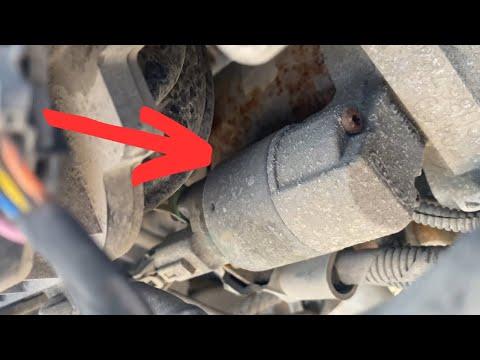
- Find the starter where the engine meets the transmission (bellhousing area). It’s a small motor with a cylinder on top (the solenoid).
- Unplug the small connector from the solenoid using needle-nose pliers only if needed (don’t crush it).
- If the connector lock tab is stuck, use a pick tool to gently lift the tab.
Step 5: Remove the main starter power cable
- Pull back the rubber boot on the starter power stud by hand.
- Use a 12mm socket to remove the nut on the large power cable (some variants use 13mm; if yours doesn’t fit, stop and use the correct size).
- Lift the cable off and move it aside so it can’t touch metal.
- Tip: Wrap the cable end with a glove.
Step 6: Unbolt the starter from the transmission bellhousing
- Support the starter with one hand from below.
- Use a 14mm socket with a 3/8" drive ratchet, extensions, and a universal joint adapter to remove the two starter mounting bolts.
- Once bolts are out, wiggle and pull the starter straight out.
- Tip: Keep bolts separated by location.
Step 7: Compare parts and prep the mounting surfaces
- Compare the old and new starter (same mounting ears, same connector style, same power stud location).
- Use a wire brush (small) to clean the starter mounting surface and cable ring terminal (clean metal helps good electrical contact).
- Apply a light film of dielectric grease to the small connector seal only (don’t pack the power stud threads).
Step 8: Install the new starter and torque the mounting bolts
- Position the starter into the bellhousing opening and start both bolts by hand to avoid cross-threading.
- Tighten the mounting bolts using a 14mm socket and torque wrench.
- Torque to 49 Nm (36 ft-lbs) for the starter mounting bolts.
Step 9: Reconnect the starter wiring
- Install the main power cable onto the stud and thread the nut by hand first.
- Use a 12mm socket and torque wrench to tighten the nut: Torque to 10 Nm (7 ft-lbs).
- Reinstall the rubber boot over the power stud.
- Reconnect the small solenoid connector until it clicks.
Step 10: Reinstall splash shield and intake parts
- Reinstall the lower splash shield using a 10mm socket, Phillips screwdriver, and flat trim tool for clips.
- Reinstall the intake ducting and tighten clamps using a Phillips screwdriver.
Step 11: Reconnect the battery and lower the car
- Reconnect the battery positive (if removed) and then the negative using a 10mm socket.
- Remove jack stands and lower the car using the floor jack.
✅ After Repair
- Turn the key/start and confirm the engine cranks strongly with no clicking.
- Check that no warning lights appear related to low voltage; if they do, drive a short distance and recheck.
- Listen for abnormal grinding; if heard, shut off and re-check starter seating and bolts.
- Recheck the starter power nut for tightness after a short test drive (engine off, cool, battery connected is OK if you’re careful).
💰 DIY vs Shop Cost
Shop Cost: $450-$850 (parts + labor)
DIY Cost: $160-$420 (parts only)
You Save: $290-$430 by doing it yourself!
Shop labor rates vary but typically run $100-$150/hour. This repair takes a shop approximately 1.5-3.0 hours.
🎯 Ready to get started?
HowToo makes it easy: same-day/2-day shipping on every part, plus all the tools and specialty tools you need! Check out the parts and tools sections below to add everything to your cart.
Guide for Starter Motor replace for these Hyundai vehicles
| Year Make Model | Sub Model | Engine | Body Style |
|---|---|---|---|
| 2021 Hyundai Veloster | - | Inline 4 1.6L | - |
| 2020 Hyundai Veloster | - | Inline 4 1.6L | - |
| 2019 Hyundai Veloster | - | Inline 4 1.6L | - |
| 2017 Hyundai Veloster | - | Inline 4 1.6L | - |
| 2016 Hyundai Veloster | - | Inline 4 1.6L | - |
| 2015 Hyundai Veloster | - | Inline 4 1.6L | - |
| 2014 Hyundai Veloster | - | Inline 4 1.6L | - |
| 2013 Hyundai Veloster | - | Inline 4 1.6L | - |
| 2012 Hyundai Veloster | - | Inline 4 1.6L | - |