









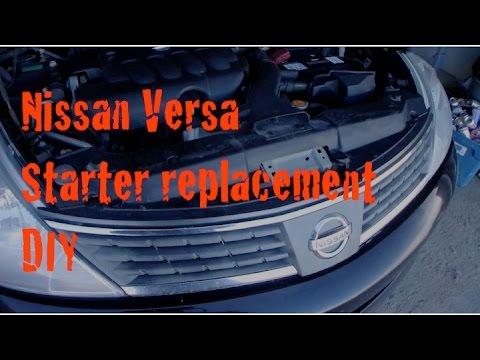





How to Replace the Starter Motor on a 2012-2019 Nissan Versa
Step-by-step instructions with tools, parts, torque specs, and safety tips
How to Replace the Starter Motor on a 2012-2019 Nissan Versa
Step-by-step instructions with tools, parts, torque specs, and safety tips for 2012, 2013, 2014, 2015, 2016, 2017, 2018, 2019


🔧 Starter Motor - Replacement
The starter on your Versa is buried low on the engine/transaxle side, so the job is mostly about gaining access, disconnecting the battery safely, and swapping the unit without damaging wiring or nearby parts. On this model, the easiest path is from the top with the air intake removed, then finishing from below for the mounting bolts and wiring.
Difficulty Level: Intermediate | Estimated Time: 2-4 hours
⚠️ Safety & Precautions
- Disconnect the negative battery cable before touching the starter wiring. This prevents accidental cranking and short circuits.
- The starter wiring is always hot at the battery feed terminal. Do not let the cable touch metal.
- Support the car securely with jack stands if you go underneath. Never rely on a jack alone.
- Keep hands clear of the belt, exhaust, and cooling fan area.
- If the engine has been running, let it cool before working near the exhaust and transaxle.
🔧 Required Tools
You'll need the following tools for this repair:
- 10mm wrench
- 12mm socket
- 14mm socket
- Ratchet
- Short extension
- Long extension
- Torque wrench
- Flat blade screwdriver
- Trim panel tool
- Floor jack (rated 3-ton minimum)
- Jack stands (rated for vehicle weight)
- Wheel chocks
- Safety glasses
- Mechanic gloves
🔩 Required Parts
HowToo sells all the parts you need for this repair:
- Starter motor - Qty: 1
- Starter mounting bolts - Qty: 2
- Battery terminal protective grease - Qty: 1
📋 Before You Begin
- Park on level ground and set the parking brake.
- Turn the ignition OFF and remove the key or keep the fob away from the vehicle.
- Disconnect the negative battery cable first using a 10mm wrench.
- If the front of the car is lifted, place it securely on jack stands before going underneath.
- Label each wire before removal.
🔨 Step-by-Step Instructions
Follow these steps in order:
Step 1: Disconnect the battery
- Use a 10mm wrench to remove the negative battery cable from the battery.
- Move the cable aside so it cannot spring back and touch the terminal.
- Torque to 5.4 Nm (48 in-lbs) when reinstalling the battery terminal.
Step 2: Remove the air intake duct for access
- Use a flat blade screwdriver or 10mm socket to loosen the intake clamps and remove the air duct.
- Remove any intake resonator or snorkel pieces that block access to the starter.
- Set the parts aside in order.
Step 3: Lift the front of the vehicle
- Use a floor jack (rated 3-ton minimum) to lift the front of the vehicle at the proper lift point.
- Support it with jack stands under the approved support points.
- Chock the rear wheels before going underneath.
Step 4: Remove the splash shield if needed
- Use a trim panel tool or 10mm socket to remove the lower shield fasteners.
- Lower the shield and set it aside.
- This gives clearer access to the starter area from below.
Step 5: Disconnect the starter wiring
- Locate the starter on the engine/transaxle side.
- Use a 10mm wrench or 12mm socket to remove the nut on the main battery cable at the starter.
- Remove the smaller solenoid control connector by pressing the lock tab and pulling it straight off.
- Do not let the main cable touch ground.
Step 6: Remove the starter mounting bolts
- Use a 14mm socket, ratchet, and extension to remove the starter bolts.
- Support the starter with one hand as the last bolt comes out.
- Lower the starter out carefully through the available opening.
Step 7: Install the new starter
- Position the new starter in place by hand.
- Install the mounting bolts finger-tight first using a 14mm socket.
- Torque to 44 Nm (32 ft-lbs) for the starter mounting bolts.
Step 8: Reconnect the wiring
- Reconnect the small control connector until it clicks.
- Install the main battery cable on the starter terminal using a 10mm wrench or 12mm socket.
- Tighten the terminal nut snugly. Torque to 9 Nm (80 in-lbs) if a factory spec tool is available.
- Make sure the cable is routed away from heat and moving parts.
Step 9: Reinstall the shield and intake parts
- Reinstall the splash shield using a trim panel tool or 10mm socket.
- Reinstall the intake duct and tighten all clamps with a flat blade screwdriver or 10mm socket.
- Confirm nothing is left loose in the engine bay.
Step 10: Restore battery power and test
- Reconnect the negative battery cable with a 10mm wrench.
- Start the engine and listen for smooth cranking.
- Check for warning lights, loose cables, or unusual grinding noise.
✅ After Repair
- Start the engine 2-3 times to confirm consistent cranking.
- Check that the battery cable and solenoid wire stay cool and secure.
- Verify the air intake tube is sealed and the engine idles normally.
- If the old starter failed with a clicking symptom, have the battery tested too.
💰 DIY vs Shop Cost
Shop Cost: $450-$850 (parts + labor)
DIY Cost: $120-$280 (parts only)
You Save: $330-$570 by doing it yourself!
Shop labor rates vary but typically run $100-$150/hour. This repair takes a shop approximately 2-4 hours.
🎯 Ready to get started?
HowToo makes it easy: same-day/2-day shipping on every part, plus all the tools and specialty tools you need! Check out the parts and tools sections below to add everything to your cart.
Guide for Starter Motor replace for these Nissan vehicles
| Year Make Model | Sub Model | Engine | Body Style |
|---|---|---|---|
| 2019 Nissan Versa | - | - | - |
| 2018 Nissan Versa | - | - | - |
| 2017 Nissan Versa | - | - | - |
| 2016 Nissan Versa | - | - | - |
| 2015 Nissan Versa | - | - | - |
| 2014 Nissan Versa | - | - | - |
| 2013 Nissan Versa | - | - | - |
| 2012 Nissan Versa | - | - | - |