









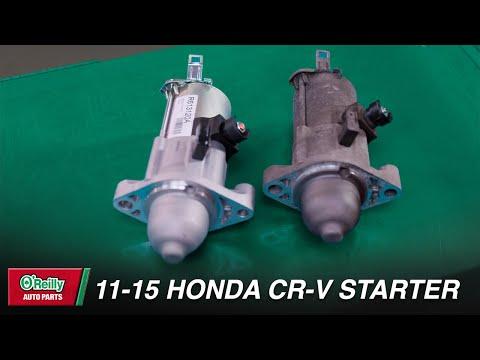







How to Replace the Starter Motor on a 2010-2011 Honda CR-V (No-Start/Click Repair Guide) (Engine: Inline 4 2.4L)
Step-by-step starter replacement with required tools/parts, safety tips, and torque specs
How to Replace the Starter Motor on a 2010-2011 Honda CR-V (No-Start/Click Repair Guide) (Engine: Inline 4 2.4L)
Step-by-step starter replacement with required tools/parts, safety tips, and torque specs for 2010, 2011


🔧 CR-V - Starter Motor Replacement
The starter motor spins your engine so it can begin running. If the starter has failed, you’ll usually get a single click, slow cranking, or no crank at all (with good battery power).
Difficulty Level: Intermediate | Estimated Time: 1.5-3.0 hours
⚠️ Safety & Precautions
- 🛑 Disconnect the negative battery cable first to prevent a short circuit.
- 🔥 Let the engine cool before working near the exhaust and engine block.
- 🧯 Never let your tool touch the starter power stud and metal at the same time.
- 🧍 If you raise the vehicle, support it with jack stands on solid ground (never rely on a jack).
🔧 Required Tools
You'll need the following tools for this repair:
- Safety glasses
- Mechanic gloves
- Wheel chocks
- Floor jack (rated 2-ton minimum)
- Jack stands (rated 2-ton minimum)
- 10mm socket
- 12mm socket
- 14mm socket
- 3/8" drive ratchet
- 3/8" drive extensions (3", 6", 12")
- 3/8" drive wobble extension
- Torque wrench (10-80 ft-lbs range)
- Flat-blade screwdriver
- Trim clip removal tool
- Needle-nose pliers
- Flashlight
🔩 Required Parts
HowToo sells all the parts you need for this repair:
- Starter motor - Qty: 1
- Intake duct/hose clamp assortment - Qty: 1 (only if clamps are damaged)
- Dielectric grease - Qty: 1 (optional)
📋 Before You Begin
- Park on level ground, shift to Park, and set the parking brake.
- Open the hood and keep the key away from the vehicle while you work.
- If you’ll lift the front: place wheel chocks behind the rear wheels before using the floor jack and jack stands.
- Plan to disconnect the battery: you’ll remove the negative cable first using a 10mm socket.
🔨 Step-by-Step Instructions
Follow these steps in order:
Step 1: Disconnect the battery
- Use a 10mm socket to loosen the negative (-) battery terminal clamp and remove it from the battery post.
- Move the cable aside so it can’t spring back to the terminal.
- Torque to 5 Nm (44 in-lbs) when reinstalling the battery terminal clamp.
Step 2: Remove the intake duct for access (top-side access)
- Use a flat-blade screwdriver to loosen the intake hose clamps.
- Disconnect any small hoses/clips from the duct using needle-nose pliers and a trim clip removal tool as needed.
- Lift the duct/resonator out for working room. Take a quick photo before unplugging hoses.
Step 3: Locate the starter on the engine
- Use a flashlight to find the starter where the engine meets the transmission.
- You’ll see a thick power cable (battery cable) and a smaller control connector (signal wire) attached to the starter.
Step 4: Remove the starter electrical connections
- Unplug the small signal connector by hand; if tight, gently help it with a flat-blade screwdriver.
- Use a 12mm socket to remove the nut on the large power cable terminal, then lift the cable off the stud.
- Torque to 9.8 Nm (87 in-lbs) when reinstalling the starter B+ terminal nut.
- If using dielectric grease, apply a light film to the small connector only (not the main power stud).
Step 5: Remove the starter mounting bolts
- Use a 14mm socket with a 3/8" drive ratchet and a wobble extension to remove the two starter mounting bolts.
- Support the starter with your free hand as the last bolt comes out so it doesn’t drop.
- Torque to 44 Nm (33 ft-lbs) when reinstalling the starter mounting bolts.
Step 6: Remove the starter from the engine bay
- Wiggle the starter free and lift it out from the top if space allows.
- If it won’t come out easily, do not force it; proceed to the alternate access step below.
Step 7 (Alternate): Remove from below if needed
- Place wheel chocks, then raise the front with a floor jack and support with jack stands.
- Use a trim clip removal tool and 10mm socket to remove any lower splash shield fasteners blocking access.
- Guide the starter down and out carefully.
Step 8: Install the new starter
- Position the new starter in place by hand, aligning it with the mounting holes.
- Start both mounting bolts by hand first (prevents cross-threading).
- Use a 14mm socket to snug them, then use a torque wrench: Torque to 44 Nm (33 ft-lbs).
Step 9: Reconnect the starter wiring
- Install the large power cable onto the starter stud and thread the nut by hand first.
- Use a 12mm socket to tighten, then use a torque wrench: Torque to 9.8 Nm (87 in-lbs).
- Plug in the small signal connector until it clicks/fully seats.
- Make sure cables are routed away from hot or moving parts.
Step 10: Reinstall the intake duct and any shields
- Reinstall the intake duct and reconnect any hoses/clips.
- Use a flat-blade screwdriver to tighten hose clamps securely (snug, not stripped).
- If removed, reinstall the splash shield using a 10mm socket and the trim clip removal tool.
Step 11: Reconnect the battery
- Reinstall the negative (-) battery terminal using a 10mm socket.
- Torque to 5 Nm (44 in-lbs).
✅ After Repair
- Start your CR-V and confirm it cranks strongly and starts normally.
- Listen for abnormal grinding or a “whirring” sound after the engine starts (could indicate misalignment or loose mounting).
- Recheck that the intake duct is fully seated (no hissing/air leak sound).
- Take a short test drive, then recheck for loose connections under the hood.
💰 DIY vs Shop Cost
Shop Cost: $450-$850 (parts + labor)
DIY Cost: $120-$350 (parts only)
You Save: $330-$500 by doing it yourself!
Shop labor rates vary but typically run $100-$150/hour. This repair takes a shop approximately 1.5-3.0 hours.
🎯 Ready to get started?
HowToo makes it easy: same-day/2-day shipping on every part, plus all the tools and specialty tools you need! Check out the parts and tools sections below to add everything to your cart.
Guide for Starter Motor replace for these Honda vehicles
| Year Make Model | Sub Model | Engine | Body Style |
|---|---|---|---|
| 2011 Honda CR-V | - | Inline 4 2.4L | - |
| 2010 Honda CR-V | - | Inline 4 2.4L | - |