









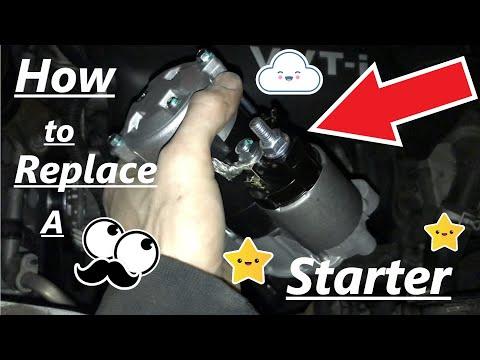





How to Replace the Starter Motor on a 2007-2019 Toyota Yaris (Trim: L)
Step-by-step instructions with tools, parts, torque specs, and safety tips
How to Replace the Starter Motor on a 2007-2019 Toyota Yaris (Trim: L)
Step-by-step instructions with tools, parts, torque specs, and safety tips for 2007, 2008, 2009, 2010, 2011, 2012


🔧 Yaris - Starter Motor Replacement
The starter motor cranks the engine when you turn the key. On your Yaris, replacement usually means disconnecting the battery, removing a few electrical connections, then unbolting the starter from the transmission bellhousing. Make sure the battery is fully disconnected before you begin, since the starter cable is always hot.
Difficulty Level: Intermediate | Estimated Time: 1.5-3 hours
⚠️ Safety & Precautions
- Disconnect the negative battery cable first, then the positive cable if needed. Reconnect in reverse order.
- The starter has a direct battery feed that can spark if shorted. Do not let tools bridge the terminals.
- Let the engine cool before working near the exhaust or transmission case.
- Support the vehicle securely with jack stands if you need bottom access. Never rely on a jack alone.
- Keep the transmission in neutral with the parking brake set before lifting.
🔧 Required Tools
You'll need the following tools for this repair:
- 10mm socket
- 12mm socket
- 14mm socket
- Ratchet
- Long extension
- Breaker bar
- Torque wrench
- Flat-blade screwdriver
- Trim clip tool
- Floor jack (rated 3-ton minimum)
- Jack stands (rated 3-ton minimum)
- Safety glasses
- Mechanic gloves
🔩 Required Parts
HowToo sells all the parts you need for this repair:
- Starter motor - Qty: 1
- Starter mounting bolts - Qty: 2
- Electrical terminal nut - Qty: 1
📋 Before You Begin
- Park on level ground and set the parking brake.
- Put the transmission in neutral.
- Turn the ignition off and remove the key.
- Disconnect the negative battery cable with a 10mm socket.
- If equipped with an engine cover or lower splash shield, remove it before starting.
🔨 Step-by-Step Instructions
Follow these steps in order:
Step 1: Disconnect the battery
- Use a 10mm socket to remove the negative battery cable from the battery terminal.
- Move the cable aside so it cannot spring back and touch the terminal.
- Keep the cable isolated.
Step 2: Raise the front of the vehicle if needed
- Use a floor jack to lift the front of the vehicle.
- Support it with jack stands at the proper lift points.
- Remove the lower engine under cover with a 10mm socket if it blocks access.
Step 3: Locate the starter
- Find the starter on the transmission bellhousing, where the engine and transmission meet.
- Identify the battery cable, smaller trigger wire, and the starter mounting bolts.
Step 4: Remove the electrical connections
- Use a 12mm socket to remove the nut from the main battery cable at the starter terminal.
- Remove the small trigger connector by releasing the lock tab with a flat-blade screwdriver if needed.
- Move the wires out of the way.
Step 5: Remove the starter mounting bolts
- Use a 14mm socket, ratchet, and long extension to remove the starter bolts.
- If the bolts are tight, use a breaker bar for extra leverage.
- Support the starter with one hand as the last bolt comes out.
Step 6: Remove the starter
- Lower and remove the starter from the vehicle.
- Compare the old and new starter to make sure the mounting points and terminals match.
Step 7: Install the new starter
- Position the new starter in place by hand.
- Install the mounting bolts finger-tight first with a 14mm socket.
- Torque the starter mounting bolts to 39 Nm (29 ft-lbs).
Step 8: Reconnect the electrical leads
- Reconnect the small trigger wire until it locks in place.
- Install the main battery cable and nut using a 12mm socket.
- Torque the terminal nut to 9 Nm (80 in-lbs).
- Do not overtighten the terminal nut.
Step 9: Reinstall covers and lower the vehicle
- Reinstall the lower engine cover with a 10mm socket if it was removed.
- Lower the vehicle carefully with the floor jack.
- Remove the jack stands.
Step 10: Reconnect the battery and test
- Reconnect the battery cable with a 10mm socket.
- Start the engine and listen for smooth cranking.
- Check for warning lights or loose connections.
✅ After Repair
- Start the engine 2-3 times to confirm the starter engages normally.
- Listen for grinding, clicking, or slow cranking.
- Check the starter terminals after the first start for looseness or heat.
- If the engine does not crank, recheck the battery connection and starter wiring first.
💰 DIY vs Shop Cost
Shop Cost: $350-$700 (parts + labor)
DIY Cost: $120-$300 (parts only)
You Save: $230-$400 by doing it yourself!
Shop labor rates vary but typically run $100-$150/hour. This repair takes a shop approximately 1.5-3 hours.
🎯 Ready to get started?
HowToo makes it easy: same-day/2-day shipping on every part, plus all the tools and specialty tools you need! Check out the parts and tools sections below to add everything to your cart.