









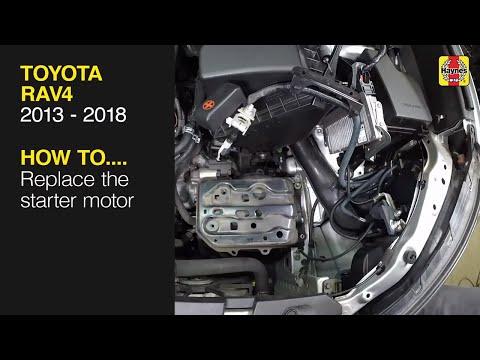





How to Replace the Starter Motor on a 2006-2017 Toyota RAV4 (Engine: Inline 4 2.5L)
Step-by-step instructions with tools, parts, torque specs, and safety tips
How to Replace the Starter Motor on a 2006-2017 Toyota RAV4 (Engine: Inline 4 2.5L)
Step-by-step instructions with tools, parts, torque specs, and safety tips for 2006, 2007, 2008


🔧 Starter Motor - Replacement
On your RAV4, the starter is mounted at the transmission side of the engine, tucked under the intake manifold. The job is mostly about safe battery disconnect, removing the air intake pieces for access, and then unbolting the starter and electrical connectors.
Difficulty Level: Intermediate | Estimated Time: 2-4 hours
⚠️ Safety & Precautions
- Disconnect the negative battery cable first. The starter has constant battery power.
- Keep tools away from the alternator and starter power cable. A short can cause sparks.
- Let the engine cool completely before working around the intake and exhaust area.
- Support any removed components securely so nothing falls into the engine bay.
- If the vehicle has been cranked repeatedly and the starter is hot, let it cool before handling.
🔧 Required Tools
You'll need the following tools for this repair:
- 10mm socket
- 12mm socket
- 14mm socket
- 3/8-inch ratchet
- 3-inch extension
- 6-inch extension
- Torque wrench
- Flat-head screwdriver
- Trim clip removal tool
- Needle-nose pliers
- Jack stands
- Wheel chocks
- Safety glasses
- Nitrile gloves
🔩 Required Parts
HowToo sells all the parts you need for this repair:
- Starter motor - Qty: 1
- Starter mounting gasket or seal - Qty: 1
- Battery terminal protector spray - Qty: 1
📋 Before You Begin
- Park on level ground and set the parking brake.
- Turn the ignition OFF and remove the key or keep the fob away from the vehicle.
- Disconnect the negative battery terminal with a 10mm socket.
- If you have a memory saver, disconnecting the battery may still clear some settings.
🔨 Step-by-Step Instructions
Follow these steps in order:
Step 1: Disconnect the battery
- Use a 10mm socket to remove the negative battery cable.
- Move the cable aside so it cannot spring back and touch the terminal.
Step 2: Remove the air intake assembly
- Use a flat-head screwdriver to loosen the intake tube clamps.
- Use a trim clip removal tool to remove any intake duct clips or retainers.
- Lift out the air inlet duct and air cleaner pieces for starter access.
- Keep track of every clip.
Step 3: Remove the battery and tray if needed for access
- If the starter area is still tight, remove the battery hold-down with a 10mm socket.
- Lift the battery out carefully.
- Remove the battery tray fasteners with a 10mm socket and lift out the tray.
Step 4: Disconnect the starter electrical connectors
- Locate the starter on the transmission side of the engine.
- Use a 10mm socket to remove the nut from the main battery cable.
- Use a needle-nose pliers if a wiring retainer needs to be released.
- Remove the smaller starter signal connector by hand or with gentle help from a flat-head screwdriver.
- Do not pull on the wire.
Step 5: Remove the starter mounting bolts
- Use a 14mm socket, 3-inch extension, and 6-inch extension to reach the starter bolts.
- Support the starter with one hand while removing the last bolt.
- Remove the starter from the engine bay.
Step 6: Install the new starter motor
- Position the new starter in place by hand.
- Start both mounting bolts by hand first.
- Use a 14mm socket to tighten the bolts evenly.
- Torque to 44 Nm (32 ft-lbs).
Step 7: Reconnect the wiring
- Reconnect the small signal plug until it clicks.
- Install the main battery cable nut with a 10mm socket.
- Torque to 9 Nm (80 in-lbs).
- Make sure the cable boots and retainers are seated correctly.
Step 8: Reinstall intake parts and battery tray
- Reinstall the battery tray with a 10mm socket.
- Reinstall the battery and hold-down.
- Reinstall the air intake duct and tighten the clamps with a flat-head screwdriver.
- Reconnect any clips or retainers removed earlier.
Step 9: Reconnect the battery and test
- Reconnect the negative battery cable with a 10mm socket.
- Start the engine and listen for a clean crank.
- Check for warning lights and make sure the engine starts consistently.
✅ After Repair
- Start the vehicle 3-4 times to confirm reliable operation.
- Check that the battery cable and starter wiring stay cool and secure.
- Verify no intake hoses or clips were left loose.
- If the battery was disconnected, reset your clock and presets as needed.
💰 DIY vs Shop Cost
Shop Cost: ₹18,000-₹35,000 (parts + labor)
DIY Cost: ₹6,000-₹14,000 (parts only)
You Save: ₹12,000-₹21,000 by doing it yourself!
Shop labor rates vary but typically run ₹8,000-₹12,000/hour. This repair takes a shop approximately 2-4 hours.
🎯 Ready to get started?
HowToo makes it easy: same-day/2-day shipping on every part, plus all the tools and specialty tools you need! Check out the parts and tools sections below to add everything to your cart.
Guide for Starter Motor replace for these Toyota vehicles
| Year Make Model | Sub Model | Engine | Body Style |
|---|---|---|---|
| 2017 Toyota RAV4 | - | Inline 4 2.5L | - |
| 2016 Toyota RAV4 | - | Inline 4 2.5L | - |
| 2015 Toyota RAV4 | - | Inline 4 2.5L | - |
| 2014 Toyota RAV4 | - | Inline 4 2.5L | - |
| 2013 Toyota RAV4 | - | Inline 4 2.5L | - |
| 2012 Toyota RAV4 | - | V6 3.5L | - |
| 2012 Toyota RAV4 | - | Inline 4 2.5L | - |
| 2011 Toyota RAV4 | - | V6 3.5L | - |
| 2011 Toyota RAV4 | - | Inline 4 2.5L | - |
| 2008 Toyota RAV4 | - | Inline 4 2.4L | - |
| 2008 Toyota RAV4 | - | V6 3.5L | - |
| 2007 Toyota RAV4 | - | Inline 4 2.4L | - |
| 2007 Toyota RAV4 | - | V6 3.5L | - |
| 2006 Toyota RAV4 | - | Inline 4 2.4L | - |
| 2006 Toyota RAV4 | - | V6 3.5L | - |