









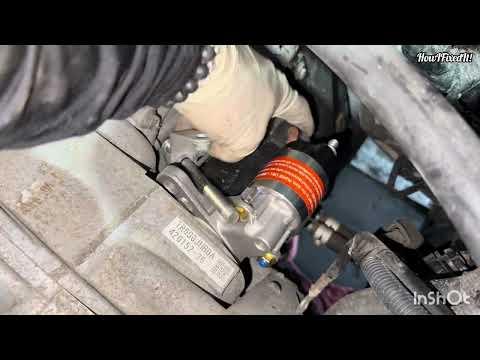





How to Replace the Starter Motor on a 2005-2019 Subaru Outback (Step-by-Step Guide) (Engine: Flat 6 3.6L)
Tools, parts list, safety tips, and torque specs for wiring, terminals, and starter mounting bolts
How to Replace the Starter Motor on a 2005-2019 Subaru Outback (Step-by-Step Guide) (Engine: Flat 6 3.6L)
Tools, parts list, safety tips, and torque specs for wiring, terminals, and starter mounting bolts for 2005


🔧 Outback - Starter Motor Replacement
The starter motor cranks your Outback’s engine. When it fails, you may get a single click, slow cranking, or no crank at all. This job is mostly about safe battery disconnect, removing the intake ducting for access, and swapping the starter and wiring correctly.
Difficulty Level: Intermediate | Estimated Time: 1.5–3.0 hours
⚠️ Safety & Precautions
- ⚠️ Disconnect the battery negative terminal first to prevent a short.
- ⚠️ Keep tools away from the battery positive terminal and starter power stud.
- ⚠️ Let the engine cool before working near the exhaust and upper engine area.
- ⚠️ If you must lift the vehicle for access checks, support it with jack stands on proper lift points.
🔧 Required Tools
You'll need the following tools for this repair:
- Safety glasses
- Mechanic gloves
- Fender cover
- 10mm socket
- 12mm socket
- 14mm socket
- 3/8" ratchet
- 3/8" extension set (3", 6", 10")
- 3/8" universal joint adapter
- Torque wrench (10–80 Nm range)
- Flat-blade screwdriver
- Trim clip remover
- Needle-nose pliers
- Pick tool
- Dielectric grease
- Floor jack (rated 3-ton minimum)
- Jack stands (rated 3-ton minimum)
- Wheel chocks
🔩 Required Parts
HowToo sells all the parts you need for this repair:
- Starter motor assembly - Qty: 1
- Starter electrical terminal nut (if damaged) - Qty: 1
- Intake manifold gasket set (only if intake manifold is removed for access) - Qty: 1
📋 Before You Begin
- Park on level ground, shift to Park, and chock the rear wheels.
- Open the hood and remove any engine covers (pull upward by hand).
- Disconnect the battery: use a 10mm socket to remove the negative (-) terminal first, then the positive (+) terminal if you’re removing the battery.
- Tip: Take a quick photo of wiring positions.
🔨 Step-by-Step Instructions
Follow these steps in order:
Step 1: Remove the battery (for working room)
- Use a 10mm socket to loosen and remove the battery terminals (negative first).
- Use a 10mm socket to remove the battery hold-down hardware.
- Lift the battery straight up and out. (Batteries are heavy—lift with legs.)
- When reinstalling later: Torque battery terminal nuts to 5 Nm (44 in-lbs).
Step 2: Remove the air intake duct/air box pieces blocking access
- Use a flat-blade screwdriver to loosen intake hose clamps.
- Use a trim clip remover to pop any plastic clips holding intake snorkels/ducting.
- Lift the intake ducting/air box section(s) out as needed to open up access at the top rear/side of the engine.
- Tip: Don’t yank—check for hidden clips.
Step 3: Locate the starter and identify the wiring
- The starter sits where the engine meets the transmission (bellhousing area).
- You’ll see: a thick battery cable on a stud (main power), and a smaller plug or small wire (signal wire from the ignition/ECM).
- Use a flashlight (from your phone is fine) to confirm you can reach the mounting bolts.
Step 4: Disconnect the starter electrical connections
- Remove the small signal connector: use needle-nose pliers or a pick tool to release the lock tab, then pull straight off.
- Remove the main power cable nut: use a 12mm socket (common) and pull the cable off the stud.
- Cover the cable end so it can’t touch metal (a glove or rag works).
- When reinstalling later: Torque starter B+ terminal nut to 13 Nm (115 in-lbs).
Step 5: Remove the starter mounting bolts
- Use a 14mm socket with a 3/8" extension (and universal joint adapter if needed) to remove the starter mounting bolt(s).
- Support the starter with your free hand as you remove the last bolt so it doesn’t drop.
- When reinstalling later: Torque starter mounting bolts to 39 Nm (29 ft-lbs).
Step 6: Remove the starter and compare parts
- Wiggle the starter free and lift it out carefully.
- Compare the new starter to the old one: mounting ears, electrical stud location, and nose length should match.
- Tip: Clean mounting surface for good ground.
Step 7: Install the new starter
- Position the starter into place by hand.
- Start the mounting bolts by hand first (prevents cross-threading).
- Use a 14mm socket to snug the bolts, then use a torque wrench: Torque to 39 Nm (29 ft-lbs).
Step 8: Reconnect the starter wiring
- Install the main power cable to the stud and tighten with a 12mm socket, then use a torque wrench: Torque to 13 Nm (115 in-lbs).
- Apply a thin smear of dielectric grease to the small signal connector seal (not the metal contact), then click the connector back on.
Step 9: Reinstall intake ducting and battery
- Reinstall intake ducting/air box: use a flat-blade screwdriver to tighten clamps and a trim clip remover to reinstall clips.
- Reinstall the battery and hold-down using a 10mm socket.
- Reconnect battery terminals: positive (+) first, then negative (-), using a 10mm socket.
- Torque battery terminal nuts to 5 Nm (44 in-lbs).
Step 10: If access was too tight (alternate path)
- If you could not reach the starter mounting bolts from above after removing intake ducting, stop here and tell me what’s blocking you (brackets/hoses/clearance). On some layouts, additional upper engine component removal may be required.
- I’ll map the exact “remove-to-access” sequence and gasket needs before you take anything else apart.
✅ After Repair
- Start your Outback and confirm it cranks strongly with no clicking.
- Check for warning lights and listen for rubbing/grinding near the bellhousing area.
- Recheck that the main power cable nut is tight and the connector is fully seated.
- If the battery was disconnected, your clock and auto-up window function may need resetting.
💰 DIY vs Shop Cost
Shop Cost: $550–$950 (parts + labor)
DIY Cost: $180–$450 (parts only)
You Save: $370–$500 by doing it yourself!
Shop labor rates vary but typically run $100-$150/hour. This repair takes a shop approximately 1.5–3.0 hours.
🎯 Ready to get started?
HowToo makes it easy: same-day/2-day shipping on every part, plus all the tools and specialty tools you need! Check out the parts and tools sections below to add everything to your cart.