














How to Replace the Starter Motor on a 2004-2019 Toyota Highlander 2.7L (Engine: Inline 4 2.7L)
Step-by-step DIY guide with tools, parts, torque specs, safety tips, and cost savings for 2004, 2005, 2006, 2007
How to Replace the Starter Motor on a 2004-2019 Toyota Highlander 2.7L (Engine: Inline 4 2.7L)
Step-by-step DIY guide with tools, parts, torque specs, safety tips, and cost savings for 2004, 2005, 2006, 2007


🔧 Highlander - Starter Motor Replacement
Replacing the starter motor on your Highlander means removing the failed starter from the front side of the engine and installing a new one. The starter is the electric motor that turns the engine when you press the START button or turn the key.
Difficulty Level: Intermediate | Estimated Time: 1.5-2.5 hours
⚠️ Safety & Precautions
- ⚠️ Disconnect the negative battery cable before touching the starter wiring. The starter has a direct battery cable that can spark heavily if shorted.
- ⚠️ Work only on a cool engine. The exhaust and engine parts near the starter can burn you.
- ⚠️ Support your Highlander securely with jack stands if you raise it. Never rely on a floor jack alone.
- ⚠️ Keep the key away from the vehicle while working so nobody can accidentally crank the engine.
- ⚠️ Label the starter wires before removal if needed. Mixing them up can cause a no-start condition.
🔧 Required Tools
You'll need the following tools for this repair:
- 10mm socket
- 12mm socket
- 14mm socket
- 3/8-inch drive ratchet
- 3/8-inch drive 6-inch extension
- 3/8-inch drive torque wrench
- Flathead screwdriver
- Needle-nose pliers
- Floor jack (rated 2-ton minimum)
- Jack stands (rated 2-ton minimum)
- Wheel chocks
- Mechanic gloves
- Safety glasses
- Battery terminal brush
🔩 Required Parts
HowToo sells all the parts you need for this repair:
- Starter motor assembly - Qty: 1
- Battery terminal protectant - Qty: 1
📋 Before You Begin
- Park your Highlander on level ground and set the parking brake.
- Place wheel chocks behind the rear wheels.
- Open the hood and let the engine cool fully.
- Disconnect the negative battery cable using a 10mm socket. The negative cable is usually marked with a minus symbol.
- If you raise the front, lift only at approved jack points and support the vehicle with jack stands.
- Take photos before unplugging wires.
🔨 Step-by-Step Instructions
Follow these steps in order:
Step 1: Disconnect the Battery
- Put on safety glasses and mechanic gloves.
- Use a 10mm socket and 3/8-inch drive ratchet to loosen the negative battery terminal clamp.
- Move the negative cable away from the battery post so it cannot spring back and touch.
- Use a battery terminal brush to clean corrosion if the terminal is dirty.
Step 2: Raise and Support the Front If Needed
- Place wheel chocks behind the rear wheels.
- Use a floor jack to raise the front of your Highlander if you need better access from underneath.
- Set the vehicle securely on jack stands.
- Gently shake the vehicle by hand to confirm it is stable before going underneath.
Step 3: Locate the Starter Motor
- The starter on your Highlander’s 2.7L engine is mounted low on the engine/transmission area near the front side of the engine bay.
- Look for a small cylindrical motor with a thick battery cable attached to it.
- The thick cable is the main starter power cable. The smaller plug is the starter solenoid signal wire. A solenoid is the small electrical switch mounted to the starter.
Step 4: Remove Any Access Obstructions
- If an engine under cover blocks access, use a 10mm socket and flathead screwdriver to remove the cover fasteners and clips.
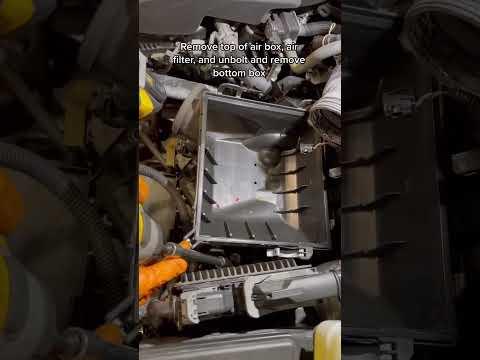
- If an air duct or bracket blocks hand access from above, use a 10mm socket or 12mm socket to remove the fasteners.
- Set all bolts and clips in order so they go back in the same places.
- A phone photo helps reassembly.
Step 5: Disconnect the Starter Wiring
- Use needle-nose pliers or your fingers to press the tab on the small starter electrical connector, then unplug it.
- Use a 12mm socket and 3/8-inch drive ratchet to remove the nut holding the large battery cable to the starter terminal.
- Move the cable aside carefully. Do not bend the terminal hard.
- Keep the nut safe if the new starter does not include one.
Step 6: Remove the Starter Mounting Bolts
- Support the starter with one hand before removing the final bolt. It is heavier than it looks.
- Use a 14mm socket, 3/8-inch drive ratchet, and 3/8-inch drive 6-inch extension to remove the starter mounting bolts.
- Once the bolts are out, pull the starter straight away from the transmission housing.
- If it sticks, gently wiggle it by hand. Do not pry hard against the aluminum housing.
Step 7: Compare the Old and New Starter
- Place the old and new starter motor assemblies side by side.
- Confirm the mounting ears, electrical terminals, and gear nose shape match.
- If the new starter came with protective caps, remove them only when ready to connect the wiring.
Step 8: Install the New Starter
- Position the new starter into the transmission housing by hand.
- Start both mounting bolts by hand first to avoid cross-threading. Cross-threading means the bolt is going in crooked and can damage the threads.
- Use a 14mm socket and 3/8-inch drive ratchet to snug the mounting bolts evenly.
- Use a 3/8-inch drive torque wrench with a 14mm socket to tighten the starter mounting bolts to Torque to 39 Nm (29 ft-lbs).
Step 9: Reconnect the Starter Wiring
- Install the large battery cable onto the starter terminal by hand.
- Use a 12mm socket and 3/8-inch drive torque wrench to tighten the starter terminal nut to Torque to 9.8 Nm (87 in-lbs).
- Push the small starter connector onto the solenoid until it clicks.
- Lightly tug the connector by hand to confirm it is locked.
Step 10: Reinstall Removed Covers or Brackets
- Use a 10mm socket, 12mm socket, and flathead screwdriver to reinstall any under cover, air duct, bracket, bolts, and clips removed earlier.
- Make sure no wiring is pinched under a bracket or cover.
- Tighten small cover bolts snug only. Do not overtighten plastic covers.
Step 11: Reconnect the Battery
- Apply battery terminal protectant to the clean battery terminal if available.
- Place the negative battery cable back on the battery post.
- Use a 10mm socket and 3/8-inch drive ratchet to tighten the terminal clamp snugly.
- Do not overtighten. The clamp should not twist by hand when properly tightened.
Step 12: Lower the Vehicle
- Use the floor jack to raise the front slightly off the jack stands.
- Remove the jack stands.
- Lower your Highlander slowly and safely to the ground.
- Remove the wheel chocks.
✅ After Repair
- Start your Highlander and listen for normal cranking. It should crank strongly without grinding or clicking.
- If the engine does not crank, recheck the negative battery cable, starter battery cable, and small starter connector.
- Let the engine idle for a minute and confirm there are no warning lights caused by a loose connection.
- Reset the clock, radio presets, and one-touch window auto function if they were lost after battery disconnection.
- For the driver window auto reset, fully lower the window, then fully raise it and hold the switch up for about 2 seconds.
💰 DIY vs Shop Cost
Shop Cost: $450-$750 (parts + labor)
DIY Cost: $180-$380 (parts only)
You Save: $270-$370 by doing it yourself!
Shop labor rates vary but typically run $100-$150/hour. This repair takes a shop approximately 1.0-1.5 hours.
🎯 Ready to get started?
HowToo makes it easy: same-day/2-day shipping on every part, plus all the tools and specialty tools you need! Check out the parts and tools sections below to add everything to your cart.