









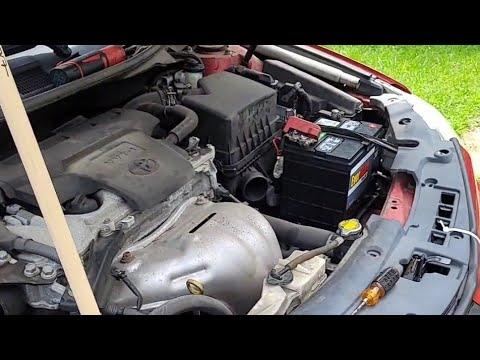





How to Replace the Starter Motor on a 2004-2017 Toyota Camry
Step-by-step DIY starter replacement with tools, parts list, torque specs, safety tips, and cost savings
How to Replace the Starter Motor on a 2004-2017 Toyota Camry
Step-by-step DIY starter replacement with tools, parts list, torque specs, safety tips, and cost savings for 2004, 2005, 2006, 2007, 2008, 2009, 2012, 2013, 2014, 2015, 2016, 2017


🔧 Camry - Starter Motor Replacement
You’ll remove the old starter motor from the front of the engine where it meets the transmission, then install a new one and reconnect the wiring. This fixes no-crank or weak crank problems when the battery and cables are good.
Difficulty Level: Intermediate | Estimated Time: 1.5–3 hours
⚠️ Safety & Precautions
- ⚠️ Always disconnect the negative battery cable before working on the starter to avoid sparks or short circuits.
- ⚠️ You will be working near the radiator and engine; make sure the engine is completely cool.
- ⚠️ If you raise the car, always support it with jack stands, never rely on a jack alone.
- ⚠️ Keep metal tools away from the battery positive terminal once the battery is disconnected.
- ⚠️ Wear safety glasses to protect your eyes from dirt and falling debris.
🔧 Required Tools
You'll need the following tools for this repair:
- 10mm socket
- 12mm socket
- 14mm socket
- 3/8" drive ratchet
- 3/8" drive socket extension (3"-6")
- Torque wrench (3/8" drive, 5–75 ft-lbs range)
- Flathead screwdriver (medium)
- Needle-nose pliers
- Trim clip removal tool
- Work light or flashlight
- Fender cover or old towel
- Mechanic’s gloves
- Safety glasses
- Floor jack (rated 2-ton minimum)
- Jack stands (rated 2-ton minimum)
- Wheel chocks
🔩 Required Parts
HowToo sells all the parts you need for this repair:
- Starter motor (remanufactured or new) - Qty: 1
- Starter mounting bolt set (optional) - Qty: 1
- Battery terminal cleaning brush - Qty: 1
- Dielectric grease - Qty: 1
- Shop towels - Qty: 1 pack
- Penetrating oil spray - Qty: 1
📋 Before You Begin
- Park your Camry on level ground, shift to PARK, and set the parking brake.
- Place wheel chocks behind the rear wheels to prevent any movement.
- Open the hood and support it with the hood prop rod.
- If you plan to work from underneath at all, lift the front of the car with the floor jack and support it securely on jack stands.
- Turn ignition OFF and remove the key from the ignition.
🔨 Step-by-Step Instructions
Follow these steps in order:
Step 1: Disconnect the battery
- Use the 10mm socket and ratchet to loosen the nut on the negative (black, marked “–”) battery terminal.
- Lift the negative cable off the battery post and tuck it aside so it cannot spring back.
- Always remove negative cable first for safety.
Step 2: Remove engine cover and air intake duct
- Gently pull up on the plastic engine cover to release its rubber grommets and lift it off; set aside.
- Loosen the clamp on the air intake hose near the air filter box using the 10mm socket or flathead screwdriver.
- Disconnect any small vacuum hoses or sensor connectors on the intake duct by gently pulling or pressing their release tabs (use needle-nose pliers if needed).
- Lift the air intake duct out and set aside to open up space.
- Take a photo of hose and connector locations first.
Step 3: Remove the air filter box (if needed for access)
- Unclip the air filter box cover latches by hand and remove the cover and air filter; set them aside.
- Use the 10mm socket to remove the bolts holding the lower air box to the body.
- Lift the air box straight up and out; you may need to wiggle it free from its rubber mounts.
- This gives more room to reach the starter.
Step 4: Locate the starter motor
- Look down at the front of the engine where it meets the transmission (driver’s side area, near the radiator).
- The starter is a small cylindrical motor bolted to the transmission housing, with a thick battery cable and a smaller plug attached.
- Use the work light to clearly see the starter and its wiring.
Step 5: Disconnect the starter electrical connectors
- Locate the small plastic connector on the starter solenoid (the smaller cylinder attached to the starter).
- Press the tab and pull the connector off by hand; if tight, gently help with the flathead screwdriver under the tab.
- Locate the large battery cable attached to the stud on the starter with a nut.
- Use the 12mm socket and ratchet to remove the nut from the stud, then pull the cable eyelet off and move it aside.
- Do not twist the cable; just slide it off.
Step 6: Remove starter mounting bolts
- Find the two main bolts that hold the starter to the transmission housing (one upper, one lower).
- Spray a little penetrating oil spray on the bolts if they look rusty and wait a few minutes.
- Use the 14mm socket, extension, and ratchet to loosen and remove the lower starter bolt.
- Then remove the upper starter bolt with the same tools; support the starter with your other hand as you remove the last bolt so it doesn’t drop.
- Note the bolt lengths and positions so you can reinstall them in the same locations.
Step 7: Remove the old starter
- Once the bolts are out, pull the starter straight away from the transmission housing.
- You may need to wiggle it slightly to unseat it from the locating dowel.
- Lift the starter out of the engine bay, watching for any nearby wiring or hoses.
- Compare new and old starters to confirm match.
Step 8: Prepare and install the new starter
- Lightly clean the mounting surface on the transmission with a clean shop towel so it’s free of dirt and corrosion.
- If desired, apply a tiny amount of dielectric grease to the battery cable eyelet contact surface to help prevent corrosion.
- Position the new starter in place, aligning the gear end with the opening in the transmission and the bolt holes with the mounting holes.
- Install the upper and lower mounting bolts by hand first to avoid cross-threading.
- Then use the 14mm socket and ratchet to snug both bolts.
- Use the torque wrench with the 14mm socket to tighten the starter mounting bolts to 39 Nm (29 ft-lbs).
Step 9: Reconnect starter wiring
- Slide the large battery cable eyelet back onto the starter stud.
- Install the nut on the stud by hand.
- Use the 12mm socket and torque wrench to tighten the nut to 9 Nm (80 in-lbs, about 7 ft-lbs). Do not overtighten.
- Plug the small electrical connector back onto the starter solenoid until it clicks into place.
- Gently tug each connector to confirm it’s seated.
Step 10: Reinstall the air box and intake duct
- Place the lower air filter box back into position and press it into its rubber mounts.
- Install the air box bolts using the 10mm socket and ratchet, and snug them down (just firm hand-tight).
- Reinstall the air filter and air box cover, closing all latches by hand.
- Reinstall the intake duct, pushing it fully onto the air box and throttle body.
- Tighten the duct clamps with the 10mm socket or flathead screwdriver.
- Reconnect any vacuum hoses and sensor connectors to their original spots.
Step 11: Reinstall engine cover
- Align the engine cover grommets with the mounting posts on the engine.
- Press down firmly at each corner until it snaps into place.
Step 12: Reconnect the battery
- Place the negative (black) cable back onto the negative battery post.
- Use the 10mm socket to tighten the clamp nut until the terminal is snug and does not rotate by hand.
- Do not overtighten; just firm and secure.
✅ After Repair
- Remove all tools from the engine bay and lower the car from jack stands using the floor jack if it was raised.
- Start your Camry. The engine should crank strongly and start quickly without grinding noises.
- Listen for any unusual sounds from the starter area (clicking, grinding, or whining). If you hear any, shut off the engine and recheck mounting and wiring.
- Check that any warning lights on the dash are normal. Some radio presets or clock settings may need to be reset after battery disconnection.
- Over the next few days, pay attention to consistent starting. Intermittent issues could indicate battery or cable problems instead.
💰 DIY vs Shop Cost
Shop Cost: $450–$750 (parts + labor)
DIY Cost: $150–$300 (parts only)
You Save: $300–$450 by doing it yourself!
Shop labor rates vary but typically run $100–$150/hour. This repair takes a shop approximately 1.0–1.5 hours.
🎯 Ready to get started?
HowToo makes it easy: same-day/2-day shipping on every part, plus all the tools and specialty tools you need! Check out the parts and tools sections above to add everything to your cart.
Guide for Starter Motor replace for these Toyota vehicles
| Year Make Model | Sub Model | Engine | Body Style |
|---|---|---|---|
| 2017 Toyota Camry | - | - | - |
| 2016 Toyota Camry | - | - | - |
| 2015 Toyota Camry | - | - | - |
| 2014 Toyota Camry | - | - | - |
| 2013 Toyota Camry | - | - | - |
| 2012 Toyota Camry | - | - | - |
| 2009 Toyota Camry | - | - | - |
| 2008 Toyota Camry | - | - | - |
| 2007 Toyota Camry | - | - | - |
| 2006 Toyota Camry | - | - | - |
| 2005 Toyota Camry | - | - | - |
| 2004 Toyota Camry | - | - | - |