









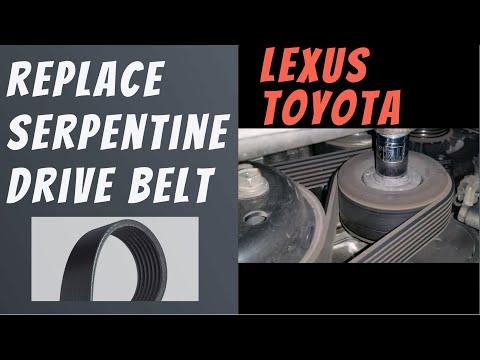






How to Replace the Serpentine (Drive) Belt on a 2017-2022 Toyota Highlander (Engine: V6 3.5L)
Step-by-step instructions with belt routing tips, required tools/parts, safety checks, and torque specs
How to Replace the Serpentine (Drive) Belt on a 2017-2022 Toyota Highlander (Engine: V6 3.5L)
Step-by-step instructions with belt routing tips, required tools/parts, safety checks, and torque specs for 2017, 2018, 2019, 2020, 2021, 2022


🔧 Highlander - Serpentine Belt Replacement
The serpentine belt (also called the drive belt) runs your A/C compressor, alternator, and other accessories. On your Highlander, replacing it is mostly about safely releasing the automatic belt tensioner, swapping the belt, then confirming the routing is correct.
Difficulty Level: Intermediate | Estimated Time: 0.5-1.5 hours
⚠️ Safety & Precautions
- Work on a cool engine; keep hands clear of pulleys and fans.
- Keep the key fob away from the vehicle so the engine can’t be started accidentally.
- If you raise the vehicle, support it with jack stands before getting underneath.
- Do not put fingers between the belt and pulleys while releasing tension.
🔧 Required Tools
You'll need the following tools for this repair:
- Safety glasses
- Mechanic gloves
- Flashlight
- Floor jack (rated 3-ton minimum)
- Jack stands (rated 3-ton minimum)
- Wheel chocks
- 21mm socket
- Breaker bar (1/2")
- 10mm socket
- Ratchet (3/8")
- Trim clip removal tool
- Serpentine belt tool (specialty)
- 14mm socket
- 19mm socket
- Torque wrench (10-150 ft-lbs)
🔩 Required Parts
HowToo sells all the parts you need for this repair:
- Serpentine belt (drive belt) - Qty: 1
📋 Before You Begin
- Park on level ground and set the parking brake.
- Open the hood and take a clear photo of the belt routing sticker (usually on the radiator support/underhood area). If there’s no sticker, take a photo of the current routing before removal.
- If access is tight from the top, plan to remove the RH (passenger-side) front wheel and the RH splash shield for better access.
🔨 Step-by-Step Instructions
Follow these steps in order:
Step 1: Confirm belt routing
- Use a flashlight to find the routing diagram sticker and compare it to the belt on the engine.
- If there’s no sticker, use your phone to take a routing photo before removing the belt.
Step 2: Create working access (only if needed)
- Place wheel chocks at the rear wheels.
- Use a floor jack (rated 3-ton minimum) to lift the RH front corner, then support with jack stands (rated 3-ton minimum).
- Use a 21mm socket with a breaker bar (1/2") to remove the RH front wheel lug nuts.
- Reinstall later and Torque to 103 Nm (76 ft-lbs).
- Use a trim clip removal tool and 10mm socket with a ratchet (3/8") to remove the RH splash shield fasteners and move the shield aside.
Step 3: Locate the belt tensioner
- Use a flashlight to find the automatic belt tensioner near the belt path.
- A “tensioner” is a spring-loaded arm/pulley that keeps the belt tight automatically.
Step 4: Release belt tension
- Use a serpentine belt tool (specialty) for leverage (it’s a long, thin handle made to reach the tensioner in tight spaces).
- Fit either a 14mm socket or 19mm socket onto the tensioner’s hex/bolt head (your Highlander may use one or the other—use the one that fully seats).
- Slowly rotate the tensioner to relieve belt tension, then slide the belt off the easiest-to-reach smooth pulley using your free hand.
- Move the tensioner slowly; it’s spring-loaded.
Step 5: Remove the old belt
- With tension released, let the tensioner return gently to its stop.
- Pull the belt off the remaining pulleys and remove it from the engine bay.
Step 6: Inspect pulleys and tensioner
- Spin the pulleys by hand and listen/feel for roughness or wobble.
- If any pulley feels gritty or loose, stop and replace the failed component before installing the new belt.
Step 7: Install the new belt (route first, then tension last)
- Route the new belt around the pulleys following the underhood routing diagram (or your photo).
- Leave the easiest pulley for last (often a smooth idler/tensioner pulley).
- Use the serpentine belt tool (specialty) with the correct 14mm socket or 19mm socket to rotate the tensioner again, then slide the belt onto the final pulley.
- Visually confirm every ribbed pulley has the belt ribs fully seated in the grooves.
Step 8: Reassemble access items (if removed)
- Reinstall the RH splash shield using the trim clip removal tool and 10mm socket with a ratchet (3/8").
- Reinstall the wheel using a 21mm socket and snug lug nuts in a star pattern.
- Lower the vehicle using the floor jack (rated 3-ton minimum), then use a torque wrench (10-150 ft-lbs) to Torque to 103 Nm (76 ft-lbs) in a star pattern.
✅ After Repair
- Before starting, do a final visual check that the belt is centered on every pulley.
- Start the engine and watch the belt for 20-30 seconds; it should run smoothly with no wandering.
- Turn A/C on and headlights on; listen for squeal or chirping (signs of misrouting or a pulley issue).
- Shut the engine off and recheck belt seating one more time.
💰 DIY vs Shop Cost
Shop Cost: $180-$380 (parts + labor)
DIY Cost: $35-$90 (parts only)
You Save: $145-$290 by doing it yourself!
Shop labor rates vary but typically run $100-$150/hour. This repair takes a shop approximately 0.7-1.2 hours.
🎯 Ready to get started?
HowToo makes it easy: same-day/2-day shipping on every part, plus all the tools and specialty tools you need! Check out the parts and tools sections below to add everything to your cart.
Guide for Serpentine Belt replace for these Toyota vehicles
| Year Make Model | Sub Model | Engine | Body Style |
|---|---|---|---|
| 2022 Toyota Highlander | - | V6 3.5L | - |
| 2021 Toyota Highlander | - | V6 3.5L | - |
| 2020 Toyota Highlander | - | V6 3.5L | - |
| 2019 Toyota Highlander | - | V6 3.5L | - |
| 2018 Toyota Highlander | - | V6 3.5L | - |
| 2017 Toyota Highlander | - | V6 3.5L | - |