









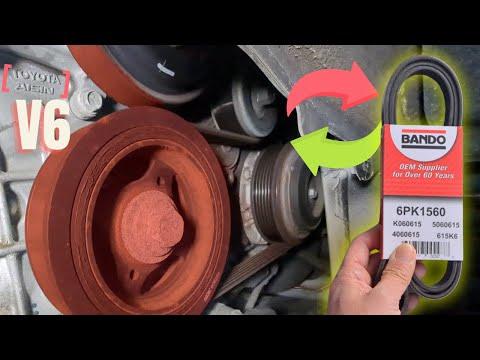





How to Replace the Serpentine Belt on a 2022 Toyota Highlander 3.5L V6
Step-by-step DIY guide with tools, parts list, belt routing, torque specs, safety tips, and cost savings for 2017, 2018, 2019, 2020, 2021, 2022
How to Replace the Serpentine Belt on a 2022 Toyota Highlander 3.5L V6
Step-by-step DIY guide with tools, parts list, belt routing, torque specs, safety tips, and cost savings for 2017, 2018, 2019, 2020, 2021, 2022


🔧 Highlander - Serpentine Belt Replacement
The serpentine belt (also called the drive belt) runs your alternator, A/C compressor, and other accessories from the engine crank pulley. On your Highlander, we’ll relieve tension with the automatic belt tensioner, remove the old belt, and install a new one following the correct routing.
Difficulty Level: Intermediate | Estimated Time: 1-1.5 hours
⚠️ Safety & Precautions
- 🔥 Work only on a cold engine; hot pulleys and components can burn you.
- 🔋 Disconnect the negative battery terminal to prevent the engine from accidentally starting.
- 👓 Wear safety glasses and gloves; you’ll be working in tight spaces around metal edges.
- 🌀 Keep fingers and clothing clear of pulleys and the tensioner while moving the belt.
- 🚗 Set the parking brake and keep the transmission in Park; you will be working in the engine bay only.
🔧 Required Tools
You'll need the following tools for this repair:
- 3/8" drive ratchet
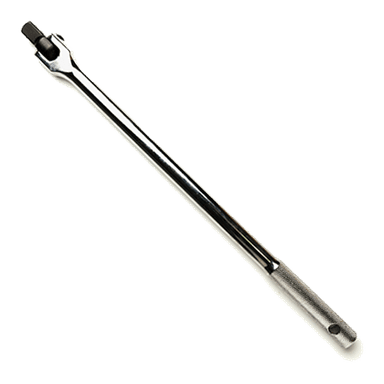
- 3/8" drive long-handled ratchet or breaker bar (at least 12")
- 14mm socket
- 10mm socket
- 3/8" drive socket extension (3"-6")
- Serpentine belt tool kit (flat, low-profile) (specialty)
- Trim clip remover tool
- Flathead screwdriver (medium)
- Torque wrench (3/8" drive, 5-75 ft-lbs range)
- Work light or flashlight
- Mechanic’s gloves
- Safety glasses
- Fender cover or thick towel
🔩 Required Parts
HowToo sells all the parts you need for this repair:
- Serpentine drive belt (accessory belt) for 3.5L V6 - Qty: 1
- Belt tensioner assembly - Qty: 1 (optional but recommended if original, replace if noisy or weak)
- Idler pulley - Qty: 1 (optional, replace if rough or noisy)
- Dielectric grease (small tube, optional) - Qty: 1
- Battery terminal protector spray (optional) - Qty: 1
- Replacement plastic push clips for engine covers - Qty: 4-6 (in case any break)
📋 Before You Begin
- Park the Highlander on level ground, set the parking brake, and shift to Park.
- Open the hood and install the hood prop securely.
- Take a clear photo of the existing belt routing from above and from the side. This is your backup diagram.
- Locate the belt routing sticker under the hood (usually on the radiator support or underside of the hood). If present, this shows the correct belt path.
- Disconnect the negative battery terminal using a 10mm socket and move the cable aside.
🔨 Step-by-Step Instructions
Follow these steps in order:
Step 1: Remove upper engine covers for access
- The plastic engine cover is the large plastic piece on top of the engine.
- Lift it straight up; it’s held by rubber grommets, no bolts.
- If there is a side or front plastic cover over the belt area, use the trim clip remover tool or flathead screwdriver to carefully pop up the plastic clips.
- Set all covers and clips aside in order. Lay clips in the order you remove them.
- No torque specs here; these covers just press back on later.
Step 2: Identify the belt path and components
- From the passenger side of the engine bay, look down at the belt.
- Identify these pulleys: crankshaft (largest at bottom), alternator, A/C compressor, idler pulley (smooth), and the belt tensioner (spring-loaded arm with a pulley).
- The tensioner on this engine uses a 14mm hex head for applying leverage.
- Compare what you see to your under-hood diagram or photo to understand the path.
Step 3: Position your tools on the belt tensioner
- Install the 14mm socket on your long-handled ratchet or serpentine belt tool.
- Place the socket on the tensioner’s bolt head (center of the tensioner pulley).
- Make sure the ratchet handle has room to move without hitting body parts or hoses.
- Do a test movement with no force first.
Step 4: Relieve belt tension and remove the belt
- On this engine, you typically rotate the tensioner clockwise to relieve tension (viewed from the front). Confirm by gently moving the ratchet: the belt should loosen.
- Using the long-handled ratchet with 14mm socket, slowly rotate the tensioner until the belt slackens.
- With your other hand, slip the belt off one of the easiest-to-reach smooth pulleys (usually the idler or alternator).
- Once the belt is off one pulley, gently let the tensioner return to its rest position under control. Never let it snap back.
- Now pull the belt out completely, noting how it weaves around each pulley.
Step 5: Inspect pulleys and tensioner
- Spin each accessible pulley by hand (engine off, belt removed).
- They should spin smoothly and quietly with no grinding or wobble.
- Check the tensioner arm for smooth spring action by moving it again with the 14mm socket and ratchet; it should move firmly and return smoothly.
- If any pulley feels rough or the tensioner is jerky or weak, plan to replace that component before installing the new belt.
Step 6: Compare old belt to new belt
- Lay the old belt and new belt side by side on the ground.
- They should be the same length and have the same number of ribs (grooves).
- Check the old belt for cracks, missing chunks, or glazing (shiny areas) so you know what wear looks like.
Step 7: Route the new belt around lower pulleys first
- Using your routing diagram or photo, start by looping the new belt around the crankshaft pulley at the bottom.
- Route the belt around the grooved pulleys (like alternator and A/C) so the ribs sit in the grooves.
- On smooth pulleys (idler or back side of tensioner), the flat back of the belt goes against the pulley.
- Leave the easiest-to-reach upper smooth pulley for last; this is where you’ll slip the belt on once you pull the tensioner.
Step 8: Apply tension and slip the belt onto the last pulley
- Reinstall the 14mm socket and long-handled ratchet on the tensioner bolt.
- Rotate the tensioner clockwise again to create slack.
- With your other hand, slip the belt over the final pulley (usually the idler or alternator), making sure it does not jump out of any other groove.
- Once the belt is fully seated on all pulleys, slowly release the tensioner back to its resting position.
- Do not torque the tensioner bolt here; this bolt is just a pivot for the spring-loaded arm, typically factory-set. If you had removed the tensioner bracket, reinstallation would be Torque to 54 Nm (40 ft-lbs) for the main mounting bolt (for reference).
Step 9: Double-check belt alignment
- Visually inspect each pulley from above and from the side if possible.
- Make sure the belt ribs are fully seated in the grooves on every grooved pulley.
- The belt should run straight, with no twists.
- Fix any misalignment now; running it misrouted can damage parts.
Step 10: Reinstall engine covers
- Reinstall any side/front plastic covers, aligning them and pressing in the plastic clips by hand.
- Reinstall the top engine cover by lining up its rubber grommets and pressing it down until it clicks into place.
- No torque specs; these just push or clip on.
Step 11: Reconnect the battery
- Reconnect the negative battery terminal using a 10mm socket.
- Tighten the terminal snugly: Torque to 5 Nm (4 ft-lbs) if using a torque wrench. Just firmly snug; do not over-tighten.
- Optionally spray the terminal with battery protector.
✅ After Repair
- Start the engine and let it idle while you observe the belt from the side of the engine bay.
- Watch the belt for 30–60 seconds: it should run smoothly with no wobble, squeal, or visible vibration.
- Switch on A/C, headlights, and rear defogger to load the system and listen again for any squeaks or chirps.
- If you hear squealing, shut off the engine immediately and recheck belt routing and alignment.
- After a short drive (5–10 km), recheck the belt visually to ensure it’s still centered on all pulleys.
💰 DIY vs Shop Cost
Shop Cost: $220-$350 (parts + labor)
DIY Cost: $40-$90 (parts only)
You Save: $130-$310 by doing it yourself!
Shop labor rates vary but typically run $100-$150/hour. This repair takes a shop approximately 0.8-1.0 hours.
🎯 Ready to get started?
HowToo makes it easy: same-day/2-day shipping on every part, plus all the tools and specialty tools you need! Check out the parts and tools sections above to add everything to your cart.