













How to Replace the Serpentine Belt on a 2022 Jeep Grand Cherokee WK 3.6L
Step-by-step DIY serpentine belt replacement with tools, parts list, torque specs, safety tips, and cost savings for 2022
How to Replace the Serpentine Belt on a 2022 Jeep Grand Cherokee WK 3.6L
Step-by-step DIY serpentine belt replacement with tools, parts list, torque specs, safety tips, and cost savings for 2022


🔧 Grand Cherokee WK - Serpentine Belt Replacement
The serpentine belt drives your alternator, power steering, A/C, and water pump. You’ll remove tension from the belt tensioner, slip the old belt off, then install a new belt following the factory routing.
Difficulty Level: Intermediate | Estimated Time: 1-1.5 hours
⚠️ Safety & Precautions
- 🛑 Always work with the engine off, key removed, and allow the engine to cool to avoid burns.
- 🛑 Disconnect the negative battery cable to prevent accidental cranking while your hands are near the belt.
- 🛑 Keep fingers and clothing clear of pulleys and fan blades at all times.
- 🛑 Support the vehicle with jack stands if you raise the front; never rely only on a floor jack.
- 🛑 Double-check belt routing before starting the engine to avoid damage to the belt and accessories.
🔧 Required Tools
You'll need the following tools for this repair:
- 🧰 3/8" drive ratchet
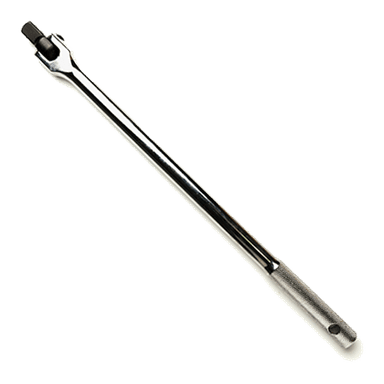
- 🧰 3/8" drive long-handled ratchet or breaker bar (18"+)
- 🧰 15mm socket
- 🧰 13mm socket
- 🧰 10mm socket
- 🧰 3/8" drive socket extension (3"-6")
- 🧰 Flat trim removal tool
- 🧰 Flathead screwdriver (medium)
- 🧰 Torque wrench (3/8" drive, 5-80 ft-lbs range)
- 🧰 Floor jack (rated 3-ton minimum)
- 🧰 Jack stands (2-ton or higher, pair)
- 🧰 Work light or flashlight
- 🧰 Mechanic gloves
- 🧰 Safety glasses
🔩 Required Parts
HowToo sells all the parts you need for this repair:
- 🧱 Serpentine drive belt (3.6L with A/C) - Qty: 1
- 🧱 Belt tensioner assembly (optional but recommended if noisy or weak) - Qty: 1
- 🧱 Idler pulley (optional, inspect for noise or play) - Qty: 1-2
- 🧱 Plastic push-pin clips for lower splash shield (if any break) - Qty: 4-6
- 🧱 Dielectric grease (small packet for battery terminal) - Qty: 1
📋 Before You Begin
- Park the Grand Cherokee on level ground, shift to Park, and set the parking brake.
- Open the hood and let the engine cool fully if it was recently running.
- Disconnect the negative battery cable using a 10mm socket. Move the cable end aside so it cannot spring back.
- Locate the belt routing decal under the hood. If it’s missing, take a clear photo of the belt routing before removal. Photo saves headaches later
🔨 Step-by-Step Instructions
Follow these steps in order:
Step 1: Safely raise and prepare the vehicle (if needed)
- On the 3.6L, you can usually do this from above, but access is better if you can also see the lower pulleys from below.
- Use the floor jack to lift the front center jacking point, then place jack stands under the front frame rails.
- Lower the Grand Cherokee gently onto the jack stands.
- Put on mechanic gloves and safety glasses.
Step 2: Remove lower splash shield (if equipped)
- Position your work light under the front of the Jeep.
- Use a 10mm socket to remove any bolts securing the plastic lower splash shield.
- Use the flat trim removal tool or flathead screwdriver to gently pry out plastic push-pin clips.
- Set the shield and clips aside. When reinstalling, tighten bolts to about 9 Nm (80 in-lbs) with the torque wrench.
Step 3: Identify pulleys and belt routing
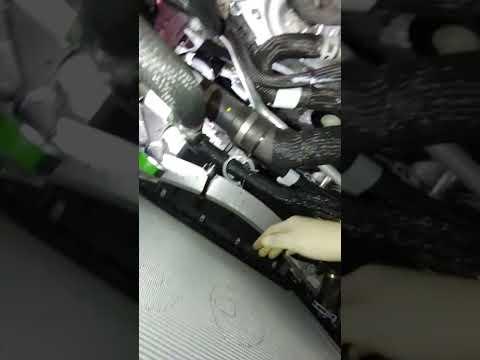
- From the top, look down on the front of the engine. The serpentine belt runs around the alternator, power steering, A/C compressor, water pump, crankshaft pulley, idler pulley, and belt tensioner.
- Find the belt tensioner — it is a spring-loaded pulley with a 15mm bolt head or a molded arm near the belt. This is what you will rotate to release tension.
- Take a clear photo of the belt routing from a couple of angles. Use phone flash for clarity
Step 4: Relieve tension from the belt
- Place a 15mm socket on the tensioner pulley bolt. Use a 3/8" drive long-handled ratchet or breaker bar to get good leverage.
- On the 3.6L, you usually rotate the tensioner clockwise (toward the rear of the vehicle) to release belt tension. Move slowly and steadily.
- While holding the tensioner in the released position with one hand on the ratchet, use the other hand to slip the belt off an easy-to-reach smooth pulley (often an idler or alternator) from the top.
- Slowly let the tensioner return to its rest position under spring tension. Do not let it snap back.
Step 5: Remove the old belt
- From the top and bottom, work the belt off each pulley by hand.
- Note how the belt passes over and under each pulley. Use your reference photo if unsure.
- Pull the old belt out from the engine bay.
Step 6: Inspect pulleys and tensioner
- Spin each accessible idler pulley and the tensioner pulley by hand.
- If any pulley feels rough, makes grinding noise, or has side-to-side play, plan to replace it. The same goes if the tensioner moves loosely or does not spring back smoothly.
- If you choose to replace the tensioner now: use a 15mm socket and ratchet to remove the mounting bolt, swap in the new tensioner, and tighten the mounting bolt to about 50 Nm (37 ft-lbs) with the torque wrench.
Step 7: Compare old and new belts
- Lay the old belt and the new belt side by side on the ground.
- They should be the same length and have the same number of ribs.
- A little difference from stretching is normal, but the routing and rib count must match.
Step 8: Route the new belt (bottom pulleys first)
- Use your routing decal or photo as a guide.
- From below, start by looping the belt around the crankshaft pulley (the large pulley at the bottom center). Make sure the ribs of the belt sit fully in the pulley grooves.
- Continue routing around lower pulleys (such as A/C compressor) according to the diagram, leaving one easily accessible smooth pulley on top (often an idler) for last.
- Fully seat belt in each groove as you go
Step 9: Finish routing from the top
- From above, guide the belt around the remaining upper pulleys: alternator, idler, power steering, and water pump as applicable to your routing diagram.
- Again, leave one smooth pulley accessible on top for the final slip-on step.
Step 10: Apply tensioner and slip belt into place
- Place the 15mm socket and long-handled ratchet back on the tensioner bolt.
- Rotate the tensioner clockwise again to remove slack.
- With the tensioner held, slip the belt over the last smooth pulley from the top. You may need to wiggle the belt slightly to get it fully seated.
- Carefully release the tensioner so it takes up the slack and tensions the belt.
Step 11: Double-check belt alignment
- Visually inspect every pulley from the top and bottom with your work light.
- Make sure the belt is centered on each pulley and the ribs are in all grooves. No ribs should hang off the edge of a pulley.
- Check that the routing matches the decal or photo exactly.
Step 12: Reinstall splash shield and lower vehicle
- Reinstall the lower splash shield, pushing any clips back in place by hand.
- Install bolts with the 10mm socket, then snug them using the torque wrench to about 9 Nm (80 in-lbs).
- Use the floor jack to lift the Jeep slightly, remove the jack stands, then lower the vehicle fully to the ground.
Step 13: Reconnect battery and test
- Apply a small amount of dielectric grease to the negative battery terminal if you have it.
- Reconnect the negative battery cable using the 10mm socket and tighten the clamp snugly (about 5-7 Nm / 45-60 in-lbs), but do not over-tighten.
- Start the engine and let it idle. Watch the belt from the side with the hood open.
- Make sure the belt runs smoothly with no wobbling, chirping, or jumping between pulley grooves.
✅ After Repair
- Listen for any squeaks or chirping noises at idle and when lightly revving the engine. If you hear noise, shut off and re-check belt alignment.
- Check that the A/C, power steering, and charging system (battery light off) are all working normally.
- After a short drive, shut the engine off and re-check belt seating visually once more.
- Recheck the negative battery clamp to ensure it stayed tight.
💰 DIY vs Shop Cost
Shop Cost: $220-$350 (parts + labor)
DIY Cost: $30-$70 (belt only) or $80-$150 (belt + tensioner/idlers)
You Save: $140-$250 by doing it yourself!
Shop labor rates vary but typically run $100-$150/hour. This repair takes a shop approximately 0.8-1.0 hours.
🎯 Ready to get started?
HowToo makes it easy: same-day/2-day shipping on every part, plus all the tools and specialty tools you need! Check out the parts and tools sections above to add everything to your cart.