









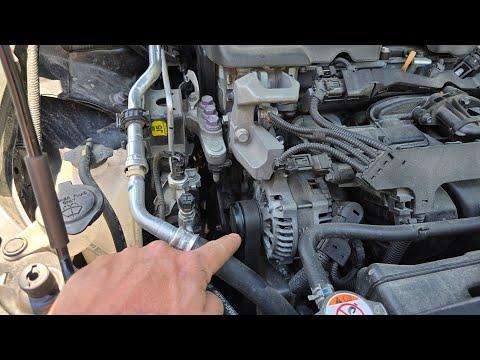






How to Replace the Serpentine Belt on a 2020 Toyota Camry 2.5L
Step-by-step DIY serpentine belt replacement with tools, parts list, torque specs, safety tips, and cost savings
How to Replace the Serpentine Belt on a 2020 Toyota Camry 2.5L
Step-by-step DIY serpentine belt replacement with tools, parts list, torque specs, safety tips, and cost savings


🔧 Camry - Serpentine Belt Replacement
You’ll be replacing the serpentine (drive) belt that runs the alternator, A/C compressor, and other accessories on your Camry. Over time, this belt wears or cracks and can break, leaving you without charging or power steering.
Difficulty Level: Intermediate | Estimated Time: 1-2 hours
⚠️ Safety & Precautions
- ⚠️ Always support the car with jack stands, never rely only on a floor jack.
- ⚠️ Work with the engine completely cool to avoid burns from hot parts.
- ⚠️ Keep fingers and tools clear of the belt path when releasing the tensioner.
- ⚠️ Turn the ignition OFF and remove the key before starting; do not start the engine until everything is reassembled.
- ⚠️ Disconnecting the battery is not required, but you may disconnect the negative terminal with a 10mm wrench if you prefer extra safety.
🔧 Required Tools
You'll need the following tools for this repair:
- 🛠️ Floor jack (rated 3-ton minimum)
- 🛠️ Jack stands (rated 3-ton minimum)
- 🛠️ Wheel chocks
- 🛠️ Lug wrench (21mm)
- 🛠️ 10mm socket
- 🛠️ 12mm socket
- 🛠️ 14mm socket
- 🛠️ 3/8" ratchet
- 🛠️ 3/8" torque wrench (10-100 ft-lbs range)
- 🛠️ Serpentine belt tool (low-profile) (specialty)
- 🛠️ 3/8" extension (6")
- 🛠️ Flat trim clip remover tool
- 🛠️ Flathead screwdriver (medium)
- 🛠️ Work light or flashlight
- 🛠️ Mechanic gloves
- 🛠️ Safety glasses
🔩 Required Parts
HowToo sells all the parts you need for this repair:
- 🔩 Serpentine drive belt (2.5L with A/C) - Qty: 1
- 🔩 Plastic splash shield clips for right inner fender - Qty: 4-6
- 🔩 Engine under-cover clips/bolts (optional backup) - Qty: 4-6
- 🔩 Dielectric grease (small tube, optional) - Qty: 1
- 🔩 Brake cleaner spray (for cleaning pulleys if needed) - Qty: 1
- 🔩 Shop rags - Qty: 1 pack
📋 Before You Begin
- 📝 Park the Camry on level ground, set the parking brake, and place wheel chocks behind the rear wheels.
- 📝 Turn off the ignition and remove the key; let the engine cool fully.
- 📝 Gather tools and parts so you are not searching mid-job.
- 📝 If you want extra safety, disconnect the negative battery cable with a 10mm socket.
- 📝 Take a clear photo of the existing belt routing before removal. This saves confusion later.
🔨 Step-by-Step Instructions
Follow these steps in order:
Step 1: Lift and secure the right front of the car
- Place wheel chocks behind the left rear wheel.
- Use the lug wrench (21mm) to slightly loosen (¼ turn) the right front wheel lug nuts while the car is still on the ground.
- Position the floor jack (3-ton) under the front right pinch weld jacking point and raise the car until the tire is off the ground.
- Place jack stands (3-ton) under the correct support points near the right front and slowly lower the car onto the stands using the floor jack.
- Remove the right front wheel using the lug wrench (21mm) and set it aside.
- Give the car a shake to confirm it’s stable.
Step 2: Remove the right inner fender splash shield
- Turn your work light on and point it into the right wheel well.
- Use the flat trim clip remover tool or flathead screwdriver to gently pry out the plastic clips holding the right inner fender liner and lower splash shield where needed for access.
- Keep the clips in a small container so you don’t lose them.
- Fold the splash shield back or remove the front portion to expose the belt and pulleys.
Step 3: Remove the lower engine under cover (if needed for access)
- From under the front bumper, use a 10mm socket with 3/8" ratchet to remove the bolts holding the right side of the lower engine cover.
- Remove any remaining clips with the flat trim clip remover tool.
- Lower the cover enough to clearly see the crankshaft pulley and belt routing near the bottom.
- Torque for engine under cover bolts on reassembly: 10 N·m (7 ft-lbs).
Step 4: Note or draw the belt routing
- Use your phone to take a clear photo showing the full belt path over all pulleys.
- If there is a belt routing sticker under the hood, study it for a moment.
- Optionally, sketch a simple diagram on paper. This really helps first-timers.
Step 5: Release tension from the belt
- The belt tensioner is a spring-loaded pulley that keeps the belt tight.
- Install the 14mm socket on your serpentine belt tool (specialty) or on a slim 3/8" ratchet if there is enough room, and place it on the tensioner bolt head (center of the tensioner pulley).
- Rotate the tensioner clockwise (toward the rear of the car) using the serpentine belt tool to relieve tension from the belt. It will feel springy.
- While holding the tensioner in the released position, slide the belt off one accessible smooth pulley (usually the idler or alternator) using your free hand.
- Slowly release the tensioner back to its resting position with the serpentine belt tool.
- Keep fingers clear of the belt and pulley edges.
Step 6: Remove the old belt completely
- With tension released from one pulley, pull the belt off the remaining pulleys by hand.
- Snake the belt out through the gap in the inner fender area.
- Compare the old belt to the new belt side by side: same length, same number of ribs, similar width.
- If lengths differ clearly, do not install; re-check part.
Step 7: Inspect pulleys and tensioner
- Spin each accessible pulley (idler, alternator, A/C, tensioner) by hand.
- If any pulley feels rough, makes grinding noise, or wobbles side to side, note it for future replacement.
- If dusty or greasy, lightly spray a rag with brake cleaner and wipe the pulley grooves clean.
- Clean, dry pulleys prevent belt squeaks.
Step 8: Route the new belt on the lower pulleys
- Using your diagram or photo, start routing the new belt around the lower pulleys: crankshaft pulley first, then A/C compressor and any idlers as shown for your engine.
- Make sure the belt ribs sit fully into the grooves of each ribbed pulley.
- Leave the belt off one upper pulley (commonly the alternator or idler) so you have a spot to slip it on when you release the tensioner again.
Step 9: Finish routing and reinstall under tension
- Double-check the belt is correctly routed on all pulleys except the last one.
- Place the 14mm socket back onto the tensioner using the serpentine belt tool.
- Rotate the tensioner clockwise again to create slack.
- With your free hand, slip the belt onto the final pulley (usually an upper smooth or alternator pulley).
- Verify the belt ribs are fully seated in every pulley groove all around.
- Slowly release the tensioner so it takes up slack and tensions the belt.
Step 10: Final belt inspection
- Visually trace the belt path one more time, pulley by pulley.
- Ensure the belt is centered on each pulley and not hanging off an edge.
- Gently press the longest belt span with your finger; it should feel firm, not loose.
- Take your time here; this avoids instant belt throw-off.
Step 11: Reinstall the engine under cover and splash shield
- Reposition the lower engine under cover.
- Start all bolts by hand using a 10mm socket and 3/8" ratchet.
- Tighten the under cover bolts to 10 N·m (7 ft-lbs) using the torque wrench (3/8") with 10mm socket.
- Reinstall the inner fender splash shield and secure it with the plastic clips. Replace any damaged clips with new ones by pressing them in by hand.
Step 12: Reinstall the wheel and lower the car
- Put the right front wheel back on and thread the lug nuts by hand.
- Use the lug wrench (21mm) to snug the lug nuts in a crisscross pattern.
- Raise the car slightly with the floor jack, remove the jack stands, then slowly lower the car to the ground.
- Torque the lug nuts with the torque wrench and 21mm socket to 140 N·m (103 ft-lbs) in a star pattern.
Step 13: Final checks before starting the engine
- Remove all tools, rags, and lights from the engine bay and under the car.
- Double-check that the belt is still correctly seated on all pulleys.
- If you disconnected the battery, reconnect the negative cable using a 10mm socket and tighten snugly (do not overtighten).
✅ After Repair
- ✅ Start the engine and let it idle while watching the belt. It should track smoothly with no wobble or jumping.
- ✅ Listen for any squealing or slapping noises. If you hear anything, turn the engine off immediately and re-check routing and seating.
- ✅ After 2-3 minutes, shut the engine off and quickly re-check belt position on all pulleys.
- ✅ Take a short test drive (5-10 minutes), then recheck the belt visually once more when you return.
💰 DIY vs Shop Cost
Shop Cost: $250-$400 (parts + labor)
DIY Cost: $35-$90 (parts + small supplies)
You Save: $160-$350 by doing it yourself!
Shop labor rates typically run $100-$150/hour. This repair takes a shop about 1.0-1.5 hours.
🎯 Ready to get started?
HowToo makes it easy: same-day/2-day shipping on every part, plus all the tools and specialty tools you need! Check out the parts and tools sections above to add everything to your cart.