













How to Replace the Serpentine Belt on a 2018 Toyota RAV4 2.5L
Step-by-step DIY serpentine belt replacement with tools, routing tips, torque specs, and safety guidance for 2009, 2010, 2011, 2012, 2013, 2014, 2015, 2016, 2017, 2018
How to Replace the Serpentine Belt on a 2018 Toyota RAV4 2.5L
Step-by-step DIY serpentine belt replacement with tools, routing tips, torque specs, and safety guidance for 2009, 2010, 2011, 2012, 2013, 2014, 2015, 2016, 2017, 2018


RAV4 - Serpentine Belt Replacement 🔧
Good project for a beginner, but we’ll go step by step and keep it safe and simple.
Quick check first: Are you working with basic hand tools at home (socket set, wrenches, screwdrivers), and do you have a safe, flat place to park the RAV4? If yes, you’re good to continue.
Parts & Specs 📦
- 🔹 Serpentine (drive) belt – 2.5L engine, A/C equipped (match by year/engine when you buy)
- 🔹 Tensioner pulley bolt torque: about 32 ft-lb (43 N·m) (if you loosen/remove it)
- 🔹 Idler pulley bolt torque: about 32 ft-lb (43 N·m)
- 🔹 Engine under cover bolts (if removed): about 7 ft-lb (10 N·m)
Exact belt part number can vary; match by 2018, 2.5L, with A/C when ordering.
Tools You’ll Need 🧰
- 🔹 Socket set (metric): 10mm, 12mm, 14mm sockets
- 🔹 Ratchet (3/8" drive is fine)
- 🔹 Breaker bar or long-handled ratchet – gives extra leverage to move the belt tensioner
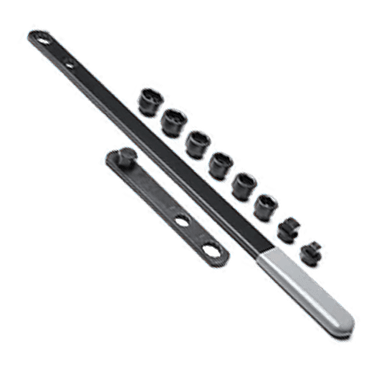
- 🔹 Serpentine belt tool (optional but helpful) – a thin, long bar with sockets for tight spaces
- 🔹 Combination wrench (14mm) – in case a socket doesn’t fit well
- 🔹 Flat-blade screwdriver or trim tool – to pop plastic clips on covers
- 🔹 Flashlight – to see the pulleys clearly
- 🔹 Gloves and safety glasses – protect your hands and eyes
A belt tensioner is a spring-loaded pulley that keeps the belt tight.
Safety First ⚠️
- 🔹 Park the RAV4 on a flat surface, set the parking brake, and put the shifter in P.
- 🔹 Turn the engine OFF and remove the key (or switch ignition fully off).
- 🔹 Let the engine cool if it was just running; you’ll be working near hot parts.
- 🔹 Never put your fingers between the belt and pulleys when moving the tensioner.
Step 1 – Access the Belt 👀
On your RAV4, the serpentine belt is on the passenger side of the engine bay.
- 🔹 Open the hood and support it with the prop rod.
- 🔹 Look down the passenger side of the engine – you’ll see the belt running around several pulleys.
- 🔹 There is usually a belt routing diagram sticker under the hood or on the radiator support.
- If you don’t see one, take a clear photo of the belt routing from above and from below if possible.
Step 2 – Remove Lower Engine Cover (If Needed) 🔩
This makes it easier to see and guide the belt.
- 🔹 Turn the steering wheel slightly left to give more room on the passenger side if needed.
- 🔹 From the front underside, remove the plastic engine under cover fasteners:
- Use a 10mm socket for bolts.
- Use a flat screwdriver to gently pop plastic clips (turn 90° or pry center up).
- 🔹 Lower the cover and set it aside.
Step 3 – Identify the Tensioner 🔍
- 🔹 The tensioner is a small pulley on an arm, usually near the middle-lower area of the belt path.
- 🔹 On the 2.5L, the tensioner has a 14mm bolt head in the center of the pulley or a 14mm hex on the arm.
- 🔹 This is where you’ll put your wrench or socket to rotate and relieve belt tension.
Step 4 – Relieve Tension and Remove Old Belt 🧵
- 🔹 Place a 14mm socket and long ratchet/breaker bar on the tensioner bolt.
- 🔹 Slowly pull the tool to rotate the tensioner:
- On this engine, you typically pull clockwise (toward the rear of the car) to relieve tension.
- If it feels wrong or doesn’t move, stop and try the opposite direction gently.
- 🔹 While holding the tensioner in the “released” position, use your other hand to slip the belt off one smooth pulley (usually the alternator or idler – a smooth pulley is easier).
- 🔹 Slowly let the tensioner return to its rest position.
- 🔹 Now remove the belt completely from all pulleys, working it out from above and below.
Tip: Note which pulleys are ribbed (grooved) and which are smooth; this helps with routing the new belt.
Step 5 – Compare Old and New Belt 📏
- 🔹 Lay the old belt and new belt side by side on the ground.
- 🔹 Check:
- Length is the same (a tiny difference is normal, but not several cm).
- Number of ribs (grooves) is the same.
- 🔹 If they look very different, do not install – you may have the wrong belt.
Step 6 – Route the New Belt (Without Tension Yet) 🔄
- 🔹 Use the belt routing diagram or your photo as a guide.
- 🔹 Start by wrapping the belt around the crankshaft pulley (the big one at the bottom).
- 🔹 Then route around the other pulleys:
- Power steering (if equipped)
- A/C compressor
- Alternator
- Idler pulley
- Tensioner pulley
- 🔹 Leave the belt off one easy-to-reach smooth pulley (often the idler or alternator) so you can slip it on last.
- 🔹 Make sure the belt ribs sit correctly in the grooves on all ribbed pulleys.
Step 7 – Apply Tension and Seat the Belt 💪
- 🔹 Put the 14mm socket and long ratchet back on the tensioner.
- 🔹 Rotate the tensioner again to relieve tension (same direction as before).
- 🔹 While holding the tensioner, slip the belt onto the last pulley you left free.
- 🔹 Double-check that:
- The belt is centered on each pulley.
- No ribs are hanging off the edge.
- The belt follows the correct path (compare to diagram/photo).
- 🔹 Slowly release the tensioner so it tightens the belt.
Step 8 – Final Checks & Reassembly ✅
- 🔹 From both top and bottom, visually inspect the belt on every pulley.
- 🔹 Spin a couple of pulleys by hand (engine off!) to be sure the belt tracks straight.
- 🔹 Reinstall the engine under cover:
- Line it up and reinstall bolts (10mm) and clips.
- Snug bolts to about 7 ft-lb (10 N·m) – just firm, not gorilla tight.
- 🔹 Start the engine and let it idle.
- 🔹 Watch the belt:
- It should run smoothly with no wobble or squeal.
- If you hear chirping or see it walking off a pulley, shut off and re-check routing.
When to Worry / Extra Notes 🧠
- 🔹 If the tensioner pulley or idler pulley feels rough, wobbly, or noisy when spun by hand, they should be replaced too.
- 🔹 If the belt squealed before and still squeals after, the tensioner or a pulley bearing may be worn.
Want Torque Specs or a Diagram Image? 📸
If you’d like, tell me and I’ll describe the exact belt routing for your engine in words (pulley by pulley) so you can double-check while you work.
HowToo makes it easy: below this answer you’ll see the correct serpentine belt and any tools you might need. You can add them to your cart right from the parts section for fast shipping.