















How to Replace the Serpentine Belt on a 2018 Ford Mustang (Step-by-Step)
Tools needed, belt routing tips, tensioner release steps, and post-install checks to stop squeal and misalignment
How to Replace the Serpentine Belt on a 2018 Ford Mustang (Step-by-Step)
Tools needed, belt routing tips, tensioner release steps, and post-install checks to stop squeal and misalignment


🔧 Mustang - Serpentine Belt Replacement
The serpentine belt on your Mustang drives key accessories like the alternator and A/C. Replacing it is mostly about safely relieving belt tension, routing the new belt correctly, and confirming it’s seated on every pulley.
Difficulty Level: Beginner | Estimated Time: 0.5-1.0 hours
⚠️ Safety & Precautions
- ⚠️ Work on a cool engine; keep hands clear of the radiator fan and pulleys.
- ⚠️ Keep fingers out of pinch points when releasing the belt tensioner (the spring-loaded arm that keeps the belt tight).
- ⚠️ Do not start the engine until the belt is fully seated in every pulley groove.
- ⚠️ Battery disconnect is not required for this job, but keep the key away from the car so it can’t be started accidentally.
🔧 Required Tools
You'll need the following tools for this repair:
- Safety glasses
- Mechanic gloves
- 3/8" drive ratchet
- 15mm socket
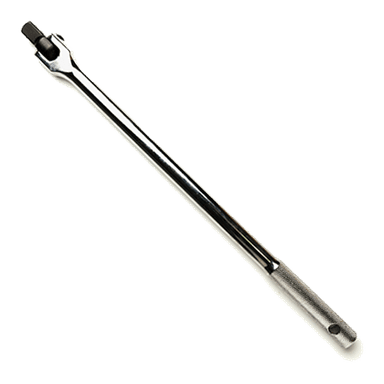
- 3/8" drive breaker bar (18" minimum)
- 8mm nut driver
- Flat-head screwdriver
- Flashlight
🔩 Required Parts
HowToo sells all the parts you need for this repair:
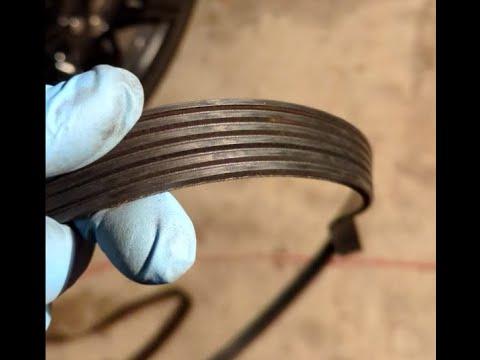
- Serpentine belt - Qty: 1
📋 Before You Begin
- Park on level ground, shift to Park, and set the parking brake.
- Open the hood and let the engine cool fully.
- Look for the belt routing diagram sticker in the engine bay and take a clear photo of it.
- If the sticker is missing, take a photo of the current belt routing before removal.
🔨 Step-by-Step Instructions
Follow these steps in order:
Step 1: Make room to access the belt
- Remove the engine cover (it pulls upward by hand).
- Loosen the intake tube clamp using an 8mm nut driver.
- If needed, release any intake tube clips using a flat-head screwdriver, then move the tube slightly for more working room.
- Take a quick photo before touching the belt.
Step 2: Locate the belt tensioner
- Use a flashlight to find the belt tensioner at the front of the engine (it’s the spring-loaded pulley/arm assembly).
- Identify the hex on the tensioner arm where your 15mm socket will fit.
Step 3: Relieve belt tension
- Install a 15mm socket on a 3/8" drive breaker bar (18" minimum).
- Place the socket on the tensioner hex and rotate the tensioner to relieve tension.
- Hold the tensioner in the released position with steady force.
- Move slowly; the spring is strong.
Step 4: Remove the old belt
- While holding the tensioner released, slip the belt off one smooth pulley (an idler pulley is usually easiest) by hand.
- Slowly let the tensioner return to its rest position.
- Remove the belt from the remaining pulleys and take it out of the engine bay.
Step 5: Inspect pulleys and tensioner
- Spin the idler pulley by hand; it should spin smoothly and quietly.
- Check the tensioner pulley for wobble or roughness by hand.
- If you see cracks in pulleys, wobble, or grinding noise, stop and replace the failing part before installing the new belt.
Step 6: Route the new belt correctly
- Match the new belt length to the old one before installing.
- Route the new belt following your photo or the under-hood diagram.
- Start by wrapping the belt around the crank pulley first (largest pulley at the bottom), then around the grooved pulleys.
- Leave one easy-to-reach smooth pulley for last.
- Make sure the belt ribs sit fully inside the grooves on every grooved pulley.
- If it’s off by 1 rib, it will shred.
Step 7: Apply tension and seat the belt
- Use the 15mm socket and 3/8" breaker bar to rotate the tensioner and relieve tension again.
- Slip the belt onto the last pulley.
- Slowly release the tensioner so it tightens the belt.
- Double-check belt alignment on every pulley using a flashlight.
Step 8: Reinstall intake parts and engine cover
- Reposition the intake tube and tighten the clamp with an 8mm nut driver.
- Reinstall the engine cover by pressing it down until it snaps into place.
✅ After Repair
- Start the engine and let it idle for 30-60 seconds while watching the belt track.
- Listen for squealing, slapping, or chirping noises; shut off immediately if you hear any and re-check routing.
- Turn A/C on and off once and confirm the belt stays centered on the pulleys.
- Recheck belt seating one more time after a short 5-10 minute drive.
💰 DIY vs Shop Cost
Shop Cost: ₹6,000-₹12,000 (parts + labor)
DIY Cost: ₹1,500-₹4,000 (parts only)
You Save: ₹4,500-₹8,000 by doing it yourself!
Shop labor rates vary but typically run $100-$150/hour. This repair takes a shop approximately 0.5-1.0 hours.
🎯 Ready to get started?
HowToo makes it easy: same-day/2-day shipping on every part, plus all the tools and specialty tools you need! Check out the parts and tools sections below to add everything to your cart.