









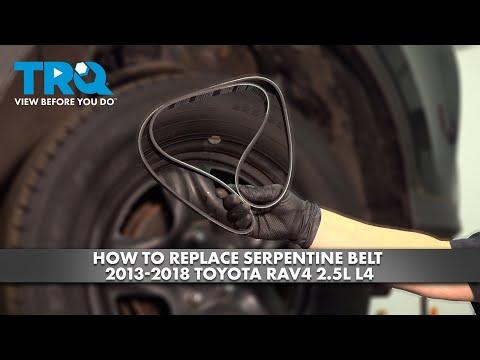






How to Replace the Serpentine Belt on a 2016 Toyota RAV4
Step-by-step instructions with tools, routing tips, safety precautions, and inspection checks for 2009, 2010, 2011, 2012, 2013, 2014, 2015, 2016, 2017, 2018
How to Replace the Serpentine Belt on a 2016 Toyota RAV4
Step-by-step instructions with tools, routing tips, safety precautions, and inspection checks for 2009, 2010, 2011, 2012, 2013, 2014, 2015, 2016, 2017, 2018


🔧 Serpentine Belt - Replacement
The serpentine belt drives the alternator, A/C compressor, water pump, and other accessories. On your RAV4, the belt is replaced by relieving the automatic tensioner, slipping the old belt off, and routing the new belt exactly the same way.
Difficulty Level: Intermediate | Estimated Time: 1-2 hours
⚠️ Safety & Precautions
- Work only on a cool engine. Hot pulleys and the exhaust can burn you.
- Keep fingers clear of the belt path. The tensioner is spring-loaded.
- Disconnect the negative battery cable if you will be working near the starter cable or alternator wiring.
- If you raise the vehicle, support it with jack stands before going underneath.
- Do not start the engine with the belt removed.
🔧 Required Tools
You'll need the following tools for this repair:
- 14mm wrench
- 3/8-inch drive ratchet
- 3/8-inch drive extension
- Floor jack (rated 3-ton minimum)
- Jack stands
- Wheel chocks
- Safety glasses
- Mechanic gloves
- Belt routing diagram reference
- Trim clip removal tool
🔩 Required Parts
HowToo sells all the parts you need for this repair:
- Serpentine belt - Qty: 1
- Engine undercover clips - Qty: As needed
📋 Before You Begin
- Park on level ground and set the parking brake.
- Let the engine cool completely.
- If the belt routing diagram is not on the radiator support, take a clear photo of the current belt routing before removal.
- If you need extra access, raise the front of the vehicle and support it with jack stands.
🔨 Step-by-Step Instructions
Follow these steps in order:
Step 1: Access the belt area
- Open the hood and locate the belt on the front of the engine.
- If needed, use the floor jack and jack stands to raise the front of the vehicle.
- Use the trim clip removal tool to remove the lower engine undercover clips and lower shield for easier access.
Step 2: Note the belt routing
- Find the factory belt routing diagram if present.
- If there is no diagram, take a photo of the belt path before removing it.
- Make sure you can see how the belt wraps around each pulley.
Step 3: Relieve belt tension
- Use the 14mm wrench on the automatic tensioner hex.
- Rotate the tensioner in the direction that slackens the belt. Move slowly and steadily.
- While holding the tensioner back, slip the belt off one easy-to-reach pulley.
Step 4: Remove the old belt
- Slowly release the 14mm wrench and let the tensioner return to rest.
- Remove the old belt from all pulleys by hand.
- Inspect the pulleys for cracks, wobble, or rough spinning.
Step 5: Install the new belt
- Route the new belt around all pulleys exactly as shown in the diagram or your photo.
- Leave the easiest pulley for last so you can slip the belt on with the least tension.
- Use the 14mm wrench to rotate the tensioner again and slide the belt onto the final pulley.
Step 6: Verify belt seating
- Check every pulley groove to make sure the belt is fully seated.
- Look at the belt edges from both sides.
- A mis-seated belt can shred quickly.
Step 7: Reassemble and test
- Reinstall the lower engine undercover using the trim clip removal tool.
- Lower the vehicle if you raised it.
- Start the engine and watch the belt for smooth tracking.
- Listen for squeal, chirping, or rubbing.
✅ After Repair
- Let the engine idle for 1-2 minutes and recheck belt tracking.
- Turn on the A/C and headlights to add accessory load and listen again.
- If you hear noise, shut the engine off and recheck routing and seating.
- Inspect again after a short test drive.
💰 DIY vs Shop Cost
Shop Cost: $180-$320 (parts + labor)
DIY Cost: $35-$75 (parts only)
You Save: $145-$245 by doing it yourself!
Shop labor rates vary but typically run $100-$150/hour. This repair takes a shop approximately 1-2 hours.
🎯 Ready to get started?
HowToo makes it easy: same-day/2-day shipping on every part, plus all the tools and specialty tools you need! Check out the parts and tools sections below to add everything to your cart.