









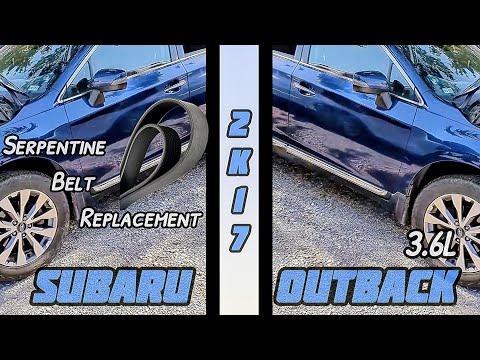






How to Replace the Serpentine Belt on a 2015-2019 Subaru Outback (Engine: Flat 4 2.5L)
Step-by-step instructions with tools, safety tips, routing guidance, and inspection checks
How to Replace the Serpentine Belt on a 2015-2019 Subaru Outback (Engine: Flat 4 2.5L)
Step-by-step instructions with tools, safety tips, routing guidance, and inspection checks for 2015, 2016, 2017, 2018, 2019


🔧 Serpentine Belt - Replacement
The serpentine belt drives the alternator, A/C compressor, and other accessories. If it’s cracked, glazed, squealing, or frayed, replace it before it fails and leaves you stranded.
Difficulty Level: Intermediate | Estimated Time: 1-2 hours
⚠️ Safety & Precautions
- Work with the engine off and completely cool.
- Keep fingers, clothing, and tools away from the belt path while releasing tension.
- Do not start the engine with the belt removed.
- No battery disconnect is required for this repair.
- If your Outback has a belt routing label under the hood, use it as the final reference before installation.
🔧 Required Tools
You'll need the following tools for this repair:
- 3/8-inch drive ratchet
- 14mm socket
- Breaker bar
- Flashlight
- Gloves
- Safety glasses
- Fender cover
🔩 Required Parts
HowToo sells all the parts you need for this repair:
- Serpentine belt - Qty: 1
📋 Before You Begin
- Park on level ground and set the parking brake.
- Open the hood and let the engine cool fully.
- Take a quick photo of the belt routing before removal.
🔨 Step-by-Step Instructions
Follow these steps in order:
Step 1: Locate the belt tensioner
- Open the hood and find the serpentine belt on the front of the engine.
- Look for the automatic tensioner pulley near the belt path.
- Take a photo before touching anything.
Step 2: Release belt tension
- Use a 14mm socket with a breaker bar or 3/8-inch drive ratchet on the tensioner.
- Rotate the tensioner in the direction that loosens the belt.
- Hold steady and slip the belt off one easy pulley with your other hand.
- There is no torque spec for this step because no fasteners are removed.
Step 3: Remove the old belt
- Slowly release the tensioner and remove the belt from all pulleys.
- Inspect the belt path for dirt, oil, or damaged pulleys.
- If a pulley feels rough or wobbly by hand, do not reuse it without repair.
Step 4: Route the new belt
- Compare the new belt to the old one to confirm length.
- Route the new belt around all pulleys except one easy-to-reach pulley near the tensioner.
- Use the routing label under the hood if it is present.
- Keep the belt fully seated in every pulley groove.
Step 5: Install the belt on the last pulley
- Use the 14mm socket and breaker bar to move the tensioner again.
- Slide the belt onto the last pulley while holding tension off the belt.
- Slowly release the tensioner and verify the belt is centered on every pulley.
- There is no torque spec for this step because no fasteners are removed.
Step 6: Final inspection
- Inspect every pulley groove visually.
- Make sure the belt ribs are not riding on the edges.
- Check that the belt is not twisted anywhere in the loop.
✅ After Repair
- Start the engine and listen for squealing, chirping, or slapping noises.
- Watch the belt for 30-60 seconds to confirm it runs true.
- Turn the A/C on and off to confirm normal accessory operation.
- If noise remains, recheck belt routing and pulley alignment.
💰 DIY vs Shop Cost
Shop Cost: $180-$350 (parts + labor)
DIY Cost: $35-$80 (parts only)
You Save: $145-$270 by doing it yourself!
Shop labor rates vary but typically run $100-$150/hour. This repair takes a shop approximately 1-2 hours.
🎯 Ready to get started?
HowToo makes it easy: same-day/2-day shipping on every part, plus all the tools and specialty tools you need! Check out the parts and tools sections below to add everything to your cart.