









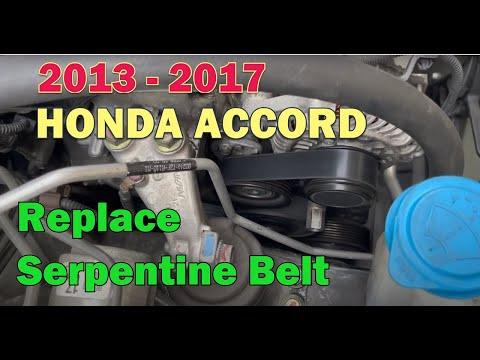






How to Replace the Serpentine Belt on a 1998-2017 Honda Accord (Engine: V6 3.5L)
Step-by-step instructions with tools, belt routing tips, safety checks, and inspection guidance
How to Replace the Serpentine Belt on a 1998-2017 Honda Accord (Engine: V6 3.5L)
Step-by-step instructions with tools, belt routing tips, safety checks, and inspection guidance for 1998, 1999, 2000, 2001, 2002


🔧 Serpentine Belt - Replacement
The serpentine belt drives the alternator, power steering, and other engine accessories. On your Accord, the belt is removed by rotating the automatic tensioner, then routed back around the pulleys in the correct path. A worn belt can squeal, crack, or slip, so replacing it early helps prevent a breakdown.
Difficulty Level: Beginner | Estimated Time: 0.5-1 hour
⚠️ Safety & Precautions
- Work only with the engine completely off and cool.
- Keep hands, sleeves, and tools clear of the belt path.
- Do not start the engine until the belt is fully seated on every pulley.
- If the belt tensioner feels weak or jerky, replace it before finishing.
- Battery disconnect is not required for this repair.
🔧 Required Tools
You'll need the following tools for this repair:
- 3/8-inch drive ratchet
- 14mm socket
- Breaker bar or long-handled ratchet
- Flashlight
- Safety glasses
- Mechanic gloves
- Wheel chocks
🔩 Required Parts
HowToo sells all the parts you need for this repair:
- Serpentine belt - Qty: 1
📋 Before You Begin
- Park on level ground and set the parking brake.
- Turn the ignition off and remove the key or keep the fob away from the vehicle.
- Let the engine cool fully so you can safely work near the belt path.
- Take a photo of the belt routing first.
🔨 Step-by-Step Instructions
Follow these steps in order:
Step 1: Access the belt area
- Open the hood and locate the serpentine belt on the front of the engine.
- If an upper engine cover is installed, remove it by hand first.
- Use a flashlight to trace the belt routing around the pulleys.
Step 2: Release belt tension
- Find the automatic belt tensioner near the belt path.
- Use a 14mm socket with a breaker bar or long-handled ratchet on the tensioner arm.
- Rotate the tensioner away from the belt to relieve tension.
- Move slowly to avoid slipping.
Step 3: Remove the old belt
- While holding the tensioner released, slide the belt off one accessible pulley.
- Carefully let the tensioner return to its normal position.
- Remove the belt from the remaining pulleys and pull it out of the engine bay.
Step 4: Inspect the pulleys
- Use your hand to check each smooth pulley for roughness or wobble.
- Spin the idler pulley and tensioner pulley by hand if accessible.
- Look for oil contamination, cracks, or damaged pulley edges.
- If a pulley feels noisy or gritty, replace it before installing the new belt.
Step 5: Route the new belt
- Compare the new belt to the old one to make sure it matches length and rib count.
- Route the belt around all pulleys except one easy-to-reach pulley for the final slip-on.
- Keep the ribbed side of the belt on the grooved pulleys and the smooth side on the smooth pulleys.
- Make sure the belt sits centered on every pulley groove.
Step 6: Finish installation
- Use the 14mm socket and breaker bar or long-handled ratchet again to release the tensioner.
- Slip the belt over the final pulley.
- Slowly release the tensioner and confirm the belt is fully seated.
Step 7: Verify belt alignment
- Use a flashlight to inspect the belt on every pulley.
- Make sure no belt ribs are hanging off the edge of a pulley.
- Check that the belt is not twisted anywhere in the route.
✅ After Repair
- Start the engine and listen for squealing, chirping, or rubbing noises.
- Watch the belt for a few seconds to confirm it runs smoothly.
- Turn the steering wheel and switch on electrical loads briefly to confirm normal operation.
- Shut the engine off and recheck belt seating if anything sounds off.
💰 DIY vs Shop Cost
Shop Cost: $150-$300 (parts + labor)
DIY Cost: $30-$70 (parts only)
You Save: $120-$230 by doing it yourself!
Shop labor rates vary but typically run $100-$150/hour. This repair takes a shop approximately 0.5-1 hour.
🎯 Ready to get started?
HowToo makes it easy: same-day/2-day shipping on every part, plus all the tools and specialty tools you need! Check out the parts and tools sections below to add everything to your cart.
Guide for Serpentine Belt replace for these Honda vehicles
| Year Make Model | Sub Model | Engine | Body Style |
|---|---|---|---|
| 2017 Honda Accord | - | V6 3.5L | - |
| 2016 Honda Accord | - | V6 3.5L | - |
| 2015 Honda Accord | - | V6 3.5L | - |
| 2014 Honda Accord | - | V6 3.5L | - |
| 2013 Honda Accord | - | V6 3.5L | - |
| 2002 Honda Accord | - | V6 3.0L | - |
| 2001 Honda Accord | - | V6 3.0L | - |
| 2000 Honda Accord | - | V6 3.0L | - |
| 1999 Honda Accord | - | V6 3.0L | - |
| 1998 Honda Accord | - | V6 3.0L | - |