









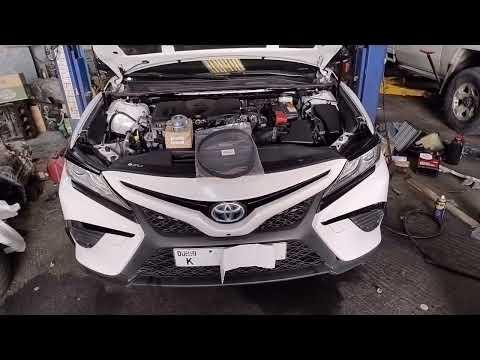







How to Replace the Serpentine Belt on a 2012-2023 Toyota Camry 3.5L V6 (Engine: Inline 4 2.5L)
Step-by-step DIY serpentine belt replacement with tools, parts list, torque specs, and safety tips for your 2019 Camry V6
How to Replace the Serpentine Belt on a 2012-2023 Toyota Camry 3.5L V6 (Engine: Inline 4 2.5L)
Step-by-step DIY serpentine belt replacement with tools, parts list, torque specs, and safety tips for your 2019 Camry V6 for 2012, 2013, 2014, 2015, 2016, 2017, 2018, 2019, 2020, 2021, 2022, 2023


🔧 Camry - Serpentine Belt Replacement
You’ll be replacing the serpentine (drive) belt that runs your alternator, A/C compressor, and power steering pump on your Camry. This belt wears over time and can crack, squeal, or break, which can leave you stranded.
Difficulty Level: Intermediate | Estimated Time: 1-2 hours
⚠️ Safety & Precautions
- 🔸Always work on a cool engine; hot pulleys and belts can burn you.
- 🔸Park on level ground, engage the parking brake, and keep the transmission in P.
- 🔸Use a floor jack and jack stands; never trust only the jack to hold the car.
- 🔸Keep fingers and clothing clear of pulleys; do not start the engine with tools in the engine bay.
- 🔸Battery disconnect is not required for this job, but do not press the start button while working.
🔧 Required Tools
You'll need the following tools for this repair:
- 🔸Floor jack (rated 3-ton minimum)
- 🔸Jack stands (rated 3-ton minimum)
- 🔸Wheel chocks
- 🔸Lug wrench or 21mm socket
- 🔸3/8" drive ratchet
- 🔸1/2" drive ratchet
- 🔸14mm combination wrench
- 🔸14mm socket
- 🔸10mm socket
- 🔸Socket extension 3"-6"
- 🔸Serpentine belt tool with 14mm adapter (specialty)
- 🔸Flathead screwdriver (medium size)
- 🔸Trim clip removal tool (specialty)
- 🔸Flashlight or work light
- 🔸Mechanic gloves
- 🔸Safety glasses
🔩 Required Parts
HowToo sells all the parts you need for this repair:
- 🔸Serpentine (drive) belt for 3.5L V6 - Qty: 1
- 🔸Plastic push clips for right inner fender liner - Qty: 4-6 (optional, in case any break)
- 🔸Dielectric or rubber-safe belt dressing - Qty: 1 (optional, normally not needed)
- 🔸Shop towels - Qty: 1 pack
📋 Before You Begin
- 🔸Park the Camry on a flat surface, set the parking brake, and put the transmission in P.
- 🔸Turn the ignition fully off and remove the key/fob from the car so no one can accidentally start it.
- 🔸Loosen the front right wheel lug nuts slightly before lifting the car.
- 🔸Locate the belt routing diagram sticker under the hood if present; if not, you’ll make your own sketch.
🔨 Step-by-Step Instructions
Follow these steps in order:
Step 1: Prepare and lift the car
- Use the lug wrench or 21mm socket to crack loose (¼ turn) the front right wheel lug nuts while the car is still on the ground.
- Position the floor jack (3-ton) under the front right jacking point (pinch weld under the rocker panel) and lift until the tire is off the ground.
- Place jack stands under the front subframe or approved jack stand points, then slowly lower the car onto the stands.
- Chock the rear wheels with wheel chocks to prevent rolling.
- Give the car a shake to confirm it’s stable.
Step 2: Remove the right front wheel
- Use the lug wrench or 21mm socket to remove the front right wheel lug nuts completely.
- Pull the wheel straight off and set it aside safely.
- Lay the wheel under the car as extra safety.
Step 3: Remove the right inner fender liner access
- The inner fender liner is the plastic shield inside the wheel well that covers the engine side.
- Use the trim clip removal tool to pop out the plastic push clips near the front and lower part of the liner.
- Use a 10mm socket with extension to remove any small 10mm bolts holding the liner.
- Gently pull back or fold the liner to open a window so you can see the belt and pulleys on the side of the engine.
- Torque for 10mm bolts on reassembly: 5 Nm (4 ft-lbs) (just snug, do not overtighten).
Step 4: Record the original belt routing
- Use a flashlight to clearly see the belt path around the pulleys.
- If there is a factory diagram under the hood, take a photo of it with your phone.
- If not, draw a simple sketch on paper: note which pulleys are ribbed (belt grooves) and which are smooth (back of the belt runs over them).
- Take multiple photos from different angles for backup.
Step 5: Locate the belt tensioner
- The belt tensioner is a spring-loaded pulley that keeps the belt tight. It will be one of the smaller pulleys with an arm attached to a base.
- From the wheel well opening, use the flashlight and look for a pulley with a 14mm bolt head in the center or a 14mm hex on the arm.
- This is where you’ll apply force to release the belt.
Step 6: Release tension on the belt
- Attach the serpentine belt tool with 14mm adapter or a 14mm combination wrench to the tensioner bolt/hex.
- On the 3.5L V6, you will typically rotate the tensioner clockwise (viewed from the front of the car) to relieve tension. Apply slow, steady pressure.
- While holding tension off the belt with one hand, use your other hand to slip the belt off one easy-to-reach smooth pulley (often the idler or alternator) using your fingers.
- Slowly let the tensioner return to its rest position under control. Do not let it snap back.
- Use gloves; the edges of pulleys can be sharp.
Step 7: Remove the old belt completely
- From the wheel well and from above the engine bay, pull the belt off all pulleys by hand.
- Note any pulleys that feel rough or wobbly while you rotate them by hand; that could mean a bad bearing.
- Remove the belt fully from the engine bay and compare it side-by-side with the new belt to confirm length and width are the same.
- If lengths differ noticeably, stop and re-check part.
Step 8: Route the new belt (leave tensioner pulley for last)
- Using your sketch or photo, start routing the new belt around the lower crankshaft pulley first (largest pulley at the bottom).
- Use your hands to wrap the belt around each ribbed pulley (belt grooves to pulley grooves) and over any smooth pulleys (back of belt on smooth pulley).
- Leave the belt off the easiest-access top or side pulley (often an idler) so that is the last pulley you slip it over when you release the tensioner.
- Double-check that the belt is sitting fully in all pulley grooves and not one tooth off.
- Misalignment will cause squeaks and fast wear.
Step 9: Apply tension and seat the new belt
- Reattach the serpentine belt tool with 14mm adapter or 14mm wrench to the tensioner.
- Rotate the tensioner clockwise again to create slack in the belt.
- With your other hand, slip the belt fully onto the last pulley (the one you left free in Step 8), making sure the belt stays properly seated on every other pulley.
- Slowly release the tensioner back to its rest position so it tightens the belt.
- Visually inspect from above and from the wheel well that the belt is centered and seated on every pulley.
Step 10: Reinstall inner fender liner and wheel
- Fold the inner fender liner back into place.
- Use the 10mm socket to reinstall any bolts you removed. Torque to 5 Nm (4 ft-lbs) (just snug).
- Use the trim clip removal tool to press the plastic clips back into their holes; replace any broken clips with new ones.
- Reinstall the wheel onto the hub and hand-thread all lug nuts.
- Use the lug wrench or 21mm socket to snug the lug nuts in a star pattern while the car is still in the air.
Step 11: Lower the car and torque the lug nuts
- Use the floor jack to raise the car slightly off the jack stands, remove the stands, and then gently lower the car to the ground.
- With the car on the ground, use the 21mm socket and 1/2" drive ratchet to tighten the lug nuts in a star pattern.
- Torque the lug nuts to 140 Nm (103 ft-lbs) according to Toyota spec.
- Re-check torque after a short drive.
Step 12: Final inspection before starting
- From the top and from the wheel well, use a flashlight to confirm the belt routing matches your diagram or photo.
- Make sure no tools, rags, or loose parts remain in the engine bay or in the wheel well.
- Confirm the inner fender liner is secure and not touching the belt or pulleys.
✅ After Repair
- 🔸Start the engine and let it idle while you watch the belt from above; it should run smoothly with no wobble or jumping.
- 🔸Listen for any new squeaks, chirps, or grinding noises. If you hear any, shut off the engine and recheck belt routing and pulley condition.
- 🔸Turn on the A/C, headlights, and steering to full lock briefly to load the belt and confirm there is no slipping noise.
- 🔸After a short test drive (5–10 minutes), recheck belt seating and re-torque the front right wheel lug nuts if needed.
💰 DIY vs Shop Cost
Shop Cost: $180-$300 (parts + labor)
DIY Cost: $35-$80 (parts only)
You Save: $100-$250 by doing it yourself!
Shop labor rates vary but typically run $100-$150/hour. This repair takes a shop approximately 0.8-1.2 hours.
🎯 Ready to get started?
HowToo makes it easy: same-day/2-day shipping on every part, plus all the tools and specialty tools you need! Check out the parts and tools sections above to add everything to your cart.
Guide for Serpentine Belt replace for these Toyota vehicles
| Year Make Model | Sub Model | Engine | Body Style |
|---|---|---|---|
| 2023 Toyota Camry | - | V6 3.5L | - |
| 2022 Toyota Camry | - | V6 3.5L | - |
| 2021 Toyota Camry | - | V6 3.5L | - |
| 2020 Toyota Camry | - | V6 3.5L | - |
| 2019 Toyota Camry | - | V6 3.5L | - |
| 2018 Toyota Camry | - | V6 3.5L | - |
| 2017 Toyota Camry | - | V6 3.5L | - |
| 2016 Toyota Camry | - | V6 3.5L | - |
| 2015 Toyota Camry | - | V6 3.5L | - |
| 2014 Toyota Camry | - | V6 3.5L | - |
| 2013 Toyota Camry | - | V6 3.5L | - |
| 2012 Toyota Camry | - | V6 3.5L | - |